
As AI agents begin to handle longer and more complex tasks, enabling them to accumulate experience from execution and continuously improve themselves is emerging as a new technical direction. openJiuwen is an open-source AI agent platform jointly built by Huawei's 2012 Lab, Huawei Cloud, and teams in devices and computing. In June this year, it released Auto Harness, allowing agents to automatically optimize their own "work equipment"—Prompt, Skill, Tool, and Rail—based on task execution results. This time, it expands the optimization targets further and releases a complete RSI framework.
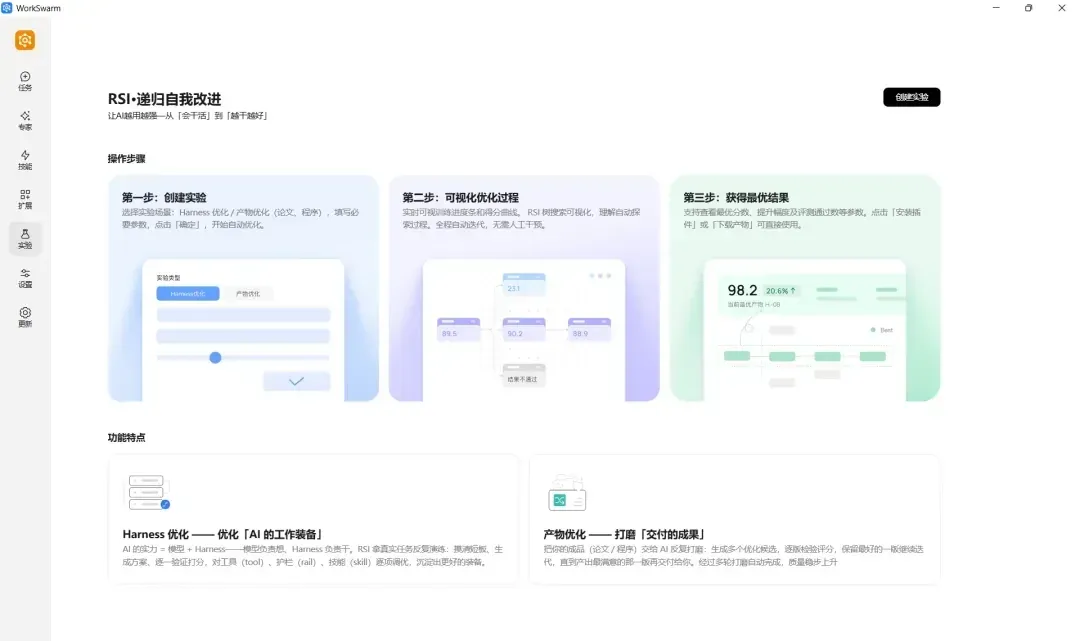
T
he framework divides optimization targets into two dimensions: Harness and Artifacts. Harness includes Prompt, Skill, Tool, and Rail, determining how an agent completes a task; Artifacts are the final deliverables generated by the agent, currently covering research papers and algorithm programs. As a result, both the agent's working methods and work outputs can enter continuous iteration.
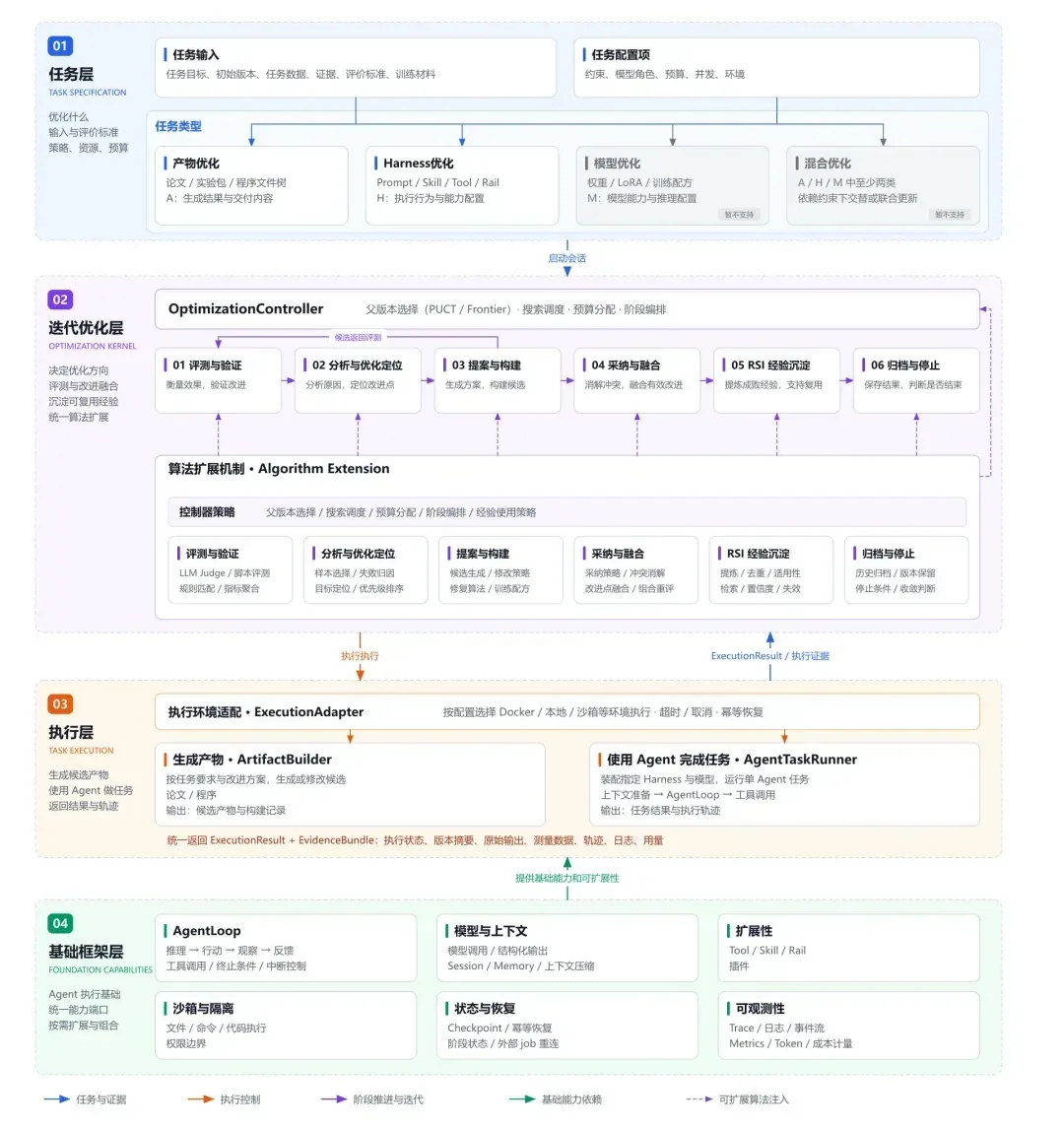
More critically, there is the question of "how to prove that optimization is effective." openJiuwen places improvement into a verifiable engineering closed loop: first establish a baseline, locate problems based on failures, execution trajectories, and metrics, then generate candidate versions and re-execute and evaluate them. Only changes verified as effective are adopted, while lessons from both success and failure feed into the next round. It also centers on versioned optimization targets, verifiable execution evidence, and