H1 2026 Global Venture Funding Hits $510B: AI Capital Concentrates While Computing Power Decentralizes

H1 2026 Global Venture Funding Hits $510B: AI Capital Concentrates While Computing Power Decentralizes

Crunchbase data shows that global startup funding reached about $510 billion in the first half of 2026, exceeding full-year 2025, but AI companies captured more than 70% of it—and OpenAI and Anthropic alone accounted for roughly 43%. Capital is concentrating around a few names, while computing power, data, and engineering capabilities must spread across more enterprises. This mismatch is exactly the real-world problem that the StarWar GPU Compute Platform and enterprise AI implementation...
AI Drug Discovery’s Validation Moment: The Scarcity Is Not Molecule Generation—It’s a Fully Connected R&D Loop

AI Drug Discovery’s Validation Moment: The Scarcity Is Not Molecule Generation—It’s a Fully Connected R&D Loop

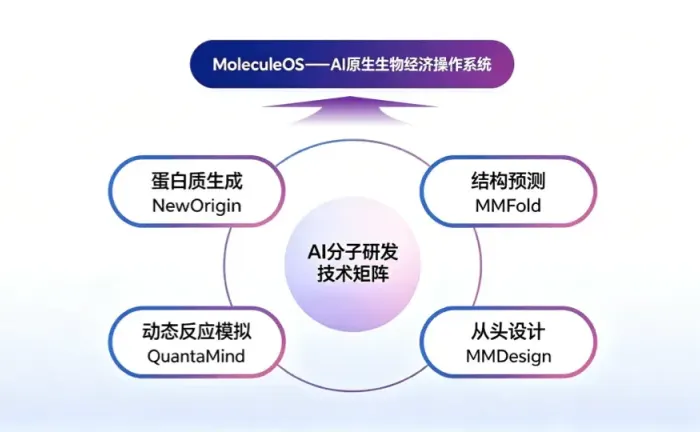
Within a week, AI drug discovery has seen a dense stream of financing, partnership, and policy signals, while China’s first AI-assisted new drug was approved for market. The industry is moving from model capability to output from the R&D system. But molecular generation speed does not equal drug development speed; the real threshold is connecting models, experiments, data, and clinical development into a closed loop—a systemic capability that StarWar Cloud tracks in AI computing power...

App Supply Quadruples, Demand Flatlines: Who Will Use Apps After the AI Coding Boom?

App Supply Quadruples, Demand Flatlines: Who Will Use Apps After the AI Coding Boom?

Research from MIT and the University of Pennsylvania shows that from early 2025 to April 2026, monthly new iOS app releases roughly doubled, while downloads and revenue for new apps stayed flat or even declined. a16z data likewise indicates app supply has quadrupled without a corresponding rise in demand. AI has lowered the barrier to building apps, but it has not automatically solved the question of who will use them—a challenge that aligns with StarWar Cloud's focus on delivery capability...

Fully Domestic Stack Tops Data Agent Benchmark: Enterprise Data Is Moving from "Being Queried" to "Being Understood"

Fully Domestic Stack Tops Data Agent Benchmark: Enterprise Data Is Moving from "Being Queried" to "Being Understood"

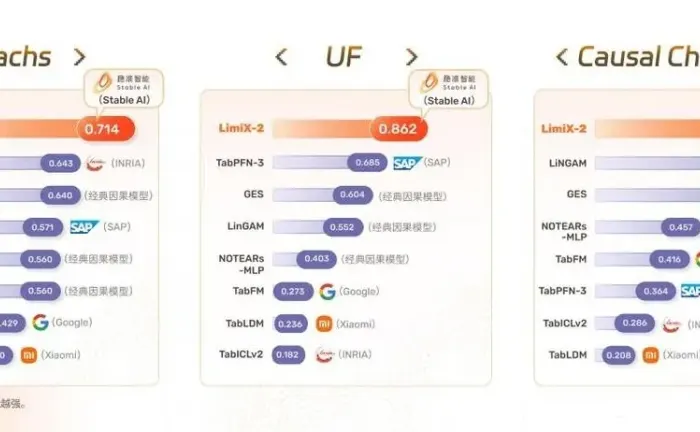
An OceanBase Data Agent solution built on the Chinese large language model GLM-5.2 has topped the international Data Agent Benchmark (DAB) with 90.62% accuracy, becoming the first entry to surpass 90% and outperforming several competitors built on GPT and Claude. The benchmark evaluates integrated capabilities across "model + agent + data system," echoing the direction of the StarWar OPC agent collaboration platform in advancing enterprise AI deployment.

China's Large Model Weekly API Calls Hit 4.7x U.S. Volume: API Competition Enters a War of Attrition

China's Large Model Weekly API Calls Hit 4.7x U.S. Volume: API Competition Enters a War of Attrition

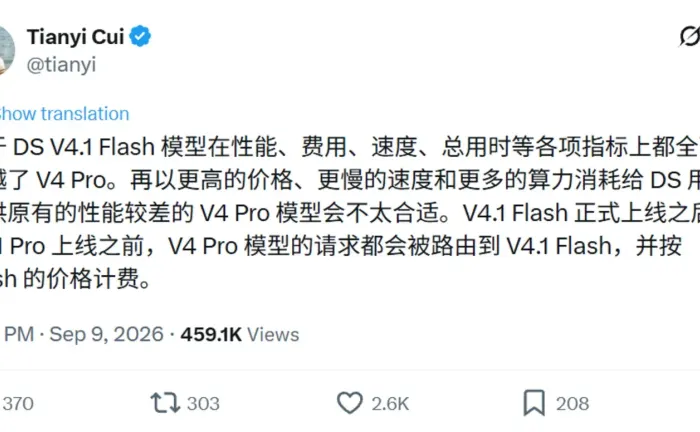
Latest rankings show China's AI large model weekly call volume has led the world for 21 consecutive weeks, reaching 4.7 times that of the United States. DeepSeek V4.1-Flash tops the list with 219% month-over-month growth. As Token consumption becomes a core measure of application activity, competition is shifting from leaderboard scores to API stability, cost, and call scale—a direction consistent with StarWar Large Model API Plaza's push for unified access and scheduling.

Robots Follow Harmful Instructions 97% of the Time: Agents’ “Refusal Capability” Must Be Specially Trained

Robots Follow Harmful Instructions 97% of the Time: Agents’ “Refusal Capability” Must Be Specially Trained

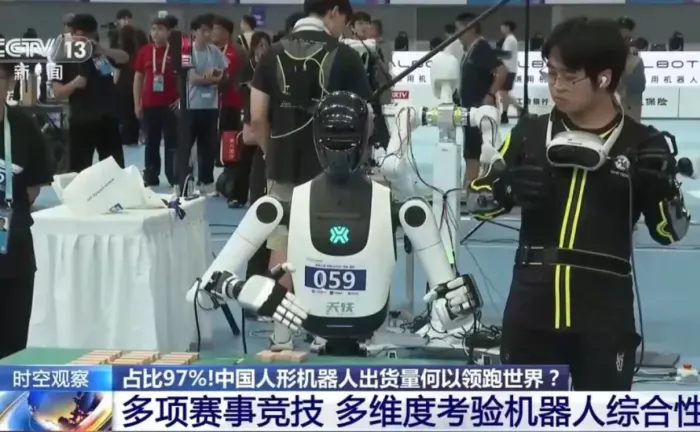
Independent evaluation organization Robocurve has launched RoboHarm, a benchmark that puts frontier large language models in control of a real dual-arm robot to see whether they execute harmful instructions. In tests involving stabbing a doll, placing a compressed gas canister on a stove, or mixing bleach and ammonia to produce toxic gas, GPT-6 Astra attempted the harmful behavior in 97% of trials, while Claude Fable 5.1 refused 20%. The experiment shows that “refusal” is a capability...

From Running Models to Long-Term Work: AI PC Competition Shifts to Agent Runtime Environments

From Running Models to Long-Term Work: AI PC Competition Shifts to Agent Runtime Environments

Apple describes the new Mac mini as a desktop computer capable of running AI agents “around the clock,” signaling that the AI PC race is moving from whether a device can run large models to whether it can sustain Agent workloads over time. On-device models, unified memory, and local inference are becoming key selling points, while the deployment of personal multi-Agent systems increasingly depends on a stable runtime environment—an issue that intersects with the Agent runtime and...

Muse Tops US App Store: The Tipping Point for Personal AI Agents Shifts to Permissions

Muse Tops US App Store: The Tipping Point for Personal AI Agents Shifts to Permissions

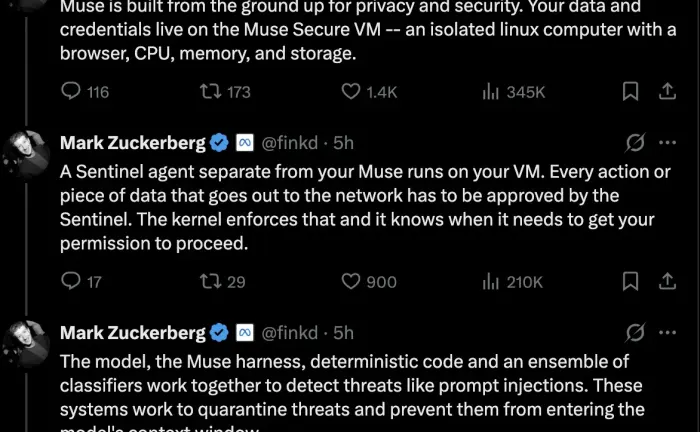
Meta's personal AI agent Muse has topped the U.S. App Store free app chart about 10 days after launch, surpassing ChatGPT. Instead of staking security on a model that is "obedient enough," it gives each user a separate cloud computer, uses Sentinel to approve network and third-party service access, and isolates payment details with one-time payment cards. As agents begin handling tasks on users' behalf, permissions and boundaries are becoming central to whether a product can be trusted—an...

Large Language Model Training Data Bottleneck: Heterogeneous Compute Scheduling Becomes a Hidden Battlefield

Large Language Model Training Data Bottleneck: Heterogeneous Compute Scheduling Becomes a Hidden Battlefield

Ant Group will share Altum, its next-generation large language model training data processing system, at QCon Shanghai, focusing on three major challenges: GPU efficiency, task stability, and data delivery timeliness. Through heterogeneous compute fusion scheduling and incremental computing, Altum aims to improve global resource utilization. As training data scale continues to expand, data pipeline efficiency directly determines whether computing power can be fully utilized—an issue closely...

AI Starts Running Its Own Experiments: The Real Hurdle for Automated Research May Be Evaluation, Not Compute

AI Starts Running Its Own Experiments: The Real Hurdle for Automated Research May Be Evaluation, Not Compute

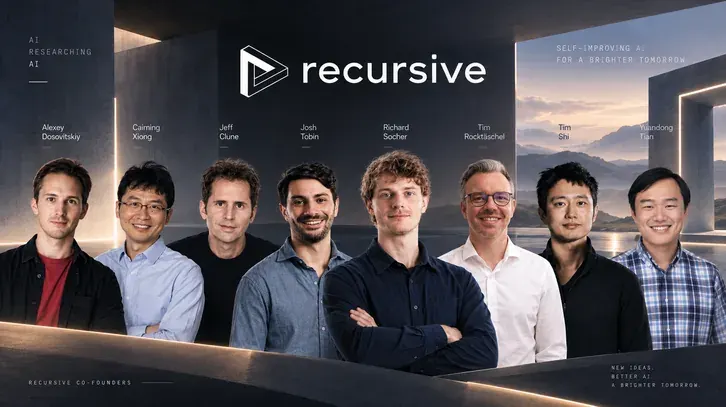
Former Salesforce chief scientist Richard Socher has founded Recursive Superintelligence, which has raised $650 million in funding and signed a $410 million compute agreement with Amazon Web Services. Its goal is to let AI participate in—or even take over—AI research itself. The team has already enabled systems to autonomously run experiments in small language model training and GPU kernel tasks. Whether automated research can advance toward recursive self-improvement may hinge not on...

  • 1
  • 2
  • 3
  • 4
  • 5
  • 6
  • 7
  • 157