
At the AICon Global AI Development and Application Conference, Xiaohongshu Chief Architect of AI Coding Zheng Xinqi shared hands-on experience from the Muse platform. The core problem: AI writes code fast enough, yet enterprise R&D isn't necessarily faster because of it. Muse aims to connect requirement co-creation, design, coding, and delivery — letting product managers, designers, and developers collaborate with AI along a single contextual chain, rather than treating AI as just another code generation tool.
Large language models are fundamentally probabilistic systems, which poses three distinct challenges for enterprise AI Coding: AI has no inherent awareness of company assets; user memory and task context are scattered across different platforms; and the capability chain from requirement to delivery remains fragmented. The time saved on coding ends up being spent all over again on review, QA submission, bug fixing, rework — and sometimes complete do-overs.
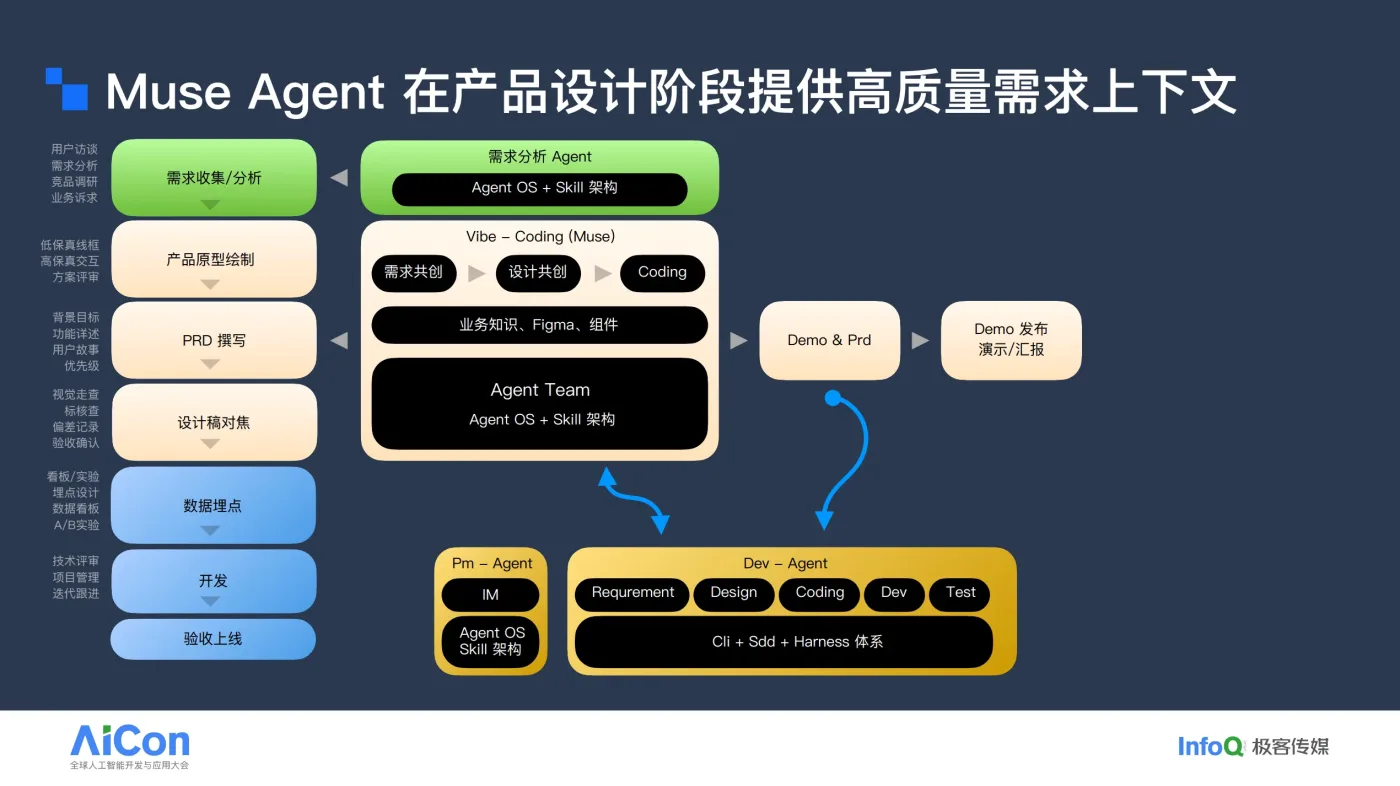
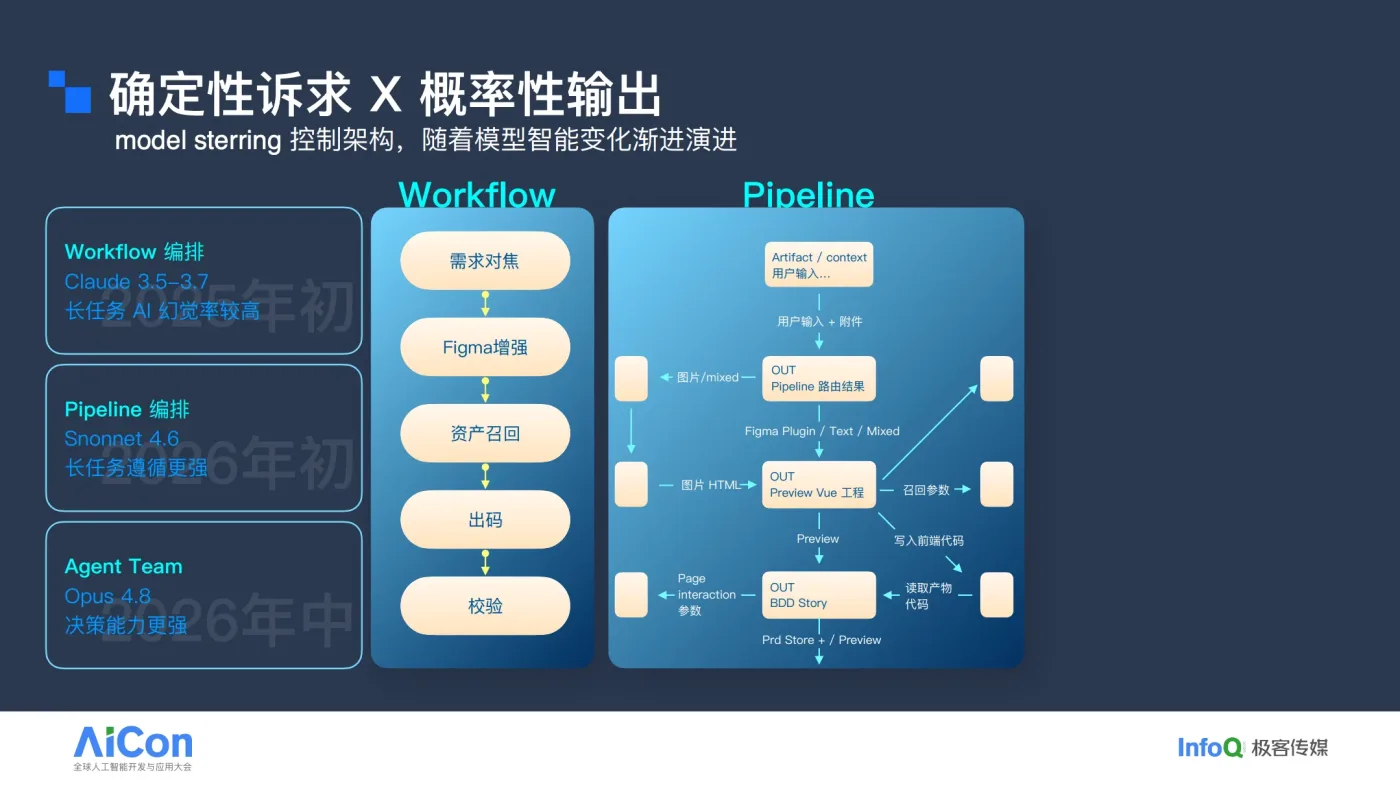
Model control architecture is now evolving from Workflow and Pipeline toward Agent Team. Tasks with high determinism requirements stay in pipelines, while scenarios demanding stronger generalization gradually adopt dynamic multi-agent orchestration. Xiaohongshu's practice confirms a key lesson: multi-agent setups only generate real gains when subtasks are genuinely independent, parallelizable, and contextually separable. Otherwise, a cleanly orchestrated pipeline beats an over-engineered agent team.
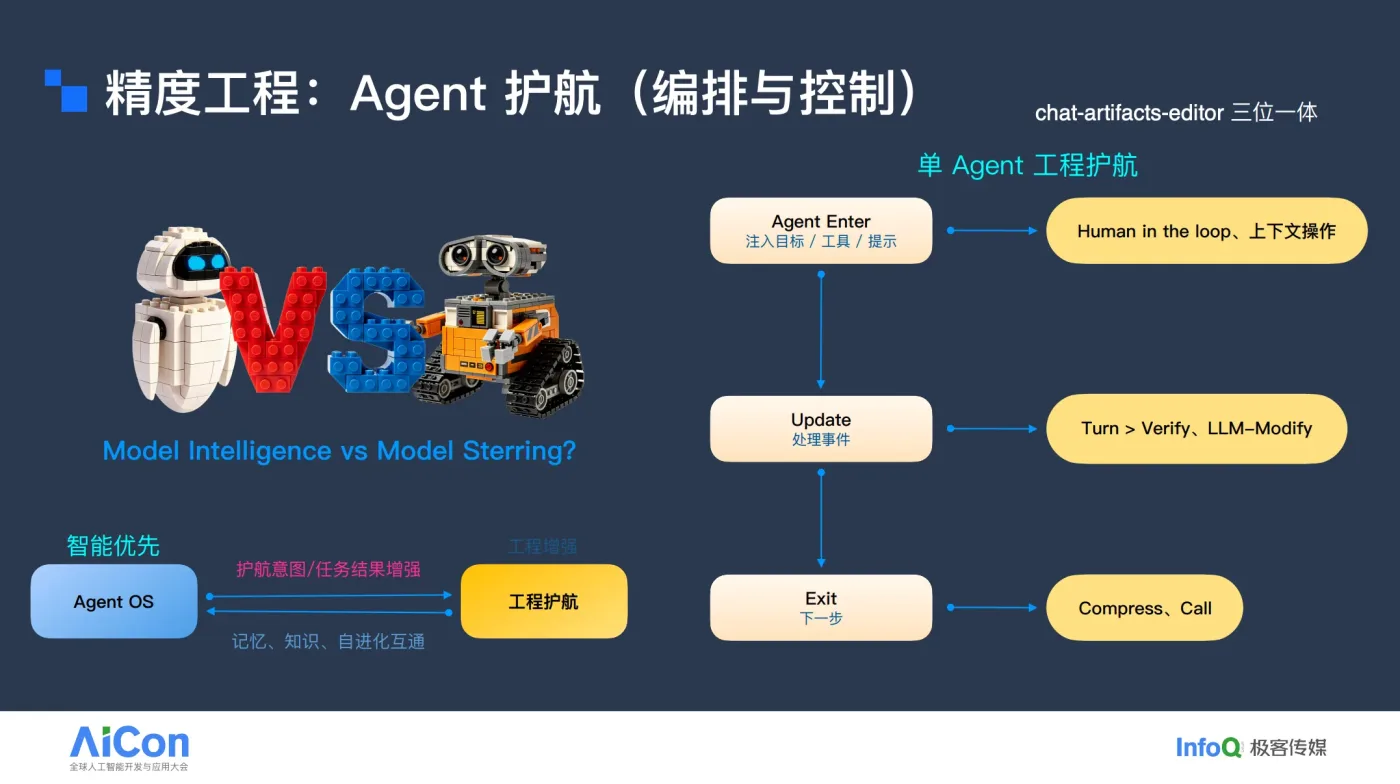
Explainable permissions, recoverable state, and auditable trails often deliver more value than a few extra percentage points of model capability. Xiaohongshu writes side-effect logs, approval records, and version numbers into structured systems rather than leaving them in compressed context windows. Every piece of evidence entering the context carries source, timestamp, ownership, and permission metadata. Transcripts are treated strictly as audit material — never as a basis for task recovery.
The team's stance is clear: the model defines the capability ceiling, but the engineering control surface determines whether something can reach production. This aligns closely with StarWar Cloud's emphasis on engineering discipline and controllability in its OPC intelligent agent collaboration platform — the shared belief being that enterprises should govern agent permissions, state, and audit trails the same way they manage traditional software, not by writing rules into a prompt and hoping the model remembers them.
Quantifying enterprise knowledge and enabling its self-evolution has become a new focal point. The right knowledge isn't simply retrieved — it's more like conducting a research exercise: code experts and knowledge experts each analyze independently, cross-pollinate, and converge on a judgment. Xiaohongshu also ran deletion experiments, removing certain context categories to see whether success rates truly dropped. Many seemingly valuable context items turned out to be dispensable — removing them changed no metrics, and they were only consuming context window and cost.
The decisive battleground for AI Coding is shifting from "who writes fastest" to "who delivers most reliably." Predictable success rates, per-task cost, and governance capability are what enterprises are genuinely purchasing. As models continue to strengthen, the human role is also moving from hands-on implementation toward higher-value judgment, oversight, and taste.