
In 2020, GPT-3 stunned the NLP community by mastering new tasks from just a few examples. Six years later, the same storyline is unfolding in embodied AI. In mid-August, Skild AI unveiled S1, its robotics foundation model: show it a task demonstration video once, and it can attempt entirely novel, untrained tasks—running up to ten minutes and spanning dozens of operational steps—with no fine-tuning and no additional post-training.
A week before S1's release, Generalist AI's GEN-1.5 similarly positioned One-Shot Learning as its core capability. The robot watches a single demonstration, then acquires a new task within seconds—no gradient updates, no fine-tuning—with support for Sim-to-Real transfer from human demonstrations to robot execution. Both companies are driving toward the same goal: enabling robots to leverage far longer, richer multimodal context.
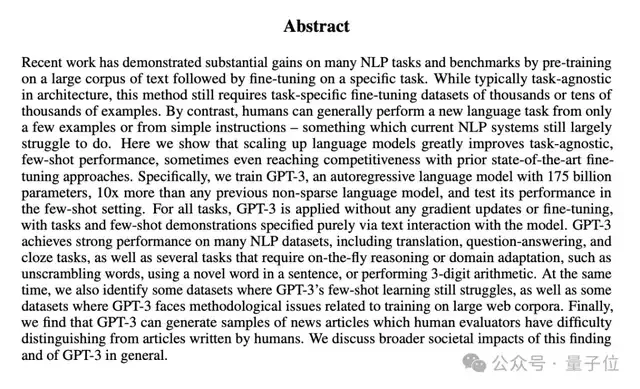
In-Context Learning has already proven itself in large language models. In 2020, OpenAI's GPT-3 paper defined ICL: with no parameter updates, the model performs new tasks in a single forward pass simply by including examples in the input. Over the past three years, context windows have expanded from 4K to 1M tokens—enough for a model to read an entire book in one sitting. But embodied models face a fundamentally different order of complexity: visual observations, linguistic instructions, and action sequences interleaved in real time. Real-world tasks are non-Markovian, and the sheer information volume runs orders of magnitude higher.
It wasn't until July that RoboTTT—co-authored by Fei-Fei Li, Jim Fan, Yuke Zhu, and others—first systematically applied "context scaling" to robot visuomotor policies. By August, the releases from Generalist AI and Skild AI had ignited a surge of ICL discussion across the embodied AI community. Shanghai-based startup COCO Matrix, however, got there even earlier. Founded in April of this year, the company's founder Gao Yuxiang brought end-to-end expertise from Fourier Intelligence—spanning teleoperation, data collection, and model deployment—and is attempting something more radical: moving ICL from the post-training phase into pretraining itself.
COCO Matrix's technical cornerstone is what it calls "conditional representation." The team argues that robot-ready visual representations shouldn't be determined solely by "what the robot sees," but also by "what it intends to do right now." The model dynamically extracts features at different levels of abstraction based on task conditions and action intent. In comparative experiments, under identical training setups and compute budgets, compressing the action head to roughly 60M parameters still outperformed a control architecture with an ~1.1B action head—lending weight to the team's "strong understanding, lightweight generation" thesis.

The metrics that matter are shifting too. The team reports that simple grasping tasks maintain a stable completion rate above 80% after one-shot adaptation, with an emphasis on self-correction: when the robot fails on its first attempt, it leverages the failure trajectory to adjust and retry. Looking ahead, the yardstick for robot intelligence may evolve from "task success rate" to "average time-to-first-success"—because that metric directly captures teaching cost and learning efficiency.
Whether embodied ICL truly delivers still hinges on solving multimodal data quality, long-context memory, and inference cost. But the direction is increasingly clear: beyond scaling models, data, and task coverage, enabling robots to continuously acquire new capabilities from demonstrations, historical experience, and real-time interaction after deployment is emerging as the next scaling dimension. Every "learn it by watching once" moment is underwritten by sustained long-context reasoning and compute consumption—keeping these workloads stable and cost-transparent is precisely the kind of scenario StarWar Cloud focuses on in GPU computing platforms and compute scheduling.