
Recently, Chinese financial AI company XunTu Technology officially closed a Series B round of more than RMB 300 million. The company has now completed three financing rounds within the past year. This round brought together insurance capital, securities firms, mutual funds, industrial capital, and leading investment institutions. China Insurance Investment and GF Xinde participated, while Qiming Venture Partners, Amber Capital, Jiacheng Capital, Xinchen Capital, Eastern Bell Capital, and existing shareholders continued their support. The proceeds will be used to increase investment in large models and products, expand the multi-asset client base, and advance overseas expansion.

The entry of industrial capital is itself a confirmation of scenario value. China Insurance Investment’s participation gives XunTu Technology a foothold for entering insurance capital research and allocation scenarios. Insurance funds span equities, fixed income, alternatives, and other multi-asset classes, with a long investment research chain, high professional thresholds, and stringent compliance requirements. This means financial AI capabilities must withstand scrutiny in serious scenarios, rather than merely producing a demonstrable product.
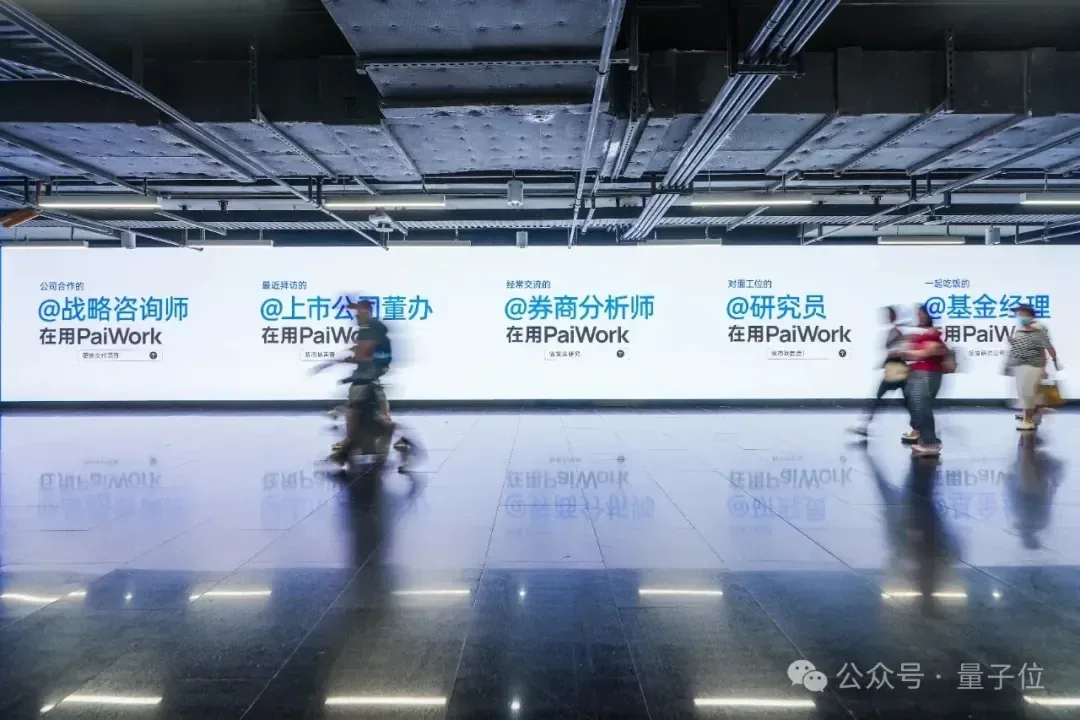
From a product perspective, AlphaPai starts with high-frequency entry points such as meetings and information processing, then moves deeper into core workflows including research and analysis and knowledge accumulation. It now serves more than 120,000 professional users and covers over 8,000 financial and asset management institutions. PaiWork, launched in April 2026, integrates financial data, research tools, office suites, and knowledge bases into a unified environment, enabling AI to move from one-off Q&A into the full investment research process.
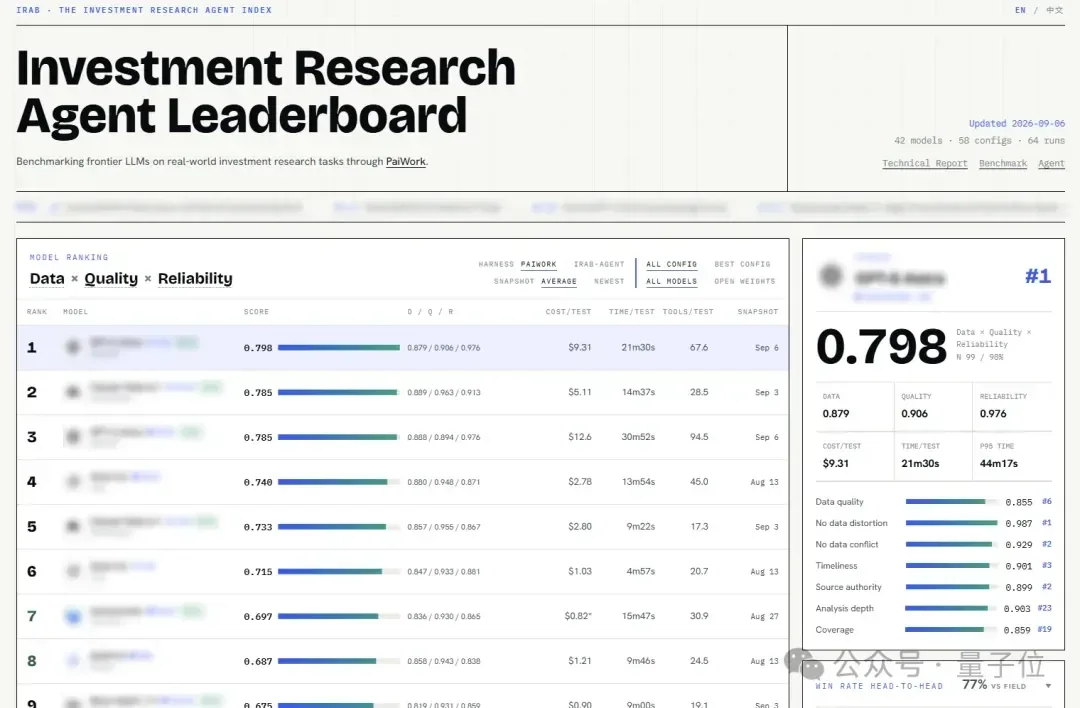
More critical are evaluation and ecosystem. The iRaB real-world investment research evaluation system, launched in June 2026, uses real investment research tasks to test AI’s understanding, analysis, and professional delivery capabilities. The ORE ecosystem plan, launched at the same time, collaborates with more than 40 brokerage research institutes and data service providers around data services, professional content, and industry skills. With workflow, evaluation, and ecosystem now in place, the competitive focus of financial AI is shifting from model capability to deliverable, verifiable system capability.
This aligns with the direction StarWar Cloud is tracking in enterprise AI deployment and the large-model API marketplace: AI for serious scenarios is closer to high-end manufacturing and requires long-term accumulation rather than a single-point breakthrough. By connecting different models and tools through unified access, scheduling them by task, and turning evaluation and reuse into processes, enterprises can move AI from “usable” to “safe to use.” Finance—with its high professional density and strong compliance requirements—is precisely where platform-level capabilities are tested.
From an industry perspective, financial AI sits at the intersection of the “AI Plus” initiative and digital finance. What institutions truly need is not a one-off tool but a work environment that connects data, models, professional judgment, and compliance requirements. This requires vendors to understand both models and business processes and to be willing to keep refining solutions through real-world feedback.
Funding is only an accelerator. What determines long-term position is the ability to continuously deliver in real workflows. As AI moves from Q&A to the full investment research process, the evaluation standard changes from “does it answer convincingly?” to “can the result be used?” This is both the threshold for financial AI and a shared direction for enterprise AI as a whole.