
On November 4, at Baidu’s Business Technology and Ecosystem Partner AI Innovation Exchange, Qingduo 3.0 disclosed a set of figures: cumulative customers served exceeded 150,000, and productivity per employee rose by more than 300%. An on-site case was more specific—iFLYTEK used Image Agent to batch-produce marketing images, with ad delivery performance improving by over 30%.
Those figures rest on an uncomfortable industry fact. Li Tao, operations head of iFLYTEK’s Baidu Advertising Business Unit, said that 82% of advertising creatives have a lifecycle shorter than four days.
Four days. No matter how good the creative is, no one is looking at it after four days. So content must be produced continuously, at scale, and quickly. AI has indeed solved this part.

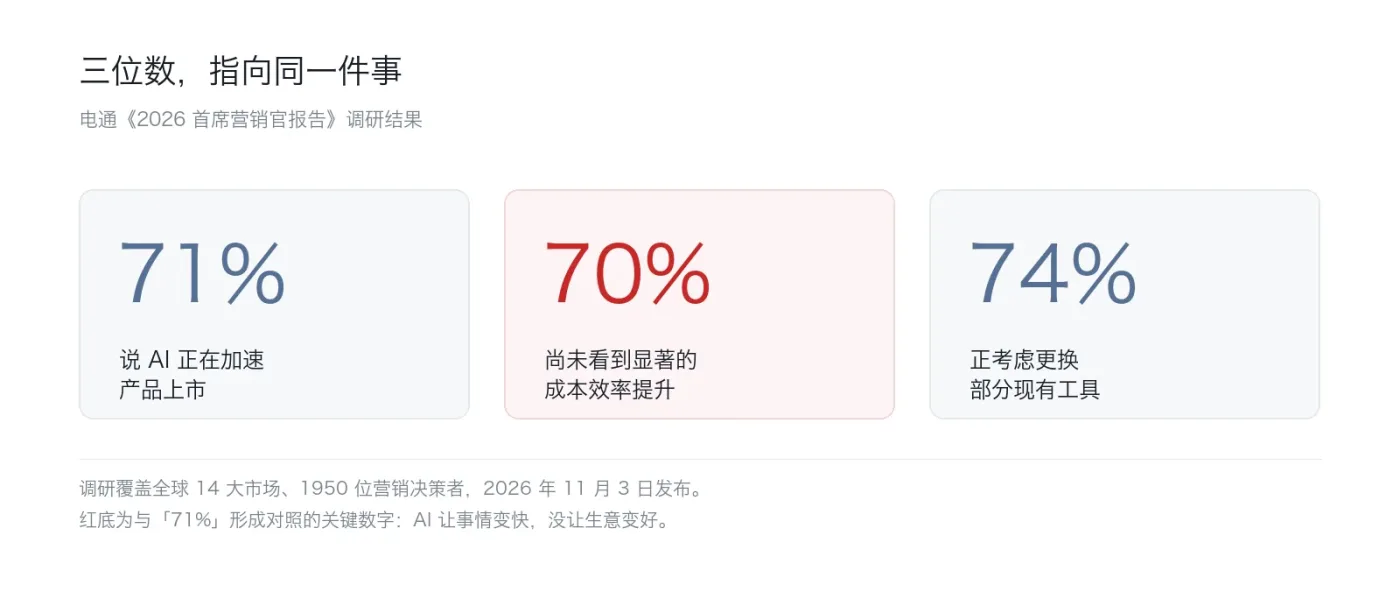
On the same day, Dentsu released its 2026 CMO Report, covering 14 major global markets. Beyond the two figures above, a third is even more noteworthy: 74% of CMOs are considering replacing some of their existing tools.
Tools are replaced batch after batch, yet the problem remains. That suggests most people still have not found where the problem lies.
At WAIE 2026, Ye Quanxin, founder of AI Xingquanke, put it more directly: AI efficiency is not growth; exposure and reach are the starting point of customer acquisition.
Content production sits at the upstream end of the chain. It has sped up, but the downstream has not caught up. After content is published, what happens in that stretch?
Comments, direct messages, forms, and lead registrations are scattered across three or four platforms. Someone asks about price, but no one replies; someone leaves a phone number, but it is seen only the next day; someone views the product page three times, but no one knows who that person is.
How long does it take from a customer message to a response? Zhituo’s official website cites an industry average of three to six hours. During that half-day, the customer has very likely already ordered from another vendor.
There is another layer. On November 3, Xinhua Daily published an article criticizing chaos in AI-generated product recommendations: many recommendation images are generated by AI without labels, and consumers arrive at stores only to find “no such product.” The more content is published, the more trust is consumed when it cannot be captured or matched.
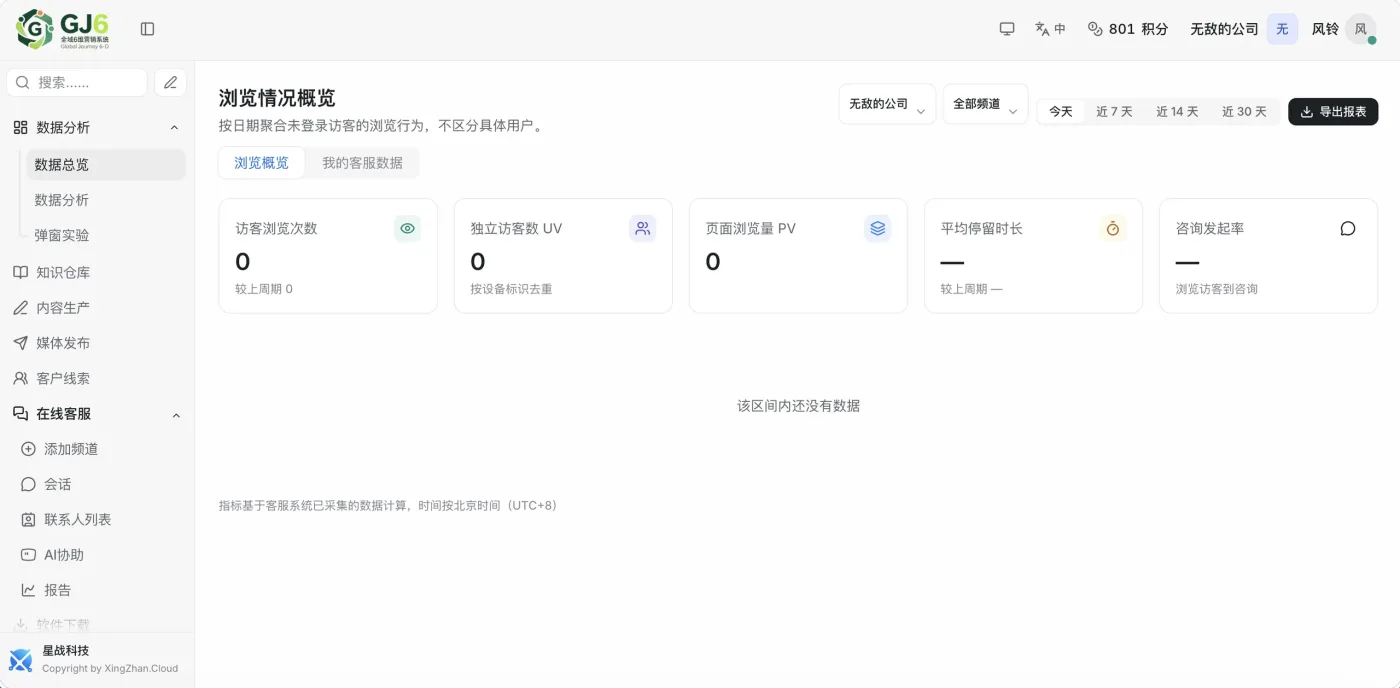
Zhituo GJ6 breaks marketing into six interlocking links: product materials, top-sales scripts, and customer profiles are unified in a knowledge base, enabling new dealers to get up to speed in seven days; content can be generated from a single sentence, with headquarters setting the tone and dealers invoking it with one click; comments, likes, direct messages, and forms are cleaned in real time, identifying high-intent customers in 0.2 seconds and routing them to the relevant dealers.
For brands that operate through dealer or agency businesses, the difference comes down to one place: when headquarters publishes a piece of content, it used to be able to wait only for dealers to report “how many posts were published.” Now it can see which account generated how many leads from that content, who followed up, and whether the deal closed.