
In the first half of 2026, the AI office sector underwent a fundamental shift: tools are no longer content to be "dialog boxes" but are trying to take over complete tasks. Whether writing copy, finishing a report, generating a PowerPoint, or even operating across applications, vendors are moving toward "end-to-end delivery"—users only provide a request, and AI autonomously completes every intermediate step from start to finish, delivering a usable finished product.

T
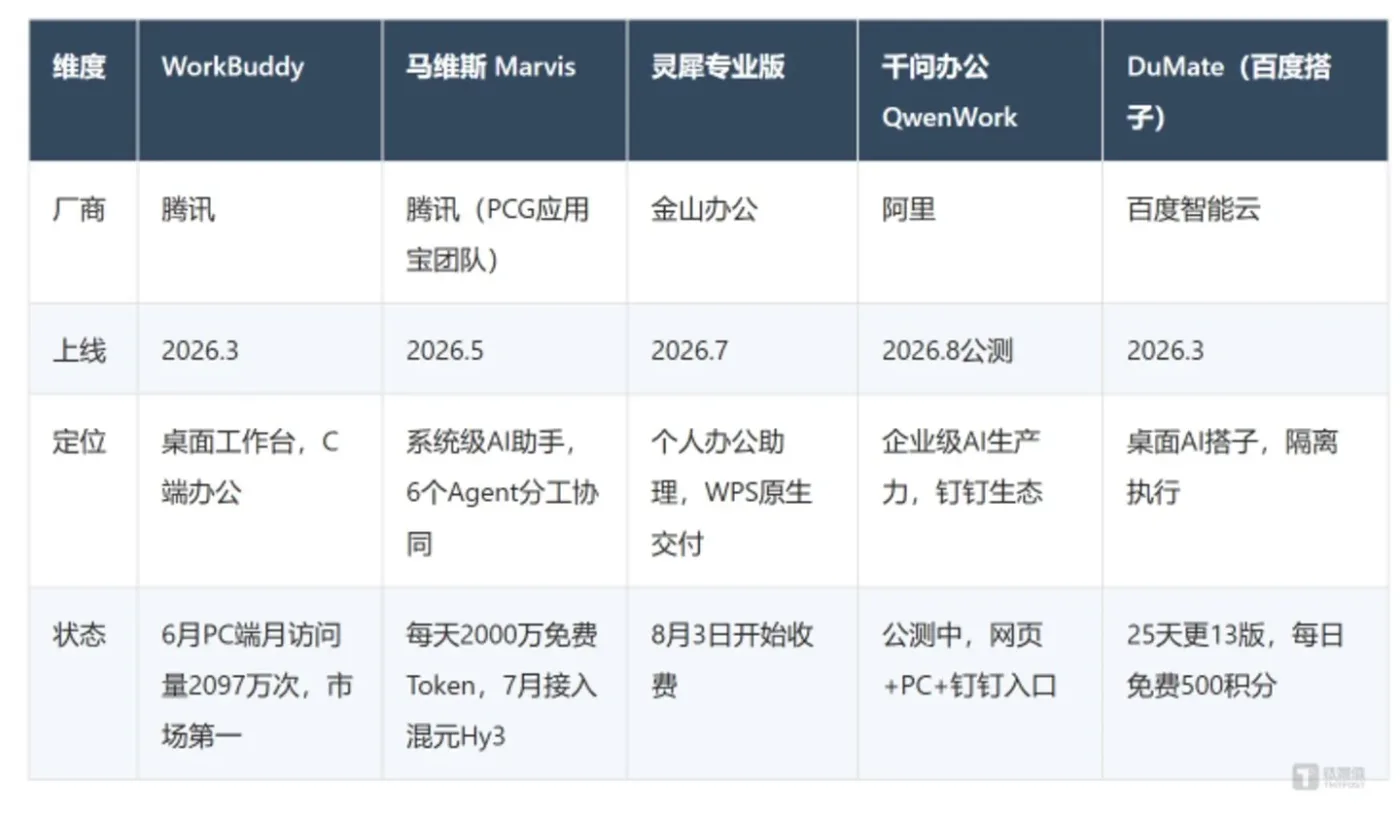
his transition has spawned a wave of new products: in March, Tencent launched WorkBuddy and Baidu introduced DuMate; in May, Tencent PCG launched Mavis; in June, ByteDance upgraded TraeWork; in July, Kingsoft Office launched Lingxi Professional Edition; and in August, Alibaba integrated Qwen Office. At the same time, vendors are rapidly consolidating product lines, with competition shifting to who can first occupy users' daily entry points.
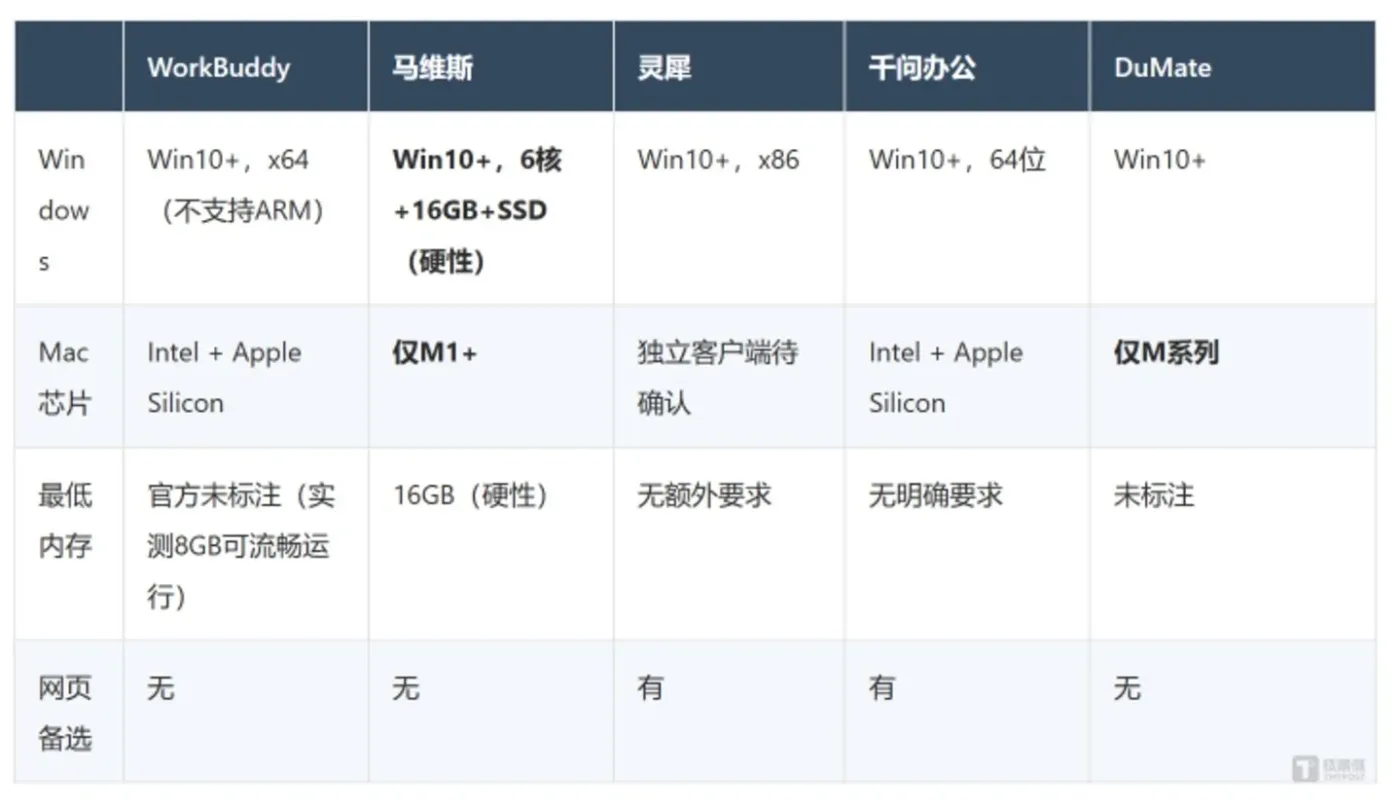
Testing revealed that differences among products far exceeded expectations. Device compatibility is the most easily overlooked prerequisite: Mavis initially had the highest hardware requirements, needing a 6-core CPU and 16GB of RAM; WorkBuddy had the lowest threshold, with no official hard hardware requirement, and in the author's tests, 8GB of RAM was enough