
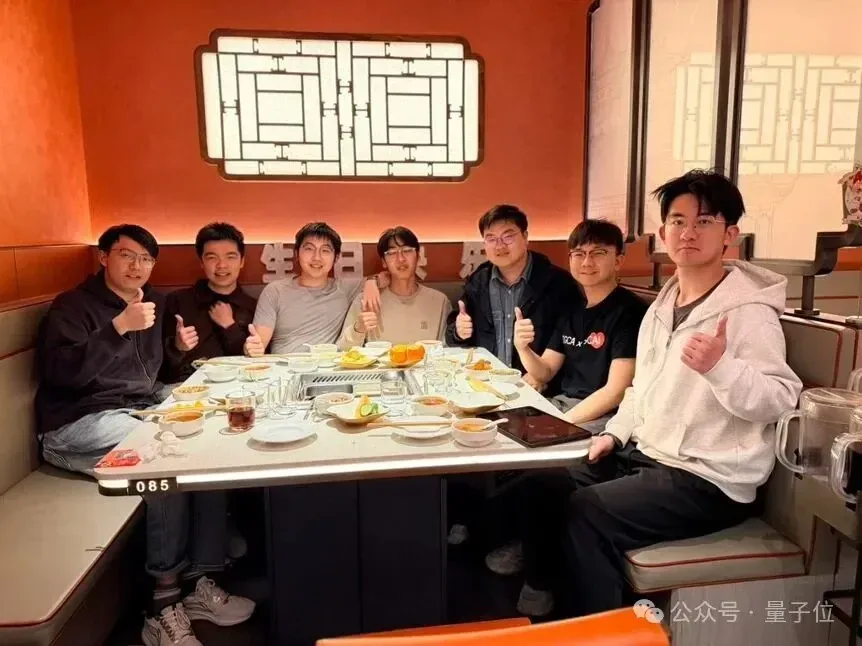
Seven PhD students from Beijing Zhongguancun Academy trained a 7B large language model, ZGCM-1, from scratch in a single summer. They then opened up training data and recipes for each stage, model weights, training code, intermediate checkpoints, and logs, allowing researchers to trace and reproduce the entire process. Across multiple general evaluations, ZGCM-1 performs similarly to same-scale models such as Qwen3-8B, and on some mathematical reasoning and search tasks it can even be compared with larger models.
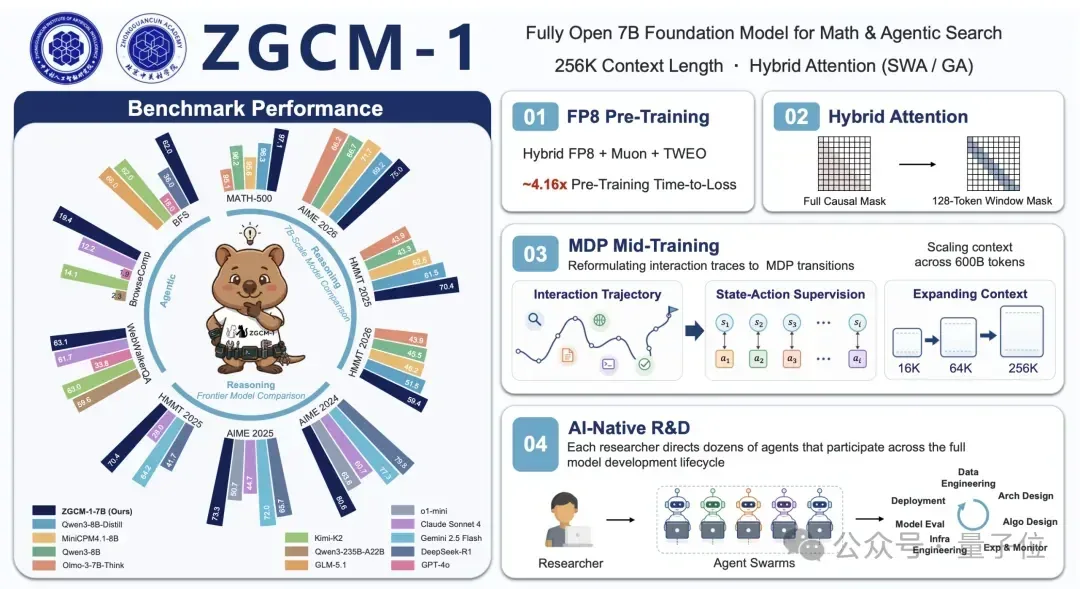
What is more noteworthy than the scores is the method. The full engineering stack—data, training, cluster operations, and evaluation—usually requires hundreds of people collaborating at big tech companies, which seven people could hardly cover. So they built themselves a team of hundreds of agents to work separately on data, run experiments, inspect logs, and conduct evaluations, practicing an “AI4AI” R&D paradigm.
The division of labor was not simple. They gradually formed agent sub-teams for data, experiments, and evaluation, and built a forum-like task publishing and reporting system so tasks could be picked up, progress could be seen, and results could be checked. Their self-developed platform accumulated meeting discussions and R&D decisions into shared context, then distilled validated scripts, workflows, and debugging experience into reusable Skills, so agents joining later could build on prior experience.
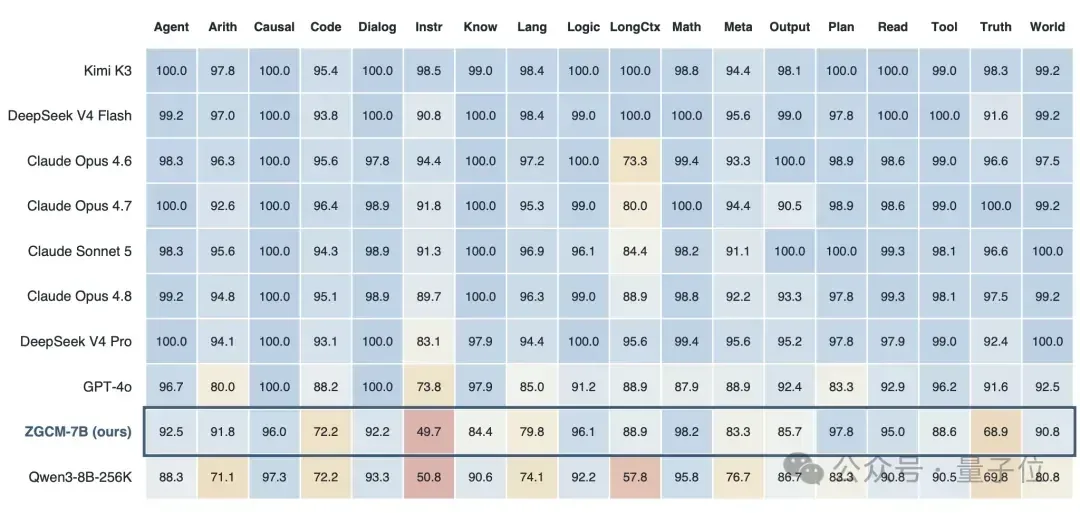
But agents did not make pitfalls disappear automatically. During one training run, loss was still decreasing, yet model capability suddenly regressed. The team eventually traced it to data sharding and shuffling—the actual proportion of data fed into training had fluctuated. After that, they no longer dared to watch loss alone. They switched to saving checkpoints more densely and built an evaluation system that breaks capabilities into 18 categories, 183 items, and 2,503 probes. They also asked core participants to rate agent autonomy using the L1-to-L5 framework: experiment monitoring and deployment reached L4, while model architecture and learning algorithm design remained at L2.
This aligns with the direction StarWar Technology is pursuing on its AI practical training platform and OPC agent collaboration platform: organizing models, agents, tools, and computing power so people and teams can train and validate in real tasks. The value of AI training is not just teaching people to