
Nvidia fired two signals at the end of August. Jensen Huang stated that the Vera Rubin platform could generate more than $40 billion in revenue per gigawatt of deployed capacity, while Nvidia simultaneously announced partnerships with Apollo, Blackstone, BlackRock, and others to channel up to $500 billion into AI infrastructure projects. On the same day, Anthropic signed a $35 billion cloud computing agreement. Combined with the earlier Nscale deal, Nvidia's cumulative compute commitments for August alone reached $80 billion.
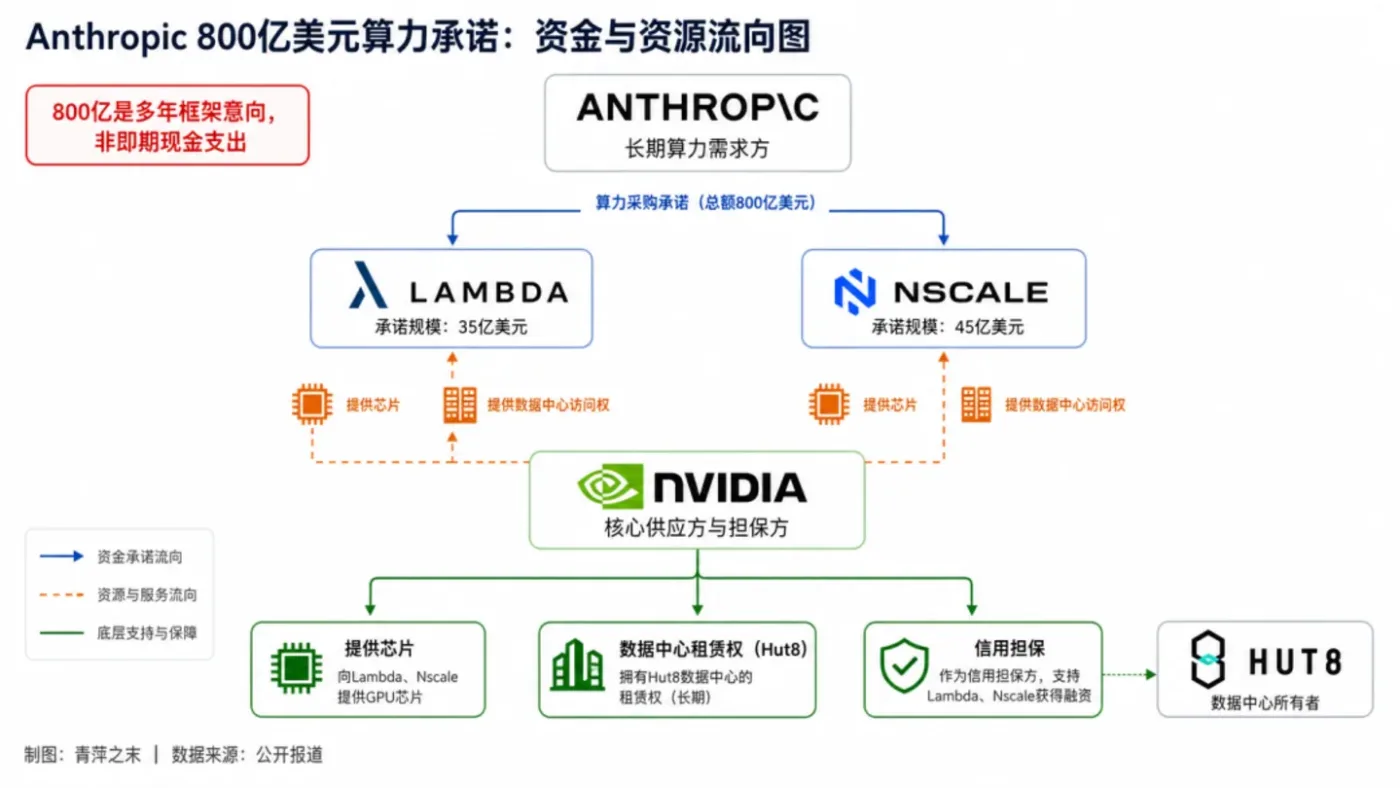
That $80 billion, however, represents multi-year framework intent rather than immediate cash outlay. The transaction architecture is deliberately intricate: Nvidia first signs a lease with Hut8 to lock in computing capacity at a Texas data center, and Lambda then uses that facility to deliver cloud services to Anthropic. Nvidia never contracts directly with Anthropic — the intermediary layer of Lambda preserves a carefully managed formal distance between the two.
Nvidia is undergoing an identity shift: from chip vendor to market maker of the AI compute ecosystem. Huang's confidence does not rest on financial leverage but on the technological generation gap delivered by Vera Rubin — a platform Nvidia claims can cut per-token inference costs by 35x. Leveraging an absolute technological lead to offset the endemic risks of high financial leverage is what truly underpins this compute playbook.
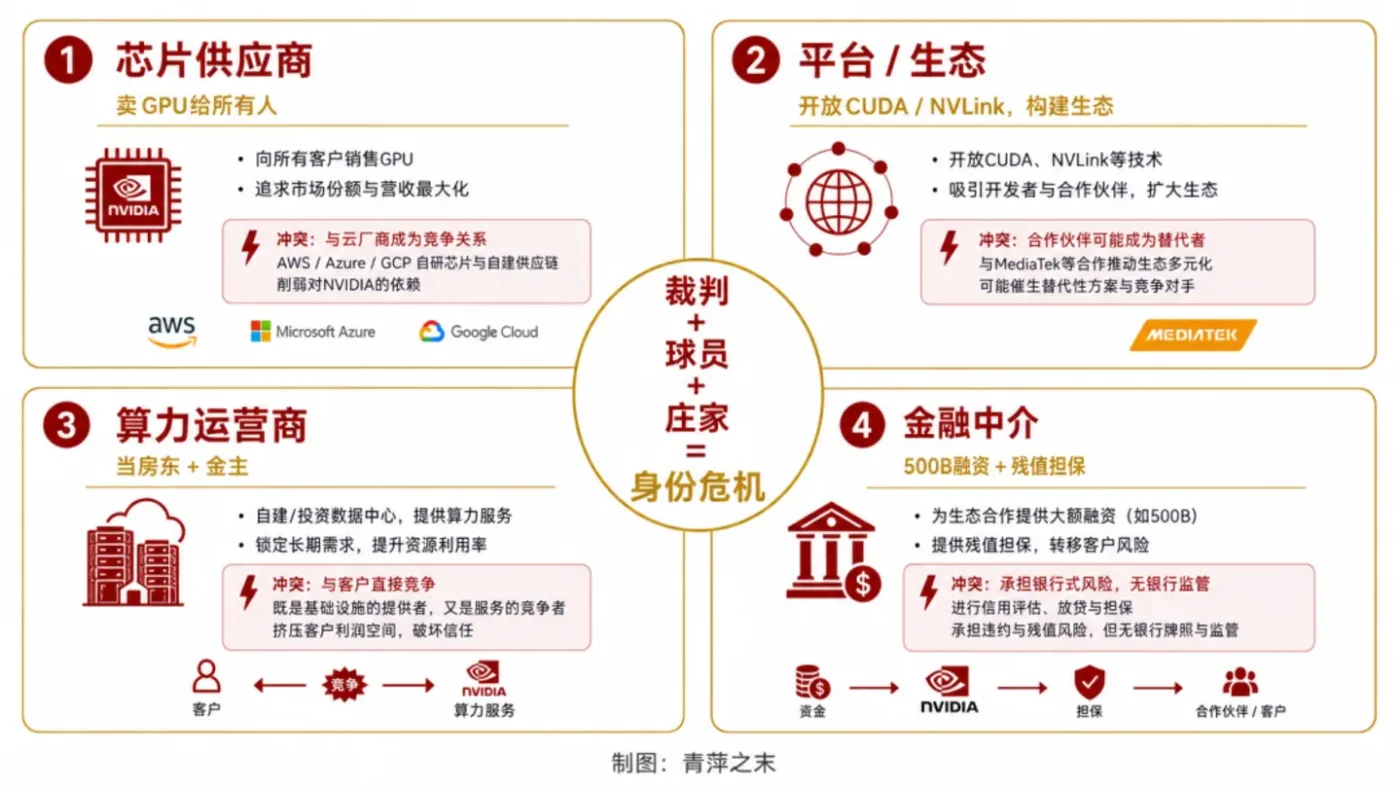
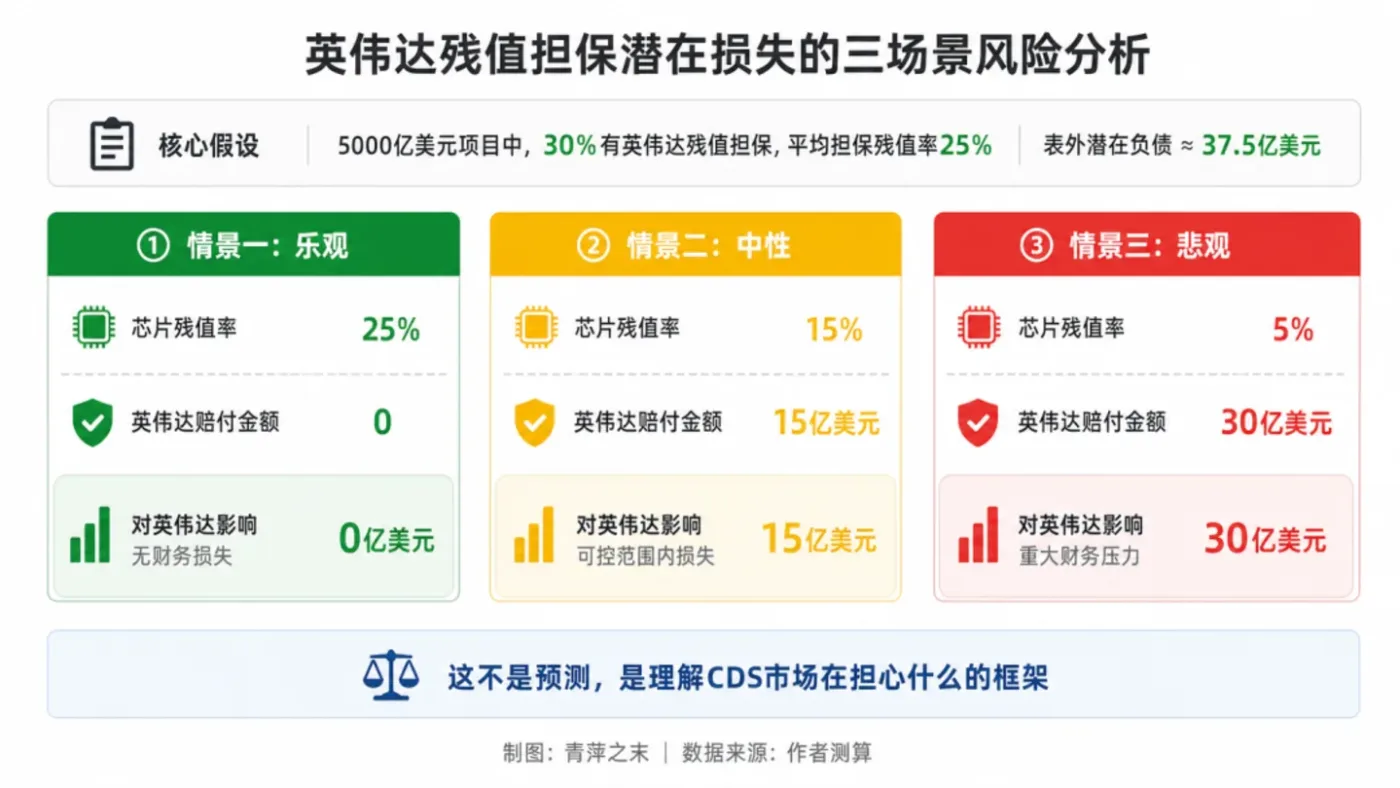
Hidden behind the leverage is a system of hedges. Residual value guarantees mean that if downstream players collapse, Nvidia becomes the buyer of last resort at the end of the chain. Lenders require repayment within three to five years, yet chip value approaches zero beyond that window — making depreciation another proverbial straw on the camel's back. The "compute loan" structure keeps heavy physical assets on cloud providers' balance sheets while Nvidia walks away with cash, pushing risk progressively down the chain.
The financialization of computing power is shifting the market from "on-demand rental" to "asset-based operation," and for downstream enterprises, the pricing and availability of compute supply are becoming far more complex. StarWar Cloud is concentrating on GPU compute platforms and compute scheduling orchestration precisely to help businesses hedge the cost risk of relying on any single procurement path — using scheduling efficiency and multi-source access to stay resilient amid volatile compute pricing.
The ecosystem rivalry is also intensifying. Hut8 is simultaneously building data centers for Anthropic that will run Google TPUs — a clear signal that customers are not betting their entire future on Nvidia. Meanwhile, the EU's Digital Markets Act, a U.S. Department of Justice review, and China's State Administration for Market Regulation are all applying simultaneous pressure. Whether the compute Nvidia leases out becomes, in effect, leased-away customers remains the biggest open question hanging over this model.