
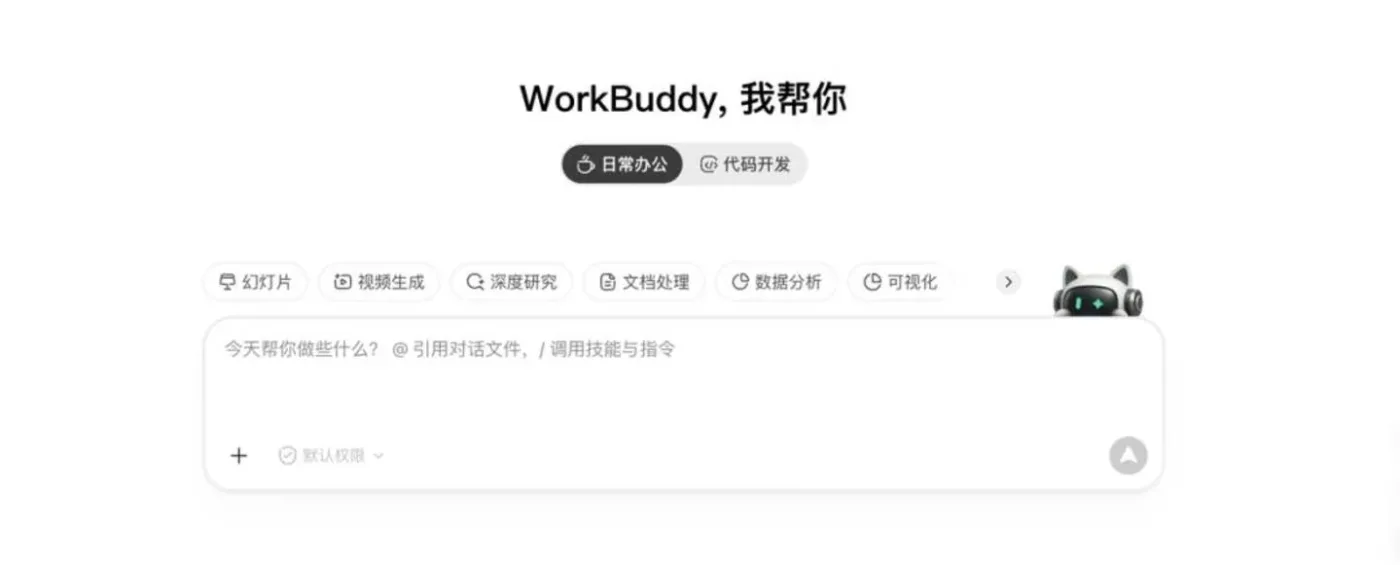
In 2026, the AI industry suddenly fell in love with one word: Work. Overseas, OpenAI launched ChatGPT Work and Anthropic introduced Claude Cowork. In China, Tencent rolled out WorkBuddy, Alibaba consolidated three products into Qianwen Office, ByteDance launched Doubao Work, Baidu introduced Dazi, and Kingsoft released Lingxi alongside WPS Comate. An all-out AI office war has erupted, and the table is crowded with players.
AI office technology has evolved through three distinct phases: AI-generated content, AI embedded into software, and Agent takeover of tasks. The defining shift in 2026 is that AI no longer emphasizes "helping you write"—it emphasizes "helping you get it done." You tell the AI to research the market, analyze the competitive landscape, and produce a 15-slide PPT. It searches, reads, runs code, generates charts, and finally delivers a file you can open, edit, and take straight into a meeting. The smallest unit of AI work has moved from "a single answer" to "a complete task."
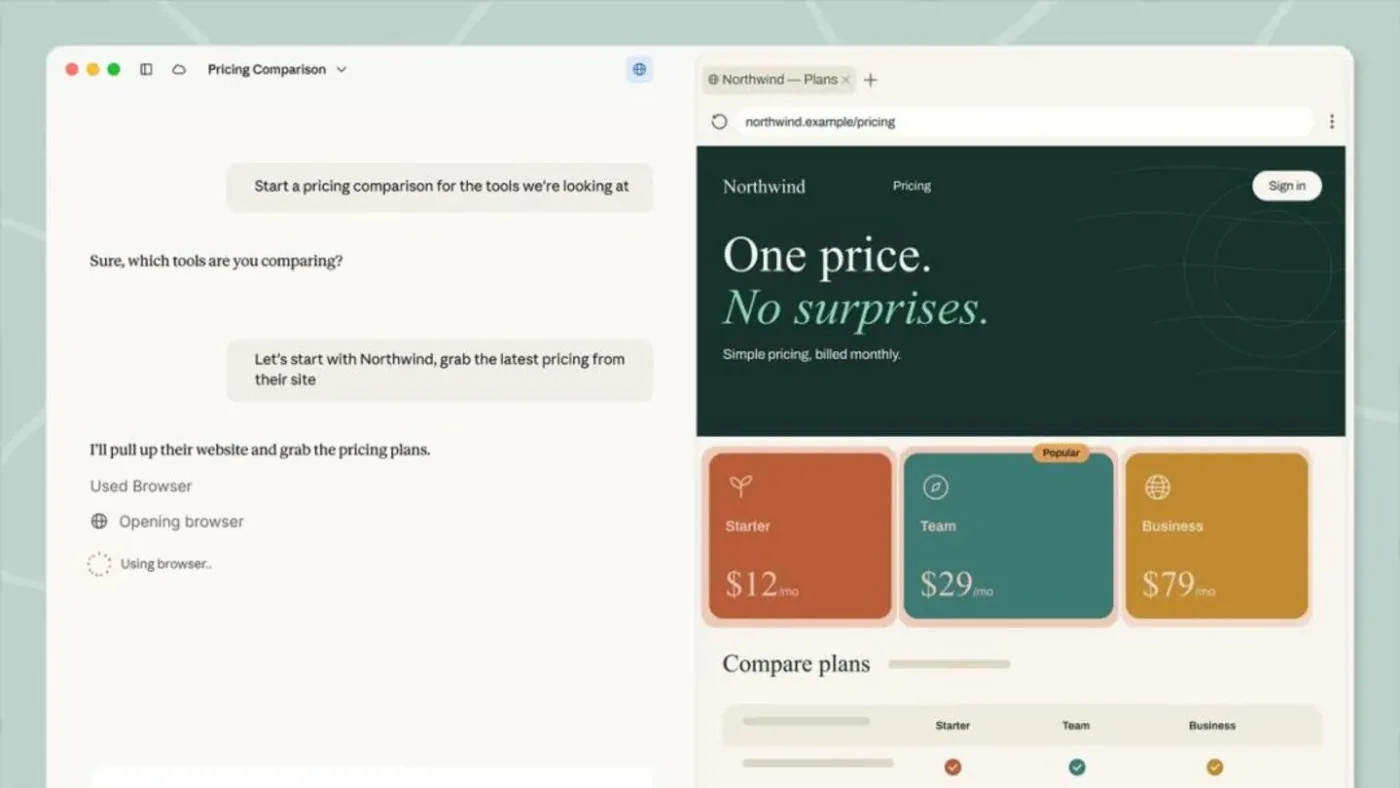
Much of this new wave of AI office capability is spilling over from Coding Agents: Claude Cowork inherits the Agent architecture of Claude Code, while Kimi Work migrates Agent capabilities validated in engineering scenarios to knowledge workers. That's because writing code and putting together a complex report are increasingly similar problems—both require understanding objectives, breaking down tasks, using tools, and continuously verifying results across dozens of steps until completion.
What the tech giants are really competing for isn't just a new office software market—it's who becomes the first gateway for delegating work to AI. But once AI enters the enterprise, the rules of the game change completely. Agents start querying sales databases, reading contracts, and modifying CRM systems. The cost of an error is no longer just a poorly written paragraph. What enterprises need isn't a smarter system—it's one that is controllable, reliable, and auditable.
Anthropic introduced the concept of "blast radius" as a warning for Agent safety: the more powerful an Agent becomes and the more system permissions it gains, the wider the potential impact when something goes wrong. What enterprises ultimately purchase is a system that can reliably execute tasks within defined enterprise permission boundaries—a direction consistent with StarWar Technology's emphasis on permission control and audit traceability in its OPC intelligent Agent collaboration platform.
Kingsoft's example offers another lesson: models can be licensed and search capabilities can be bought, but a mature document kernel, a format compatibility system, and decades of accumulated Office engineering expertise are nearly impossible to rebuild in just two or three years. What determines the endgame are the assets models can't touch: files, work habits, enterprise data and permissions, and real business workflows.
AI office is a genuine need, but "AI office" may not remain a standalone product category for long. As AI truly embeds itself into every piece of software and every workflow, the competition is over who has the right to become the execution layer between humans and the digital world. When the dust settles, the victor may not be decided by AI at all—but by whoever sits closest to the work itself.