
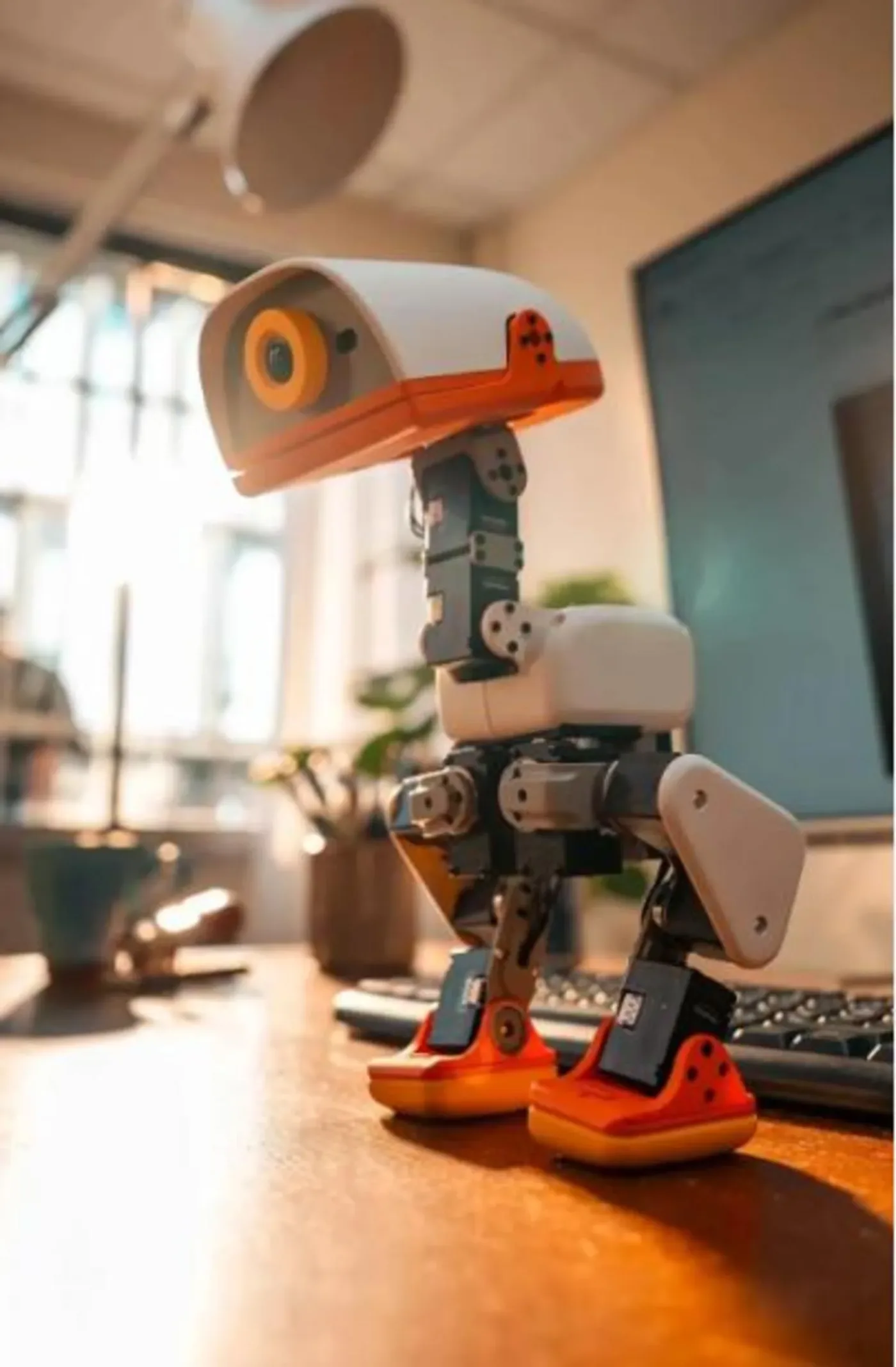
On August 27, 2026, AI open-source community Hugging Face, together with Pollen Robotics—the French robotics company it acquired—released Microduck, a bipedal robot duck priced at $399, standing 25cm tall and weighing under 800 grams. Within six hours of pre-orders opening, sales surpassed $1 million; within 24 hours, cumulative orders exceeded $2.6 million, translating to more than 5,000 units. At peak demand, one duck sold every four seconds.
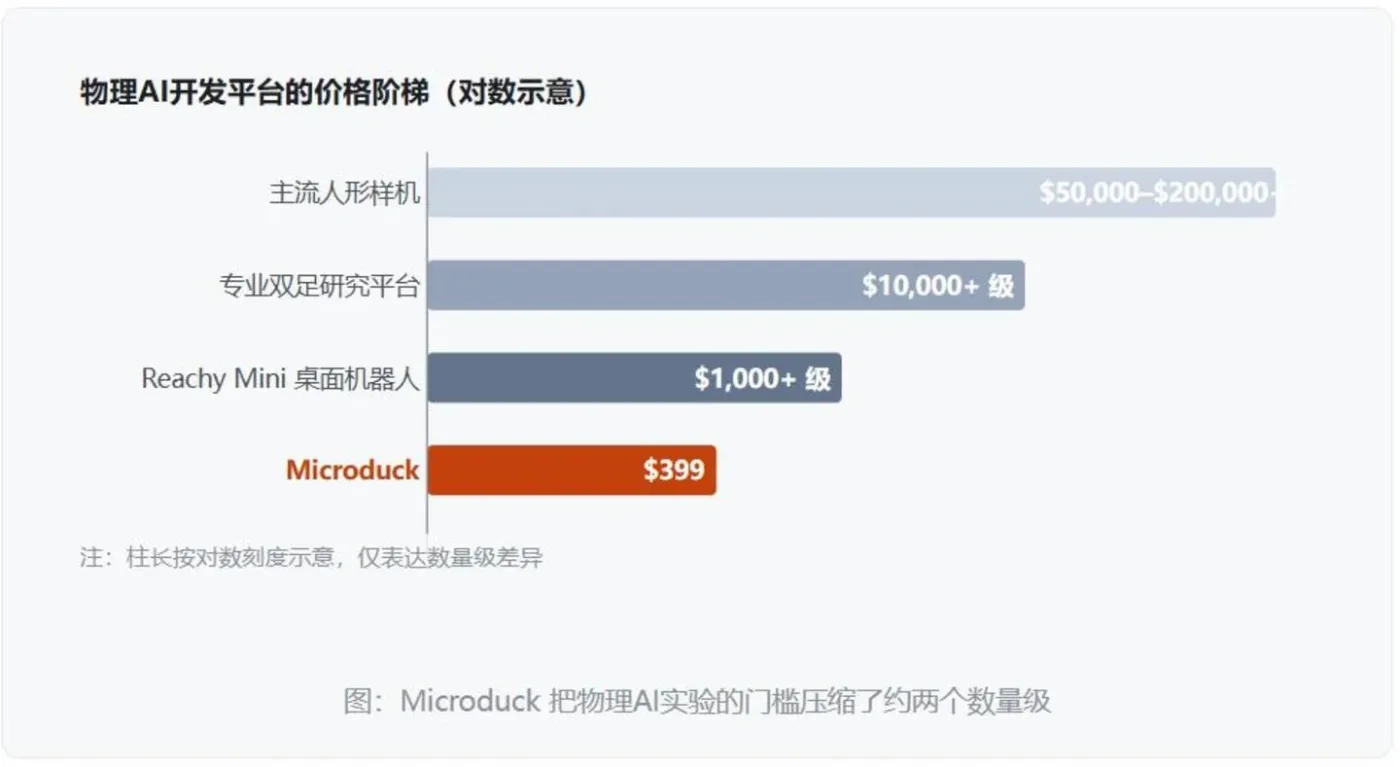
The market frenzy around this duck points to a truth long buried by pricing: previously, conducting real-world validation for bipedal robot reinforcement learning and world models required professional prototypes costing tens of thousands of dollars—putting hands-on experimentation out of reach for ordinary developers and student teams. At $399, the complete "simulation-to-real machine" loop has been compressed to roughly the price of a flagship smartphone for the first time.
Behind this lies the systemic strength of China's hardware supply chain. According to media reports, Microduck is manufactured in full by an open-source hardware vendor in Shenzhen—the same OEM that previously produced Hugging Face's desktop robot. The persistent pain points of overseas open-source robotics projects—exorbitant low-volume tooling costs, soaring servo motor and sensor procurement prices—are being systematically flattened by the Chinese supply chain.
The deeper signal is a shift in distribution model. Microduck launched without a barrage of advertising; what ignited it was the sharing, teardowns, and derivative works of the global developer community. Hugging Face has transplanted the playbook proven in AI software—the "open-source community plus developer ecosystem" model—directly onto hardware. Customer acquisition costs approach zero. Users become the channel, the content, and the R&D team.
The breakout of a robot duck pulls embodied AI competition away from the "bigger, faster, stronger" hardware arms race and back toward developer ecosystems and training accessibility. When physical-world training becomes cheap and attainable, the next wave of embodied AI innovation is likely to emerge from countless small-scale experiments by individual developers. This surge in training demand also imposes new requirements on compute and simulation-to-real training platforms—StarWar Cloud's strategic positioning in the AI training infrastructure space is precisely aimed at this developer-grade demand.
To be clear, a robot duck is not a humanoid robot. Its significance lies more in lowering the barrier to learning and validation than in replacing industrial hardware. But history has repeatedly shown that every time the barrier drops, the density of industry innovation leaps forward—that is the underlying logic of Cambrian-explosion-style breakthroughs.
The narrative around embodied AI adoption is changing: innovation is no longer confined to the lavish laboratories of tech giants; increasingly, it lives in small teams within open-source communities. One duck may just have changed the pace of exploration for an entire industry.