
At the QCon Global Software Development Conference 2026 Beijing, Qian Shijun delivered a presentation titled "Giving Agents a 'CT Scan': Observability and Quality Assurance for Large-Scale Agents," detailing the engineering practices behind building a unified observability foundation and achieving white-box tracing across the entire agent call chain.
Unlike traditional deterministic microservices, agents autonomously plan tasks, invoke external tools, and accumulate memory and knowledge bases. While this represents a leap in capability, it also makes fault diagnosis extremely difficult—slower responses, error feedback, and even hallucinated self-talk unrelated to the input are nearly impossible to trace back to internal decision processes using conventional logging. Compounding the problem is cost: a single misaligned orchestration step can trigger massive cascades of large language model API calls in a very short time, sending token consumption soaring exponentially.
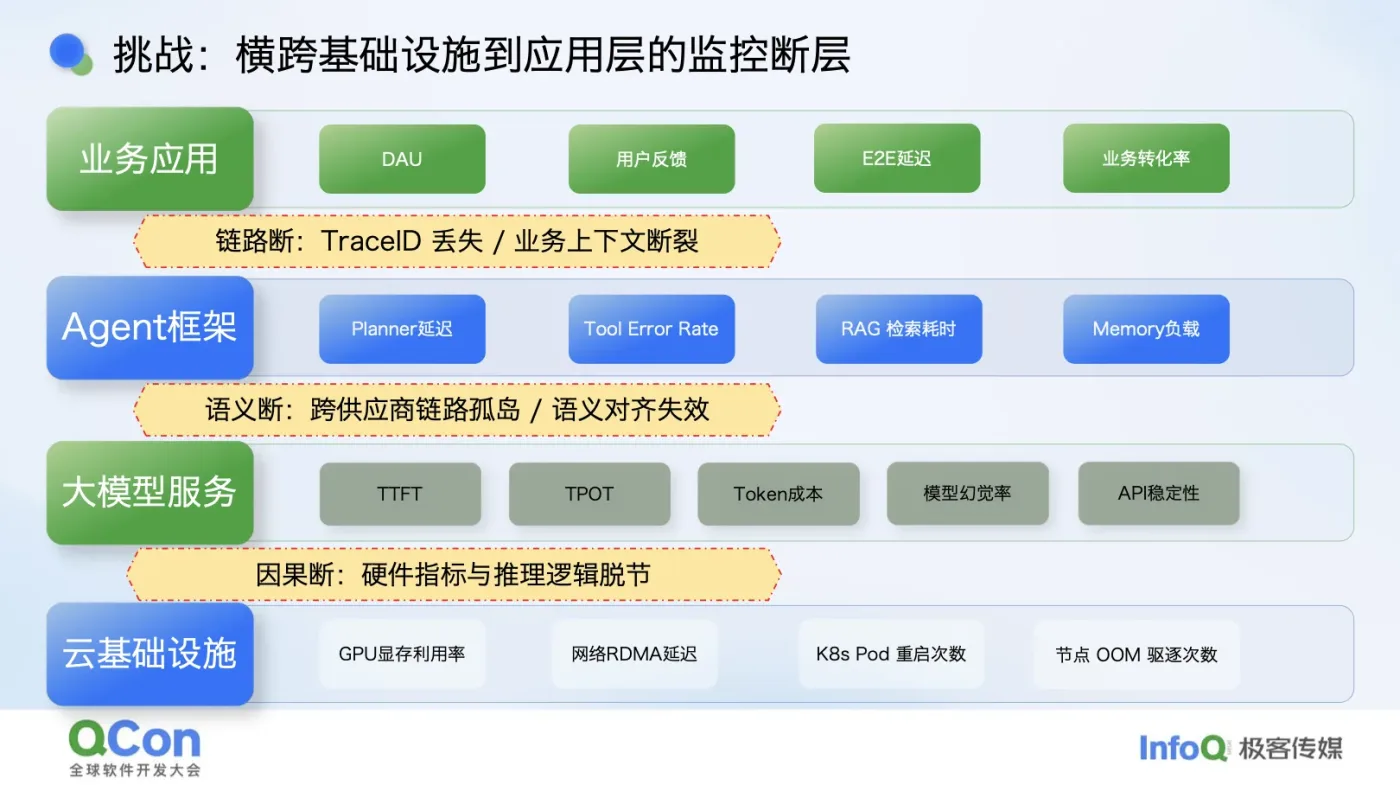
Qian categorized the observability challenges of agent systems into three dimensions: fundamental differences from traditional microservices, the opacity of internal decision-making, and the loss of deterministic cost control. He proposed a "CT system" approach that allows developers to see every step of an agent's decision trajectory from input to output, addressing three core questions—visibility, explainability, and actionability—to form a closed-loop improvement path.
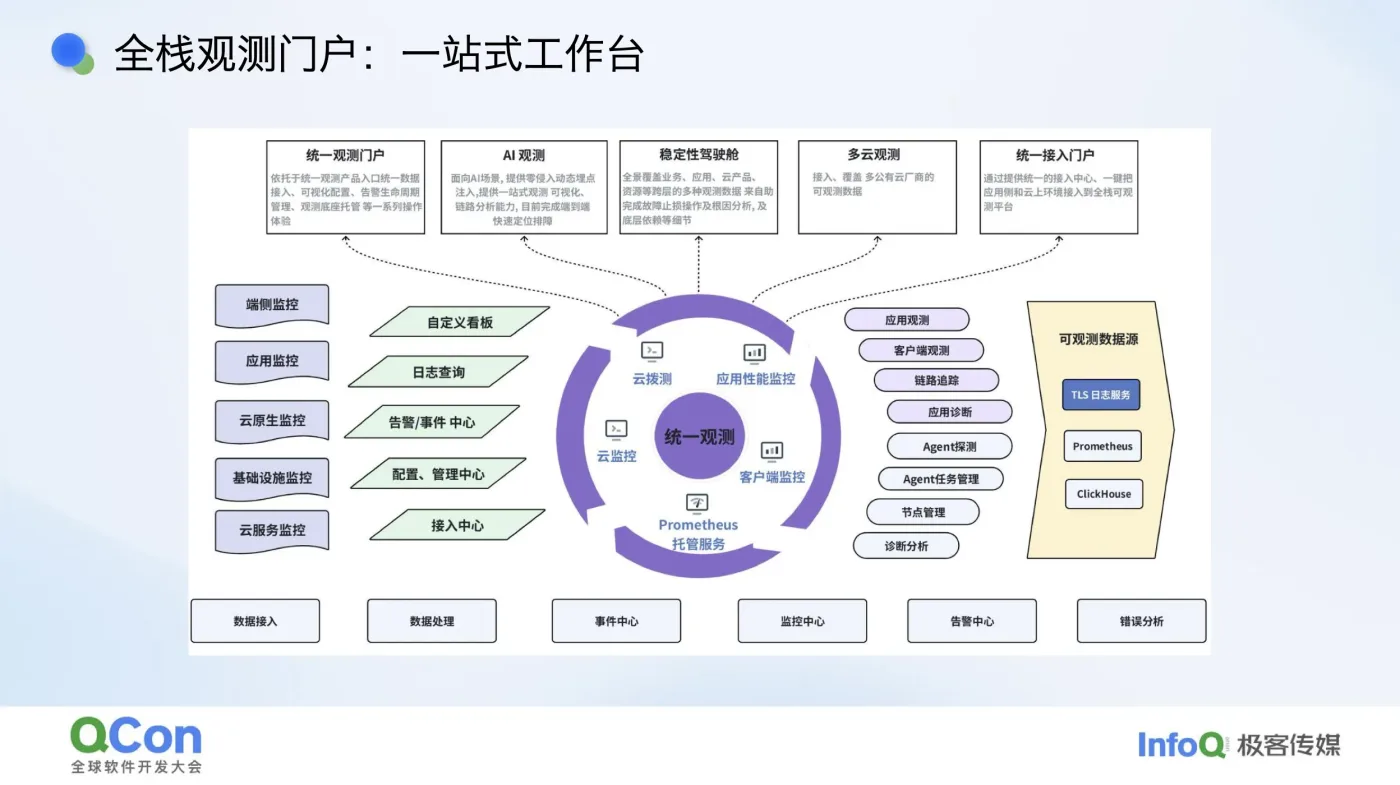
From an architectural perspective, agent systems span four layers from top to bottom: the business application layer, the agent framework layer, the LLM inference service layer, and the cloud infrastructure layer. Observability data from these four layers is scattered across different systems. Connecting this data into an end-to-end trace requires a unified observability foundation that spans infrastructure to business semantics—currently the most significant challenge in observability engineering.
Agent observability and quality assurance are, at their core, about managing uncertainty. For enterprises to bring agents into production, they cannot focus solely on model performance; they must also understand what the agent is doing at each step, why it makes those decisions, and how much compute is being consumed. This aligns closely with the engineering-first, controllability-focused philosophy of the StarWar Technology OPC Agent Collaboration Platform, whose value lies in making complex multi-agent collaboration processes observable, manageable, and optimizable.
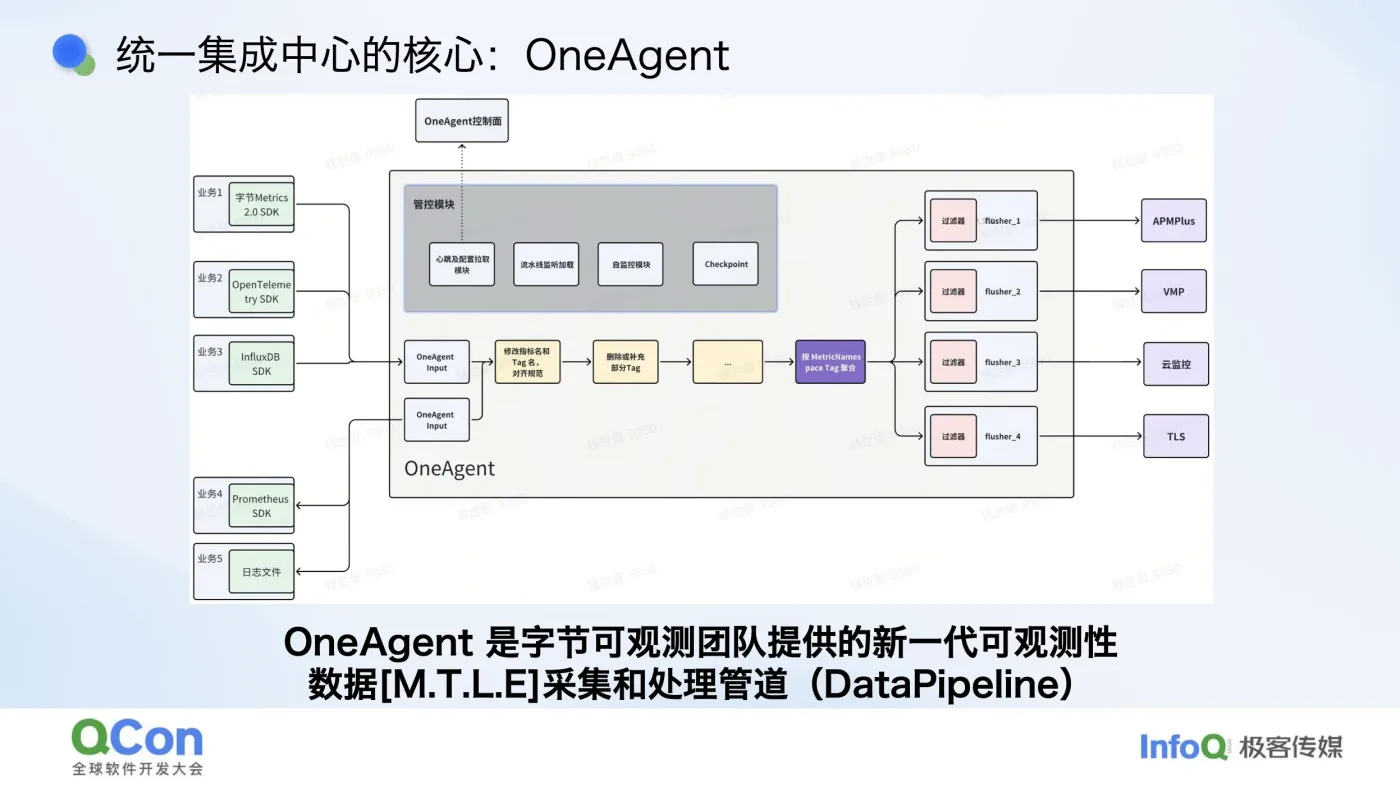
A clear industry trend is emerging: agent observability is shifting from a "nice-to-have" to a "must-have." Industries with strict compliance and stability requirements—such as finance, government, and manufacturing—especially need to demonstrate that agent operations are auditable and that outcomes are explainable. It is foreseeable that monitoring, logging, traceability, and cost management tools built specifically for AI agents will form a rapidly growing market segment.
From proof-of-concept to production scale, agents need more than stronger models—they need an engineering system that makes them visible, controllable, and tunable. Giving agents a "CT scan" may seem like an operations concern, but it is in fact an essential lesson for agents to achieve production-grade maturity.