
For the past week, AI developers worldwide have been chasing the same question: which lab is behind Ox Alpha, the anonymous model that suddenly appeared on OpenRouter? With no developer attribution, parameter disclosure, or technical report, it still rocketed up the platform's trending ranks within days, fueled by standout results in code generation, complex reasoning, and long-horizon agent tasks. The answer came last night: Ox Alpha is GLM-5.3-Flash, Zhipu's newest model.
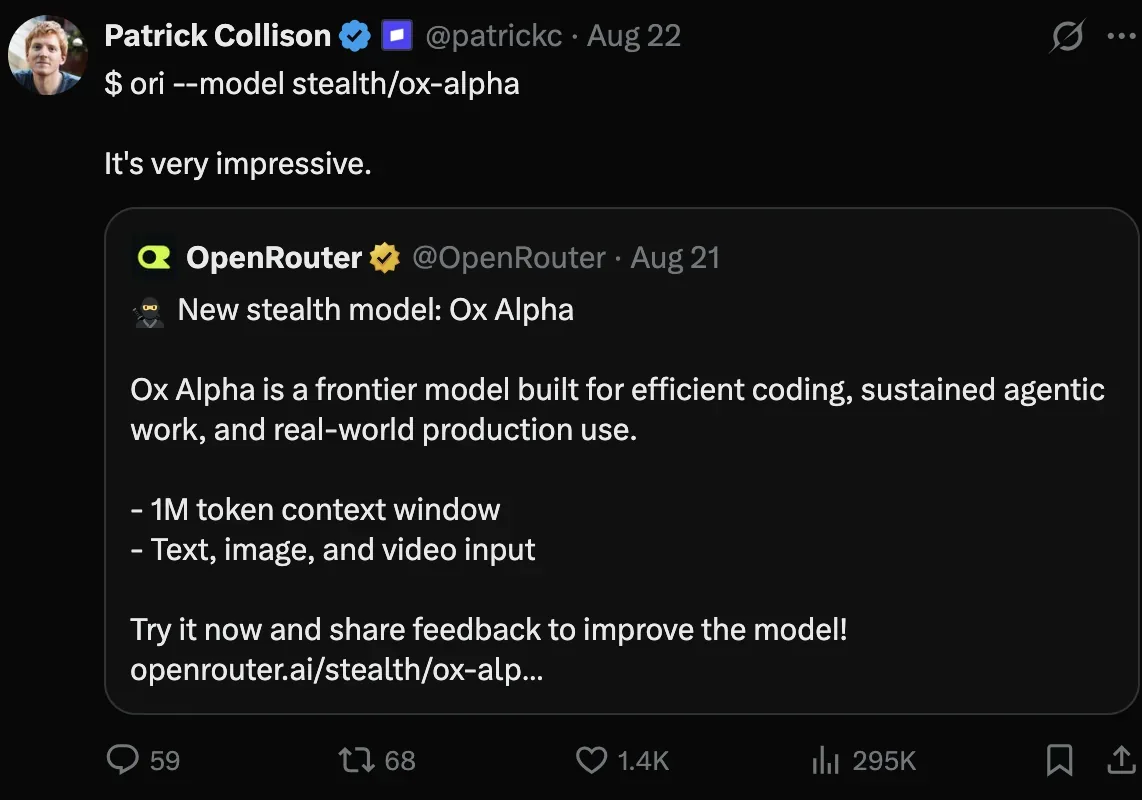
Ox Alpha first went live anonymously on OpenRouter on August 20, offering a 1.04 million-token context window and temporarily free access to all users. This near-unlimited free testing model drew in a flood of real-world users within days. Stripe co-founder Patrick Collison described his experience as "very impressive," and many developers noticed that its ability to grasp large-scale codebases and sequentially invoke tools was far beyond what a typical low-cost model should deliver.
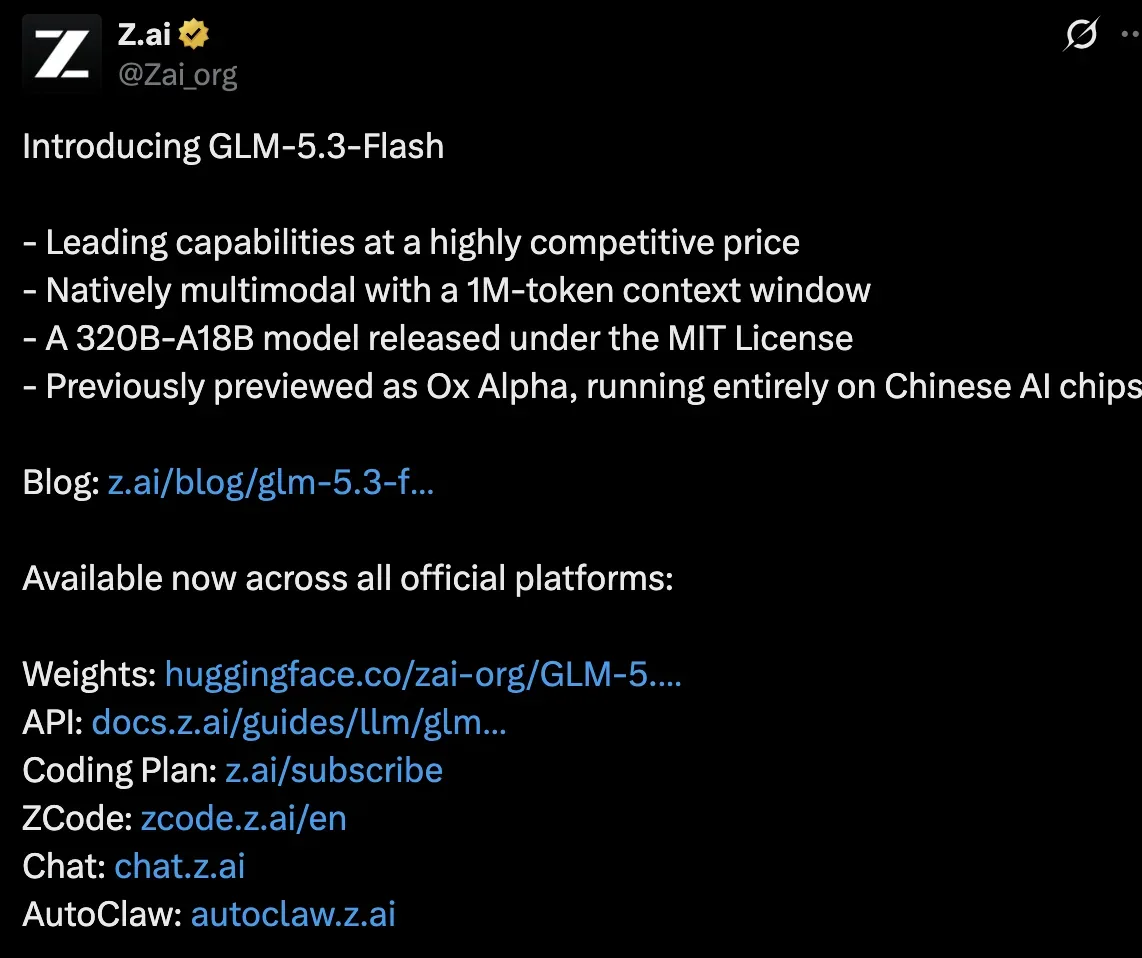
The anonymous debut functioned as a massive public blind test: hide the vendor and model name, let developers score results purely on merit, then unveil the identity and technical specs. Compared with publishing benchmark scores outright, this tactic reduces brand bias in evaluations while gathering far greater real-world load and user feedback ahead of an official release. Zhipu previously adopted the same strategy with Pony Alpha.
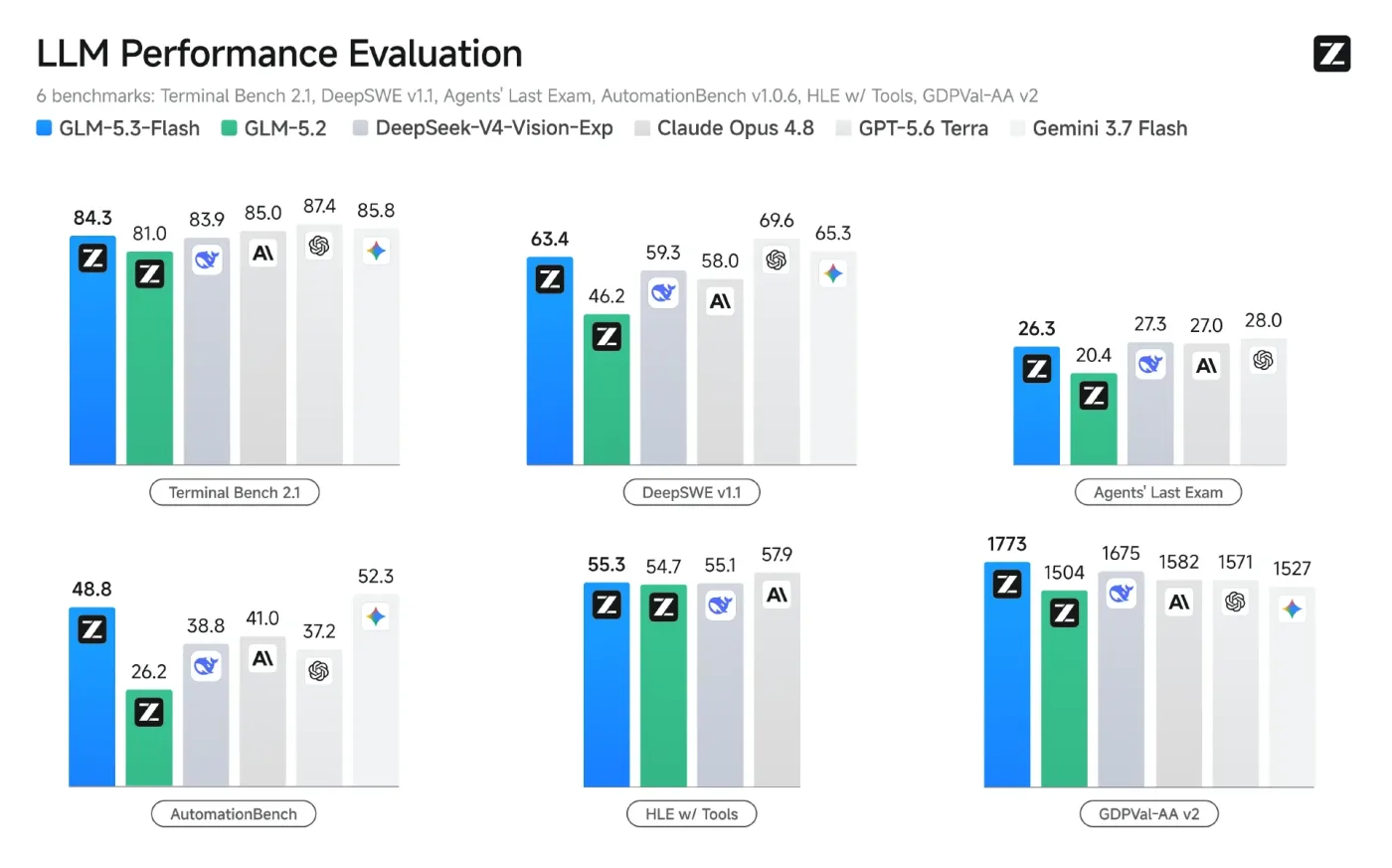
GLM-5.3-Flash is a Mixture-of-Experts architecture with 320 billion total parameters, activating roughly 18 billion per token processed. Against the GLM-4.5 series, active parameters have been cut from 32 billion to 18 billion, and model depth reduced from 92 layers to 45. The design philosophy is clear: retain near-frontier capability with far less actual computation, striking a careful balance between model performance, inference speed, and deployment cost — which is precisely what the "Flash" moniker implies.
Most significantly, all traffic generated during the anonymous testing period was carried by a large-scale cluster deployed on domestic AI chips. Domestic chips successfully absorbing massive public-test traffic for a flagship model signals that China's homegrown computing power has crossed the threshold from "workable" to "production-grade under real load." For the industry, that is a more compelling proof point than any benchmark number — and it underscores the growing synergy between domestic hardware and domestic models, a direction that aligns closely with StarWar Cloud's mission to advance domestic computing power adoption and power the LLM API ecosystem.
From an industry standpoint, the "blind test plus free access" release model is emerging as a fresh playbook for model vendors seeking authentic user feedback and rigorous engineering validation. What it tests goes beyond model quality to the stability and cost discipline of the inference cluster itself — absorbing massive concurrent traffic is, in essence, a real-world stress test.
The global buzz around an unnamed model reflects a deeper shift: overseas developers are reassessing the progress of China's domestic large language models. Beyond raw capability, inference cost, domestic computing power support, and ecosystem readiness are now the factors that will decide how far a model can truly go.