
Embodied intelligence is experiencing an explosive growth phase, yet the underlying landscape suffers from a severe "structural mismatch": developers are trapped behind steep hardware barriers with code that cannot be reused across different robot platforms; hardware manufacturers are forced into complex custom delivery cycles; and customers with real-world scenarios are left waiting for deployable products due to the lack of standardized solutions. Chen Yuqiang, co-founder of FanShi, pointed out that the industry has shifted from "competition on isolated technical capabilities" to "competition on system-level ecosystems."
Progress on the co-building front has been remarkably rapid. In just two months since its inception, the PhanthyMotus community has attracted developers from leading robotics brands including Unitree, AgiBot, DJI, Zhongqing, CloudMinds, and Leju. The community has accumulated over 600,000 lines of high-quality contributed code, completed adaptation for 15+ mainstream robot platforms, and built a repository of 200+ standardized hardware driver modules—comprehensively covering humanoid robots, quadruped robots, wheeled platforms, robotic arms, and drones. Zero-cost cross-platform algorithm reuse is quickly becoming a reality.
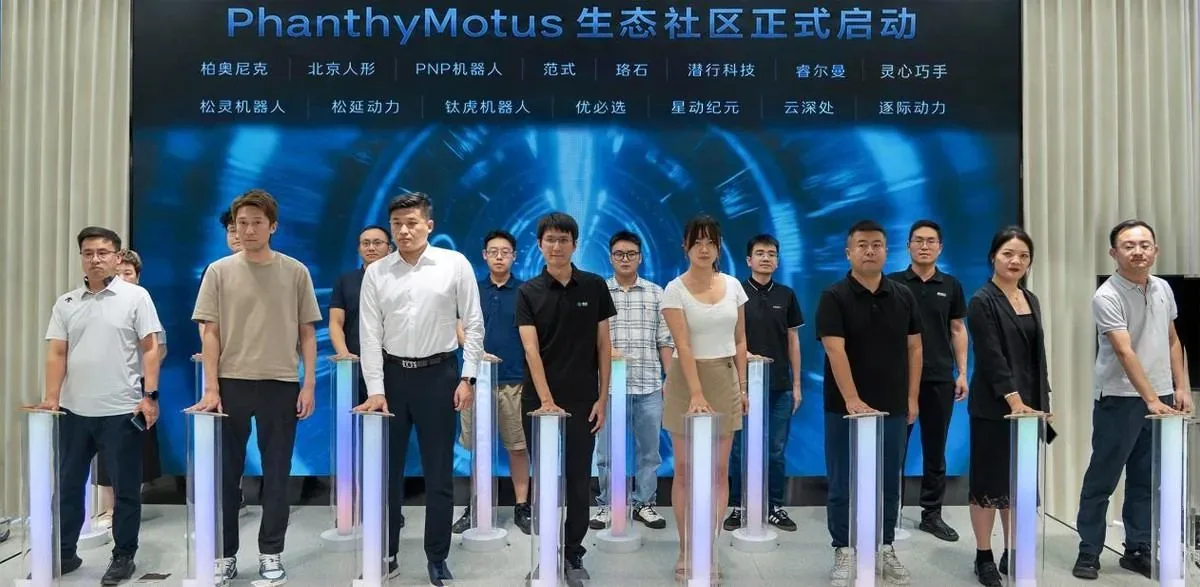
To enable developers to join with "zero barriers to entry," FanShi also unveiled a developer incentive program: full access to a cross-category hardware resource pool, remote debugging support across multiple robot models, and free computing power tokens for code contributors. The roadmap targets adaptation for 50+ robot platforms, expansion to 500+ "big-brain/small-brain" AI algorithms, and the accumulation of 10,000+ community-shared skills by the end of 2026—with the goal of transforming the community into a "skill app store" for the embodied intelligence era.
The large-scale deployment of embodied Agents cannot succeed without a stable, elastically scalable computing power infrastructure. From model training to simulation validation to edge-side inference, every stage imposes demands on computing resource orchestration. StarWar Cloud focuses on GPU computing platforms and intelligent scheduling capabilities, enabling enterprises to manage training and inference tasks under a unified framework with on-demand elastic allocation—freeing embodied AI teams to concentrate on algorithm innovation and scenario development rather than infrastructure management.
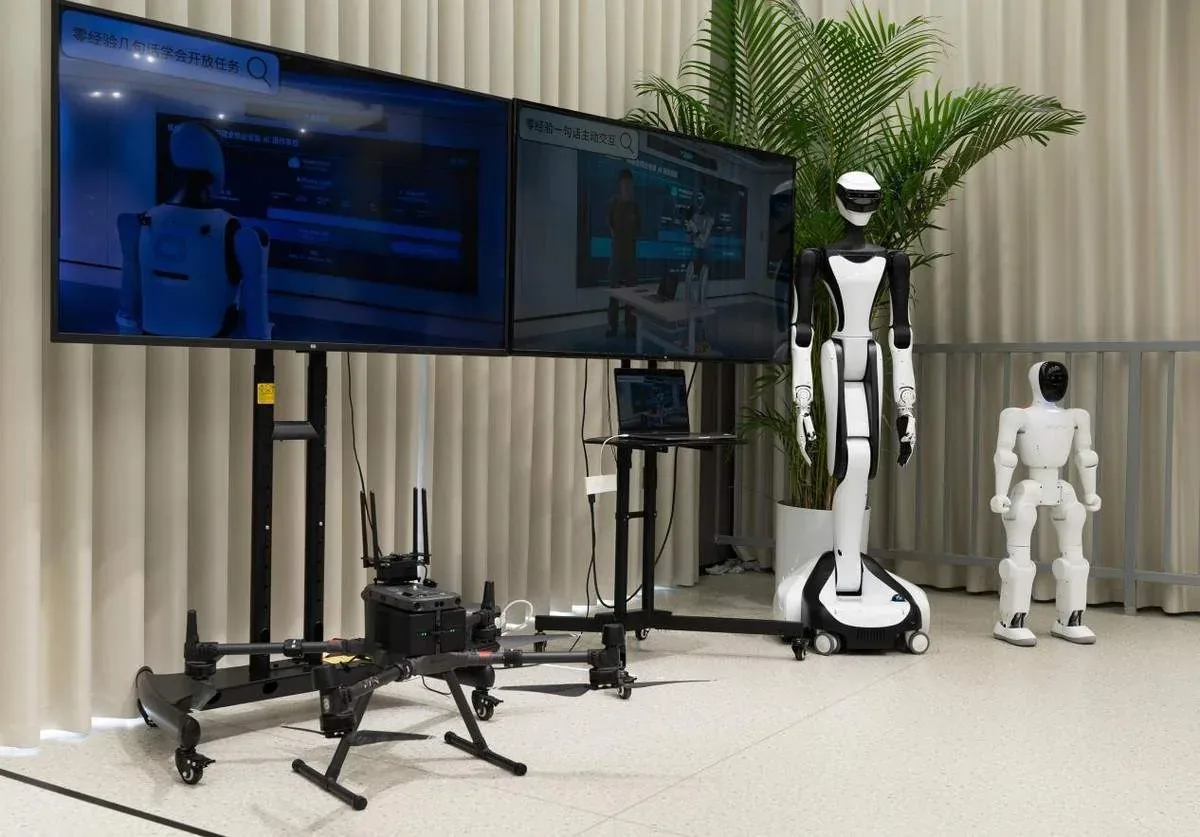
From a broader trend perspective, embodied intelligence is moving from point-by-point technical competition to system-level ecosystem rivalry. The value of a general-purpose middleware foundation lies in its ability to interconnect and decouple hardware, algorithms, and application scenarios, allowing each participant to focus on their core strengths. When a single foundation can simultaneously serve developers, hardware manufacturers, and industry customers, the deployment cost and iteration speed of embodied intelligence will be fundamentally redefined.
From open source to multi-party co-building, PhanthyMotus represents a more industrially resilient collaborative paradigm. In the second half of the embodied intelligence race, the decisive factor may not be any single robot model, but whether the entire ecosystem can unite fragmented hardware, algorithms, and scenarios into a cohesive force—ultimately bringing robots into large-scale real-world deployment.