
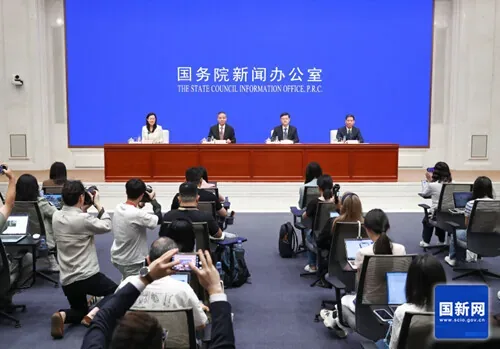
On August 26, the State Council Information Office held a press conference under the "Embarking on the 15th Five-Year Plan" series, where officials from the Ministry of Industry and Information Technology outlined key initiatives for implementing the 15th Five-Year Plan and accelerating new industrialization. The data unveiled at the conference was particularly striking: as of the end of June, China's intelligent computing power had reached 2,185 EFLOPS, more than 70 computing corridors had been established around national computing hubs, nearly 200 key AI standards had been successfully developed, and multiple cities were simultaneously conducting AI ethics reviews and service practices.
Intelligent computing power is the foundation of the AI industry. The 2,185 EFLOPS milestone means that the domestic AI infrastructure—including AI chips and GPU-based platforms—can now physically support large-scale large language model training and inference. The 70-plus computing corridors enable efficient cross-regional scheduling and resource sharing, connecting compute resources where they are needed most. On the standards front, nearly 200 key AI standards spanning foundational commonalities, application enablement, security, and ethics are paving the way for AI to move from technical demonstrations to real production lines.
What deserves even closer attention is the strategic shift in policy direction. The press conference made it explicit that the next step is to drive AI deep into manufacturing, vigorously develop industrial AI agents, and leverage real-scenario training to bring robots and intelligent agents into operational deployment. From technology breakthroughs to scenario cultivation, from "can the model run" to "can the agent get on the production line," the policy focus has clearly moved forward. Industrial AI agents are now positioned as a key lever for the next phase of industrial upgrading in China.
Industrial scenarios are fundamentally different from consumer applications. They impose far more stringent requirements on latency, stability, and data security. For AI agents to truly integrate into production workflows, they still face practical hurdles such as fragmented industry standards, difficulty accessing high-quality training data, and a shortage of interdisciplinary talent. This is precisely where real-scenario training proves its value: only by repeatedly training, validating, and iterating robots and AI agents in real or near-real production environments can they accumulate trustworthy operational experience. That is why the press conference placed special emphasis on real-scenario training—a signal of deep policy intent.
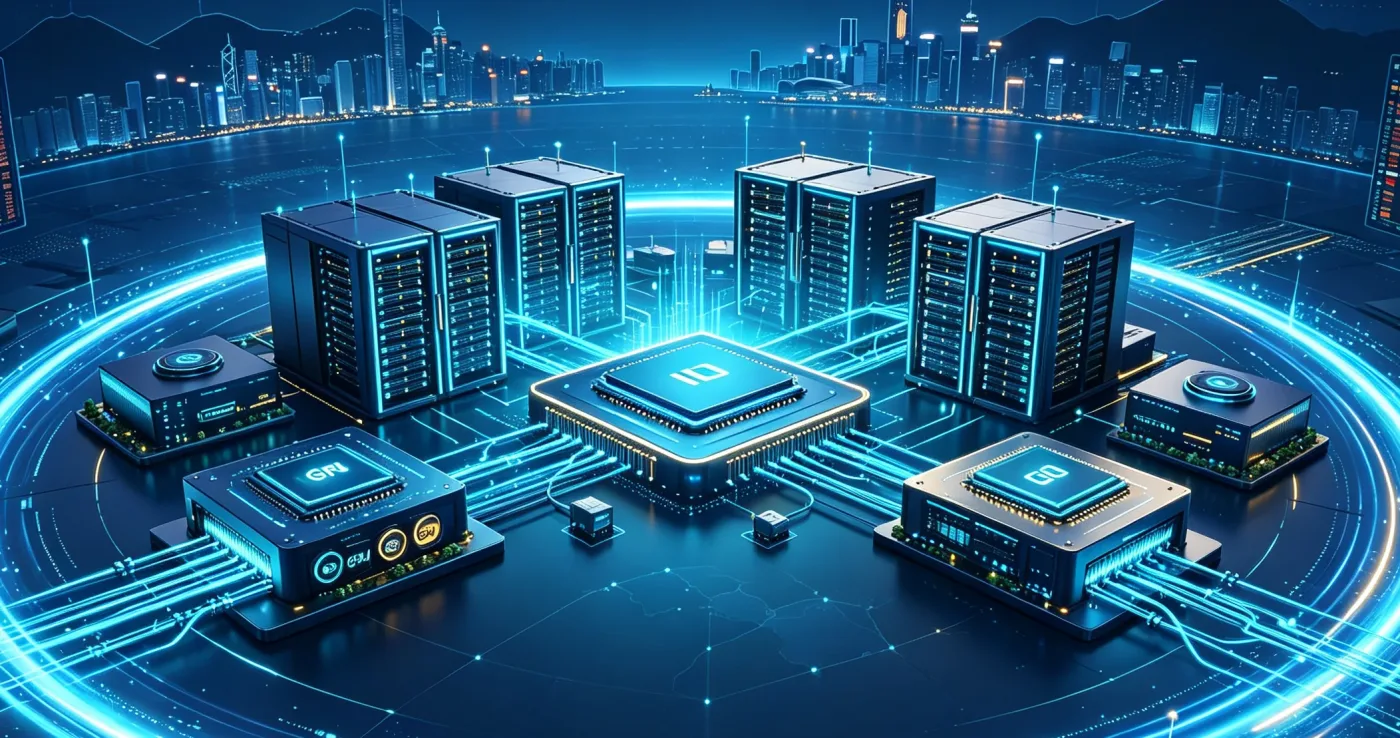
With computing power scale and standards now largely in place, the critical question becomes how to efficiently deploy AI agents in real-world settings. StarWar Cloud, focused on intelligent computing cloud infrastructure and DiWorker multi-agent systems, addresses this challenge through unified GPU computing platform management and intelligent scheduling. The platform flexibly orchestrates model training, inference, and real-scenario training tasks across diverse computing resources, allowing enterprises to acquire computing power on demand and deploy AI agents tailored to specific scenarios. Meanwhile, its AI training platform connects talent with industry, helping developers train and validate agents in close-to-real industrial environments—offering dual support of computing power and scenario-based training for the large-scale rollout of industrial AI agents.
From an industry perspective, as computing power, standards, and scenario cultivation advance in tandem, segments such as quality inspection, operations and maintenance, and production scheduling in manufacturing are likely to be the first areas where AI agents take over core responsibilities. The accumulated "tribal knowledge" of veteran engineers over years of industrial practice can also be systematically extracted and distilled into reusable capabilities. For enterprises, the cost of accessing computing power and developing AI agents is decreasing, but capabilities in computing power selection, task orchestration, and scenario refinement are becoming the new competitive dividing line.