
OpenAI has officially introduced Workspace Agents in ChatGPT for Teams and Enterprise, delivering collaborative work agents designed for organizational use. These agents can execute complex tasks across enterprise digital environments, including cross-document retrieval and automated workflow orchestration. With this launch, OpenAI aims to elevate ChatGPT from a simple conversational assistant into a productivity partner embedded in daily business operations.
As enterprise AI adoption moves into deeper operational territory, single-turn Q&A assistants are no longer sufficient. Real business processes are inherently multi-document, multi-step, and multi-stakeholder endeavors. If agents cannot organize tasks across systems and documents, they remain trapped in information silos. Collaboration and orchestration have become the critical link in unlocking the value of enterprise agent deployments.
The Workspace Agents rollout path is notably pragmatic: rather than pursuing a single super-model to handle everything, OpenAI emphasizes multiple agents working in parallel under a unified permission framework, orchestrating workflows across documents and applications. This mirrors how human teams operate in enterprises—clear role definitions, specialized responsibilities, and centralized governance.
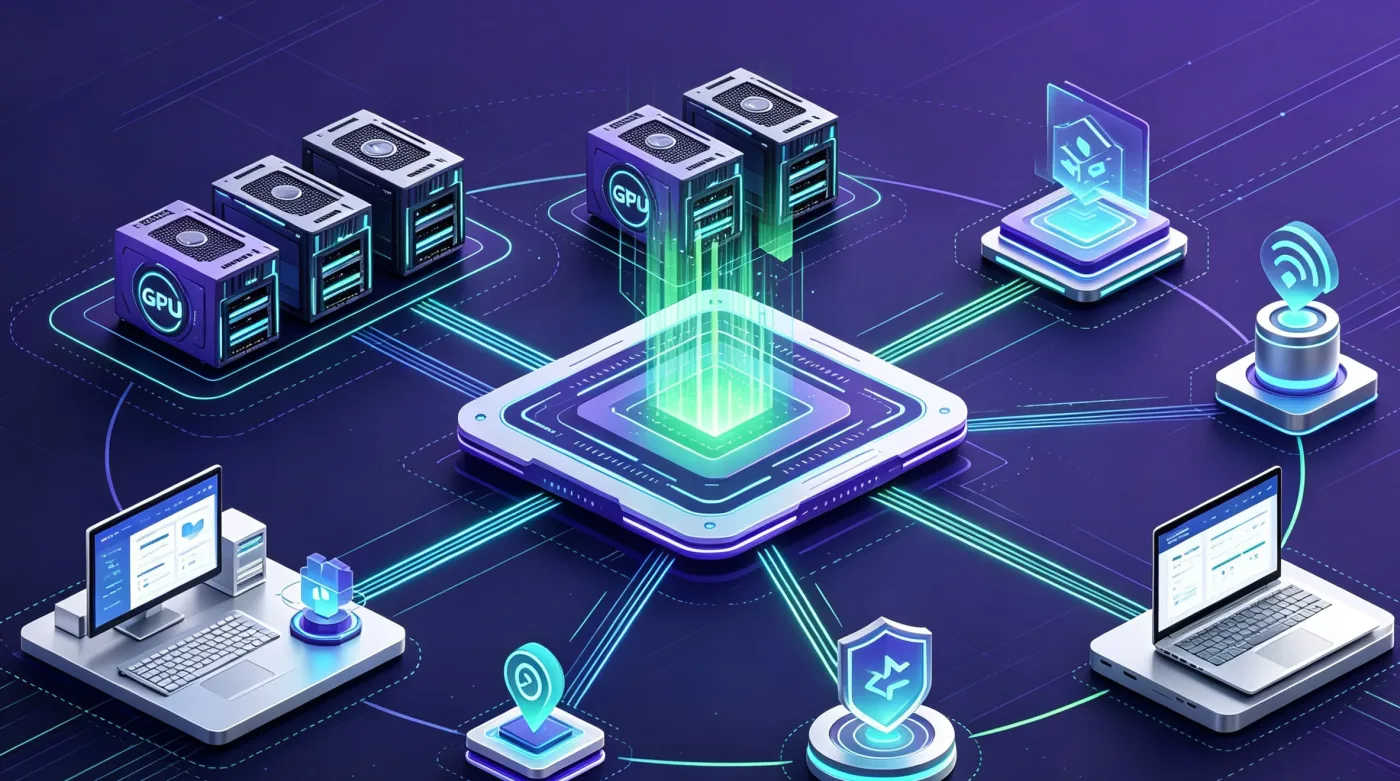
When multi-agent systems enter the enterprise, the greatest risk lies not in capability but in governance: Are permission boundaries clearly defined? Is the enterprise knowledge base properly isolated? Can every agent action be audited and traced? OpenAI's emphasis on permission controls and knowledge base isolation signals that leading vendors recognize a fundamental truth—agent collaboration is only viable when it is controllable. Without governance, even the most powerful capabilities will struggle to earn trust in production environments.
This aligns with the approach StarWar Cloud is taking in building enterprise-grade agent collaboration ecosystems. StarWar Cloud focuses on GPU computing platforms and its DiWorker multi-agent collaboration platform, delivering the compute scheduling and agent engineering infrastructure that enterprises need. By unifying agent role assignment, permissions, and workflow orchestration into a single framework, StarWar Cloud helps organizations move team-based AI from concept to manageable production reality.

From a product perspective, enterprise agents are branching into two distinct paths: one is embedded collaboration within general-purpose platforms, and the other is private deployment tailored to specific organizational processes. Regardless of the route, cross-document collaboration, task orchestration, and permission governance are becoming non-negotiable baseline features. When enterprises evaluate platforms, the benchmark is no longer just model leaderboard rankings—it's whether the platform can support multi-role, long-cycle collaborative operations.
OpenAI's decision to make agents the core selling point of its enterprise tier marks a new phase in enterprise AI competition: the focus has shifted from "does the model exist" to "can agents collaborate, and can they be governed." For organizations, incorporating agent collaboration, knowledge base isolation, and permission governance into IT planning early will determine the ceiling of their AI-driven productivity.