
As large-model applications move into production environments at scale, inference-side computing power is becoming an even more contested battleground than training-side capacity. Edge devices must strike a delicate balance between power consumption and cost, while cloud platforms face dual pressures of inference throughput and latency. Chip design philosophies are accordingly diverging — dedicated AI accelerator chips, near-memory computing, and heterogeneous stacking have all emerged as key fronts in the race among semiconductor vendors.
The launch of the Xuanjie O100 continues the technical trajectory of near-memory computing and 3D stacking in AI inference chips. By binding compute units and memory cells more tightly together, the chip significantly alleviates the bandwidth bottleneck inherent in LLM inference — an approach that converges with the strategies of leading global players. For China's domestic AI chip sector, this signals that beyond cloud training chips, an inference chip portfolio spanning edge-cloud collaboration is now taking shape.

However, chip hardware is only one link in the computing power supply chain. Domestic Chinese AI chips broadly face challenges in software stack maturity, developer ecosystem development, and multi-framework adaptation. Even with chips in hand, enterprises may not be able to run training and inference tasks seamlessly — a layer of engineering adaptation still separates hardware cost reductions and expanded computing supply from real-world deployment.
This is precisely where multi-computing selection platforms add critical value. StarWar Technology focuses on GPU computing platforms and compute scheduling capabilities, helping enterprises manage training and inference workloads under unified orchestration with elastic resource allocation. This approach allows diverse computing power foundations — including domestic chips — to be integrated on demand, offering flexible, lower-cost compute options for intelligent agent businesses.
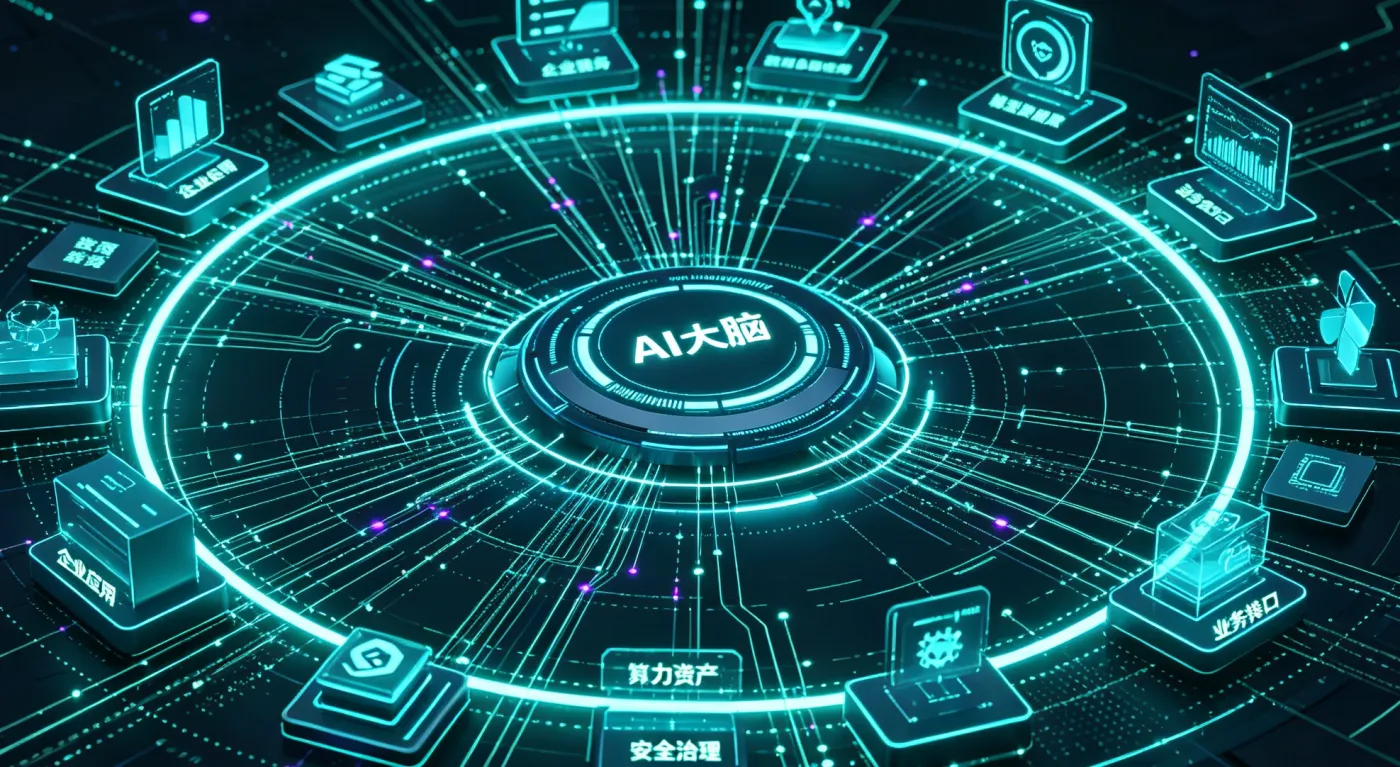
Looking at the industry rhythm, the maturation of edge-side chips will push AI applications from the cloud toward the edge, granting intelligent agents local inference capabilities on smartphones and terminal devices. On the cloud side, the coexistence of multiple chip vendors will ease over-reliance on any single supply chain and strengthen the overall resilience of computing power supply. For enterprises, compute procurement is no longer an either-or decision, but rather an exercise in combination and orchestration.
Xiaomi's entry into the LLM acceleration chip arena underscores that inference computing power has become a capability terminal manufacturers must build in-house. As domestic chips continue to fill market gaps, computing costs are gradually shifting from a supply-side scarcity to an everyday engineering problem — and those who can orchestrate diverse computing resources most effectively will be closest to achieving large-scale LLM and intelligent agent deployment.