
OpenAI recently announced that the entire team behind Instant, a backend infrastructure project for intelligent agents, has officially joined the company, with its cloud-hosted service continuing to run until August 31. Described by developers as "Firebase for the AI era," Instant offers AI agents a one-stop backend stack encompassing databases, permission validation, real-time synchronization, and offline caching. The project's GitHub stars have just surpassed 10,000, with more than 17,000 registered developers, over 400,000 apps built on the platform, and a cumulative 2.5 billion transactions processed.
The strategic intent behind this acquisition is unmistakable: equipping agents with a "memory layer" and a "state layer." Instant solves the two most critical shortcomings plaguing AI agents today—persistent state management and real-time data consistency. When multiple agents simultaneously read from and write to the same schedule, order, or code data, even the most powerful large language model cannot resolve the underlying data concurrency conflicts. This is purely an engineering problem.
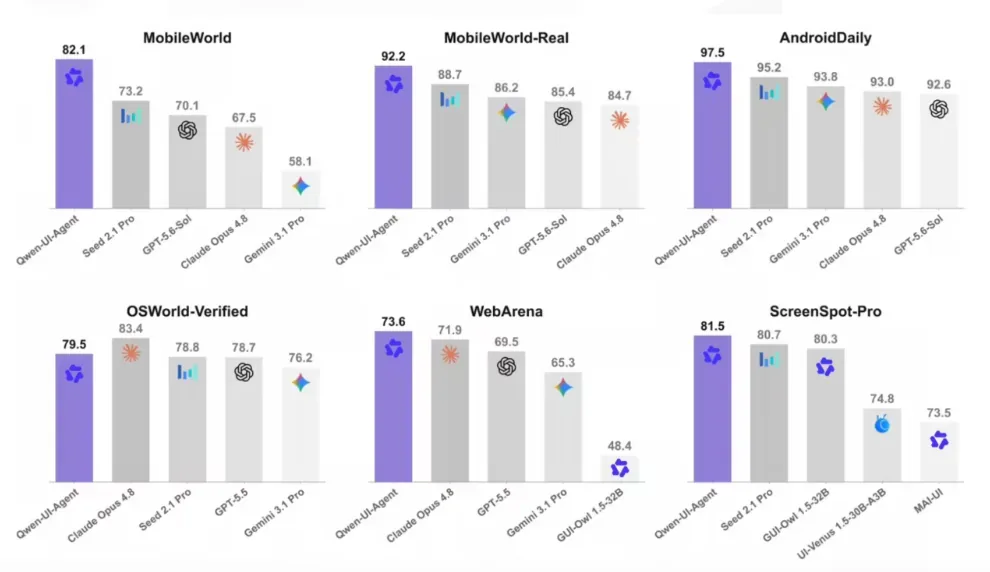
The industry trend has become increasingly clear: agents designed merely for single-turn Q&A no longer suffice. As intelligent agents evolve from "having a chat" to "working continuously," they need to retain long-term context, accumulate historical work, cache data offline during network disruptions, and correctly merge conflicts upon reconnection. Infrastructure capable of providing these capabilities is becoming the focal point of competition for next-generation agent platforms.
For enterprises, the bottleneck to deploying agents in real production environments often lies not in the models themselves, but in memory and collaboration mechanisms: Can project documentation be automatically accumulated? Can historical tasks be reused? How is data kept consistent across multiple members and multiple agents? Until these issues are resolved, agents will remain confined to demo scenarios, struggling to take on long-cycle business tasks.
This is precisely the capability direction that enterprise agent platforms need to strengthen. StarWar Cloud focuses on GPU computing power platforms and the DiWorker multi-agent collaboration platform, providing enterprises with computing resource scheduling and agent engineering support. It brings long-cycle operation, task state management, and collaborative orchestration into a unified framework, turning "memory" and "collaboration" from concepts into manageable engineering capabilities.
It is foreseeable that competition around the agent memory layer will continue to intensify: open-source solutions, cloud services, and private deployments will evolve in parallel, and long-term memory will gradually become a default capability of agent products rather than a differentiating selling point. For teams lacking in-house R&D capabilities, choosing a platform with mature memory and collaboration mechanisms is an important path to shortening deployment cycles.
OpenAI's absorption of Instant signals that leading players are treating agent infrastructure as a core strategic asset. For enterprises and developers alike, the focus should not be merely on how powerful a model is, but on whether the platform can support agents running reliably, collaboratively, and over the long haul—the memory layer, state layer, and computing power foundation are jointly forming the new groundwork for agent deployment.