
The four major domestic GPU companies have finally converged in the capital markets. On September 11, 2026, Enflame Technology listed on the Shanghai Stock Exchange’s STAR Market, surging 179.22% on its first day to a market capitalization of RMB 170.8 billion. With Moore Threads, MetaX, and Enflame on the STAR Market and Biren Technology on the Hong Kong Stock Exchange, the four companies had a combined market capitalization of RMB 613.2 billion based on that day’s closing prices.
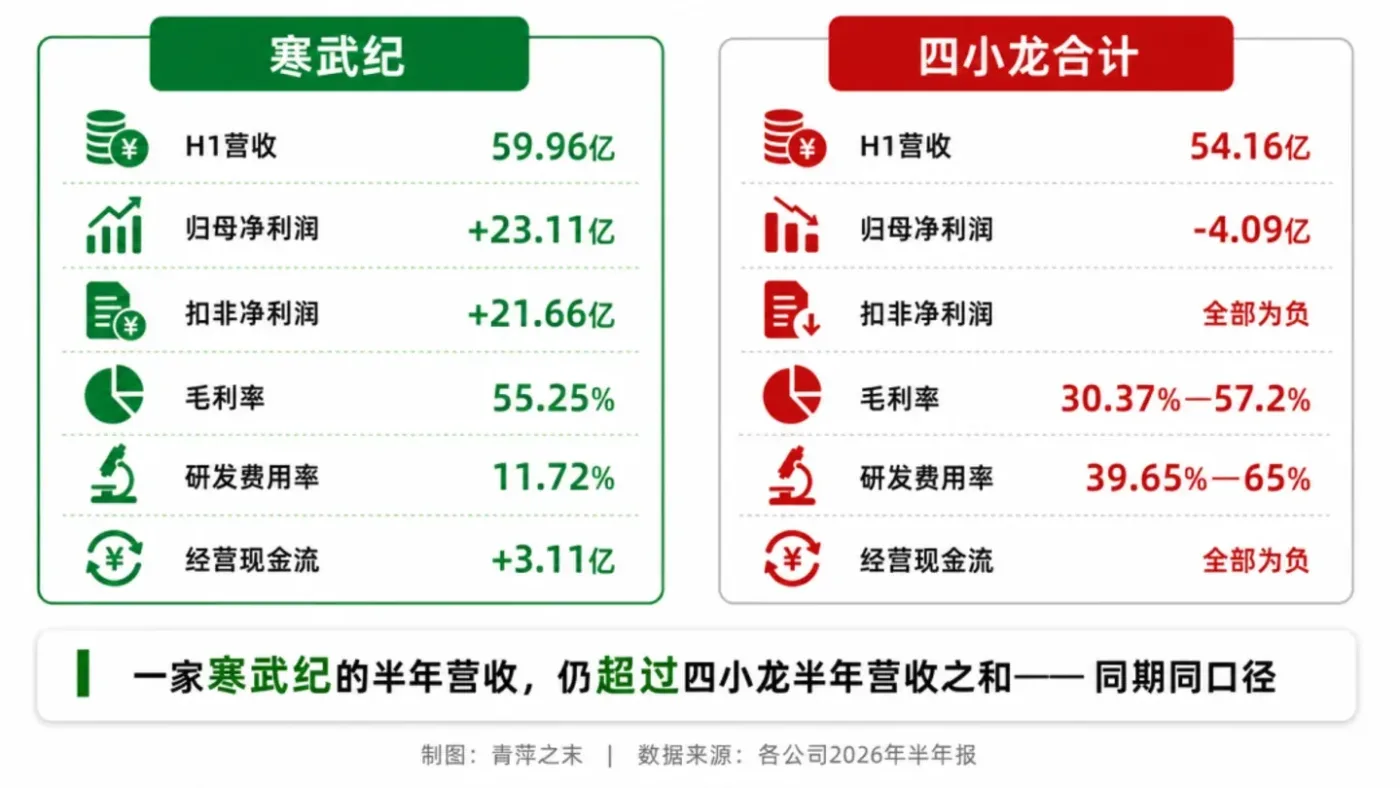
This is a milestone for China’s domestic computing-power industry, but the more important questions lie behind the numbers. Moore Threads, the first to list, has seen its share price retrace more than 60% from its peak; all four companies reported rapid revenue growth in the first half of 2026, yet all remained unprofitable on a non-recurring-item-adjusted basis. Once the question of “whether China has domestic GPUs” has been answered, the market is asking “who can truly emerge as a winner.”
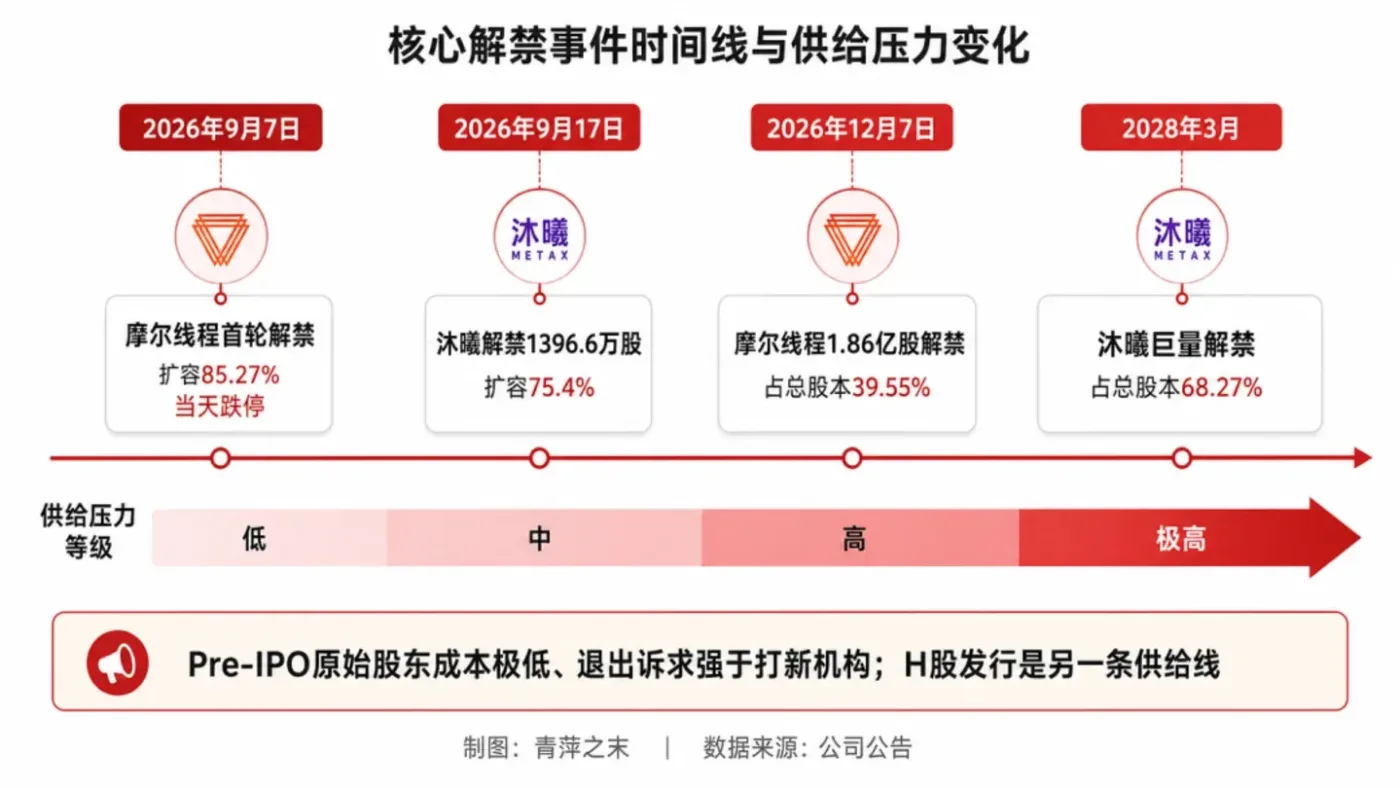
The four companies are pursuing four different paths. Enflame is deeply tied to Tencent, which is both its largest shareholder and largest customer; Tencent’s share rose to 83.79% in 2025, while gross margin fell from 40.78% to 31.78%. MetaX has a relatively diversified customer base, with its top five customers accounting for about 61% and a first-half gross margin of 57.2%. Moore Threads has the largest revenue scale but takes on substantial low-margin system-integration business, depressing its second-quarter gross margin. Biren Technology sticks to cloud-based high-performance training chips, with revenue up nearly 20x year over year, partly because it started from a low base.
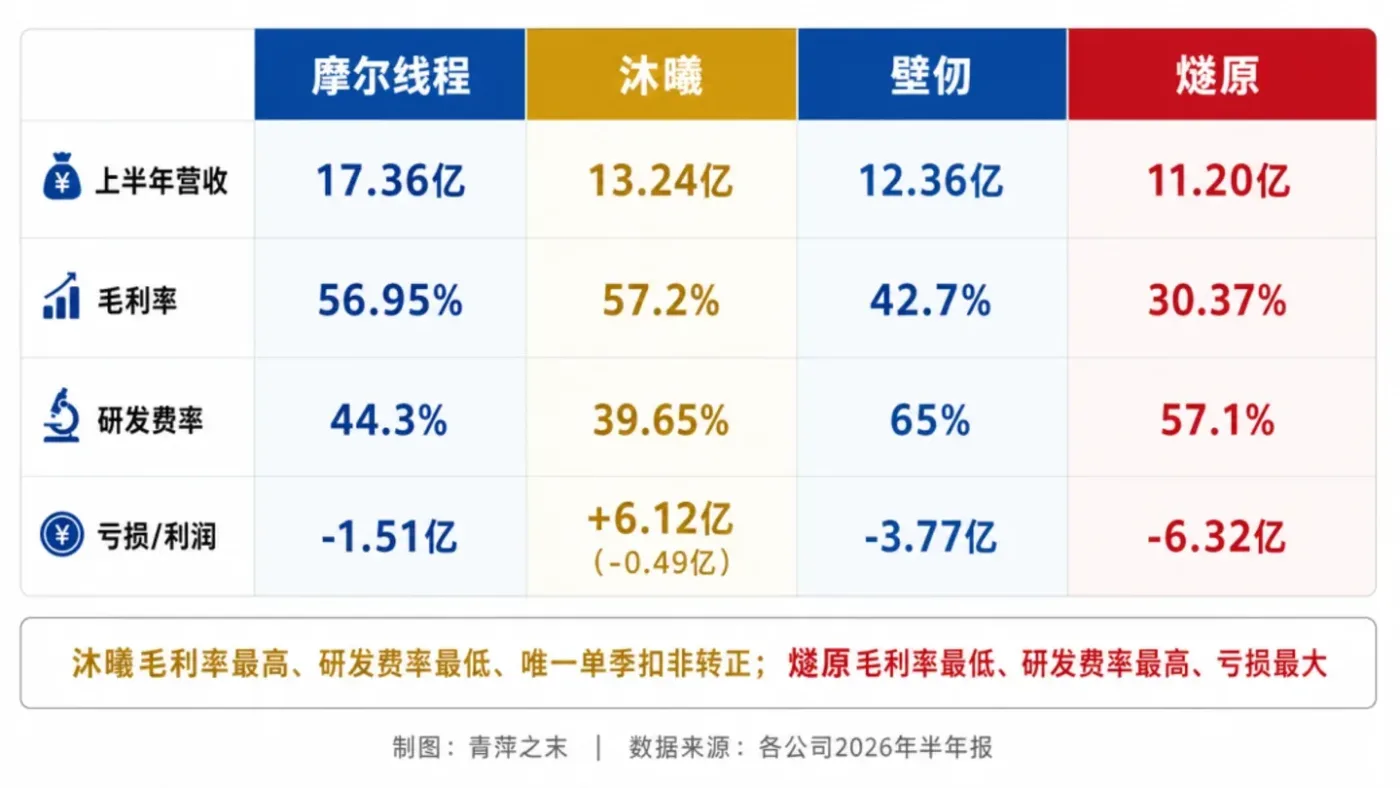
Behind the divergence is a gap in scale. For reference, Cambricon reported RMB 5.996 billion in revenue and RMB 2.311 billion in net profit in the first half of 2026; one company’s half-year revenue still exceeded the combined total of the four little dragons. At least MetaX, with the highest gross margin, has shown that what it lacks is