
Over the past year, embodied AI has iterated rapidly. Vision-language-action (VLA) models and world models continue to evolve, and reinforcement learning has re-emerged as a key path for robot learning. Yet a more fundamental question is surfacing: a robot being able to do something is not the same as being able to do it reliably, stably, and generally over the long term in open environments.
Traditional robotics R&D has largely relied on task decomposition: navigation solves navigation, motion control solves motion control, and robotic-arm manipulation solves manipulation. The clearer the task and environment, the easier it is to optimize an engineering system for them. But general-purpose robots face changing environments, tasks, embodiments, and even their own physical states.
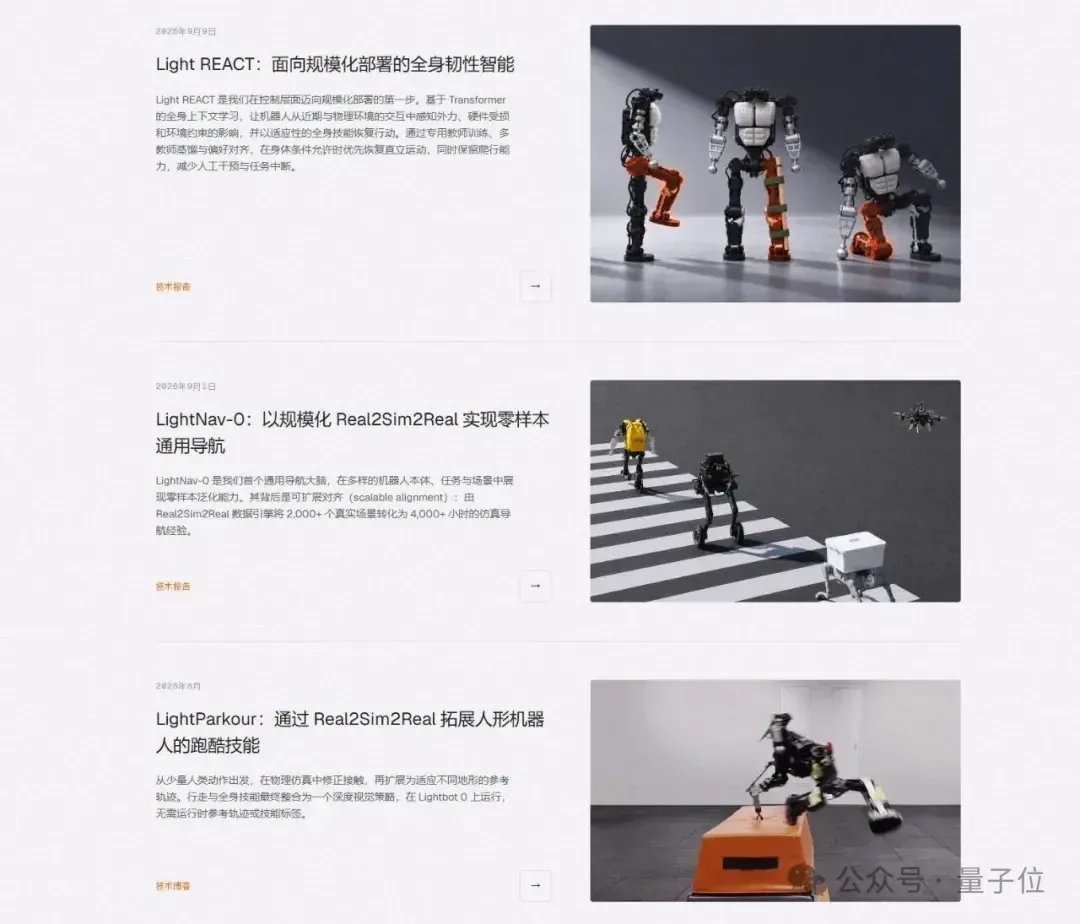
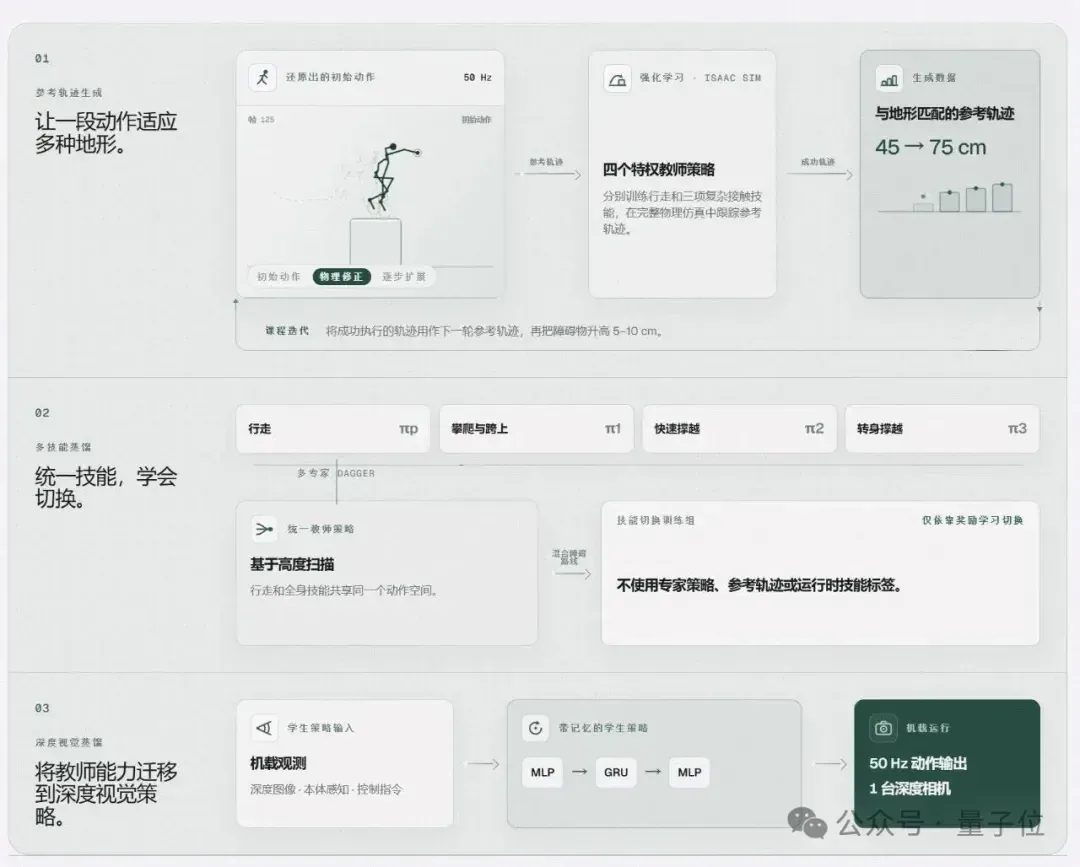
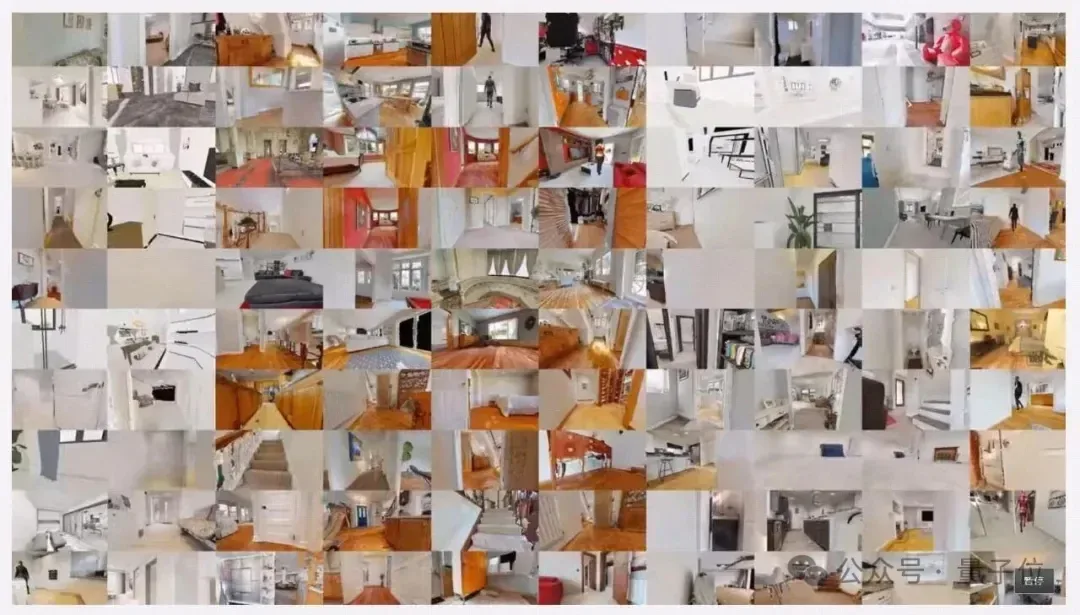
Liangyuan Xinchuang’s three releases address this problem from different angles. LightParkour starts from short real human motion clips, places actions and obstacles together in physical simulation, and uses curriculum learning to let skills grow on their own—expanding from motions aimed at 45 cm obstacles to 75 cm. LightNav-0, built on a Real2Sim2Real data engine, converts more than 2,000 real-world scenes from internet sources into reusable simulation environments and generates over 4,000 hours of visual, language, and action experience.
If every new task requires retraining a model, every new embodiment requires fresh adaptation, and every anomaly requires a new rule set, capabilities may appear to increase—but development and deployment costs rise in tandem. Embodied AI does not need a growing collection of isolated skills; it needs a learning mechanism that can continuously expand the boundary of capability.
This closed loop—from training and alignment to real-world deployment—mirrors StarWar Technology’s approach to GPU computing platforms and compute scheduling: scalable pre-training, simulation generation, and real-robot tasks share orchestrated computing resources and are executed according to workload, rather than operating in silos. As data and model scale continue to grow, the ability to organize distributed compute into