
At the AICon Global AI Development and Application Conference, Wei Changzheng, a senior technical expert at Ant Digital Technologies, used two real-world projects to explain new problems emerging as AI Coding enters the stage of agents independently executing tasks: code output speed is multiplying, and it is unclear whether requirement constraints, code review, and test acceptance mechanisms can keep pace.
The developer role is shifting from chat-box questioning to IDE plug-ins, AI IDEs, and terminal tools such as Claude Code—from code producer to result evaluator. Tasks handed to AI have also expanded from writing a few lines of code to independently completing a task that humans then accept.
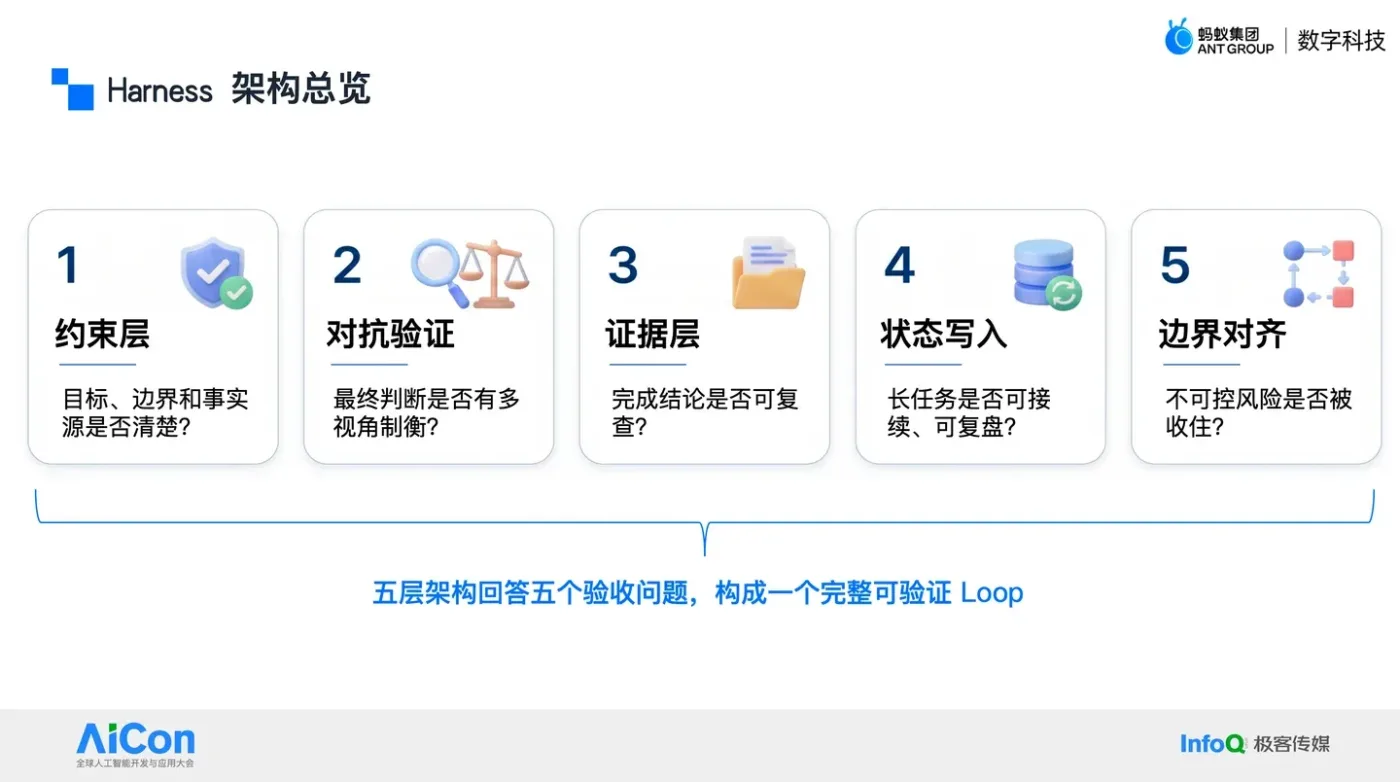
The two cases form a contrast. A new Rust project of more than 400,000 lines built Harness into its R&D process from day one, with core documentation defining a single source of truth; every change was submitted with synchronized change documentation and had to pass CI gates. A 600,000-plus-line C++ legacy project first had an agent scan the project, correct facts, rebuild documentation and quality gates, and then proceed with a C++20 upgrade. One month after the transformation, the legacy project's code defect rate fell from over 20% to single digits.
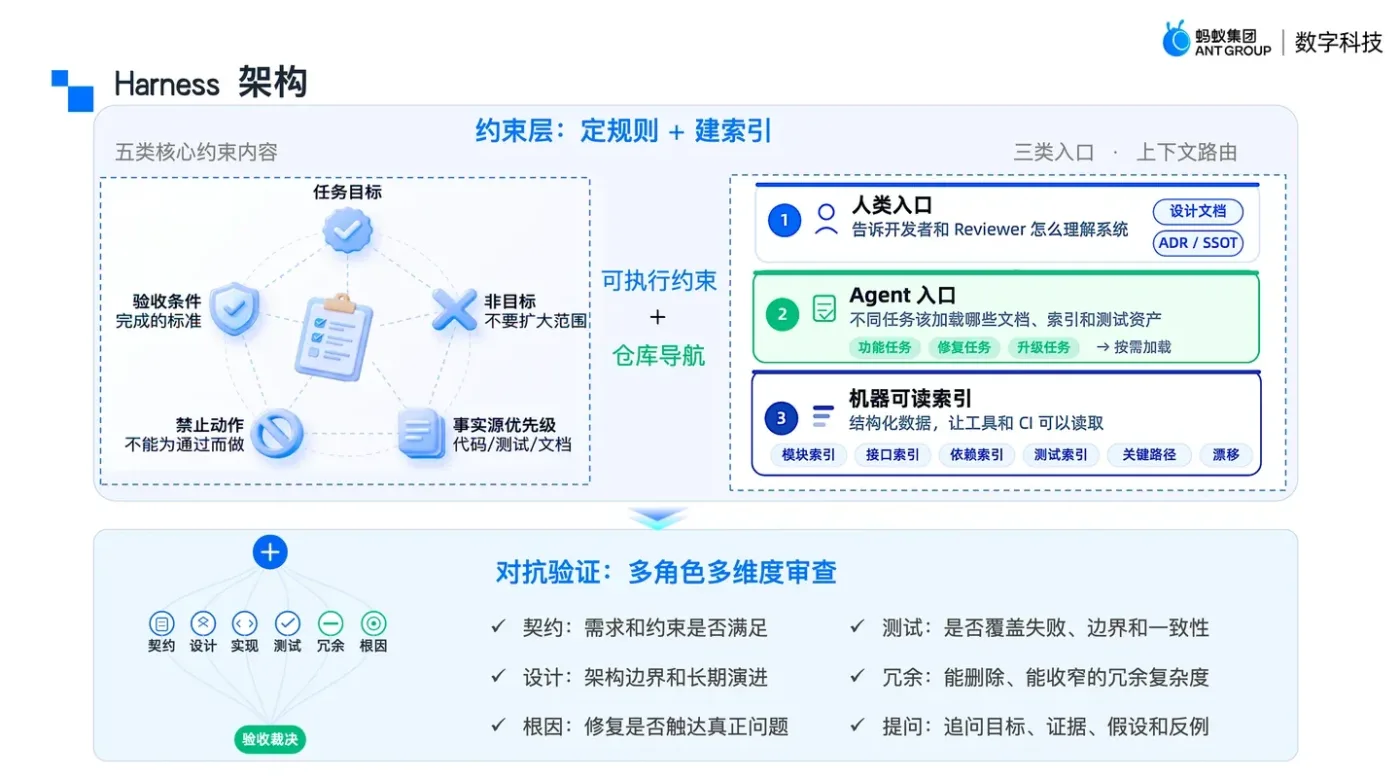
The core contradiction is the asymmetry between production capacity and verification. An agent may complete in one day the amount of code that once took three months. Requirement ambiguity, goal drift, factual conflicts, and quality debt that were previously spread over months become concentrated and amplified. Facing a single commit of 4,000 to 5,000 lines, a reviewer can hardly cover it line by line, and code review can easily become a formality.
This aligns with the direction StarWar Technology emphasizes on its OPC Agent Collaboration Platform: enabling multiple models, tools, and agents to work toward the same goal while making constraints, verification, and acceptance manageable and reusable processes, so agents can take on long-chain tasks within clear boundaries. The value of multi-agent collaboration is not that each produces more, but that outputs can be verified and traced.
The article also notes that model behavior fluctuates—sometimes tending to complete more cases, other times doing less—and such changes may not be promptly detected by Harness. Moving from AI collaboration to a truly autonomous and stable development system still requires considerable work and continued exploration.
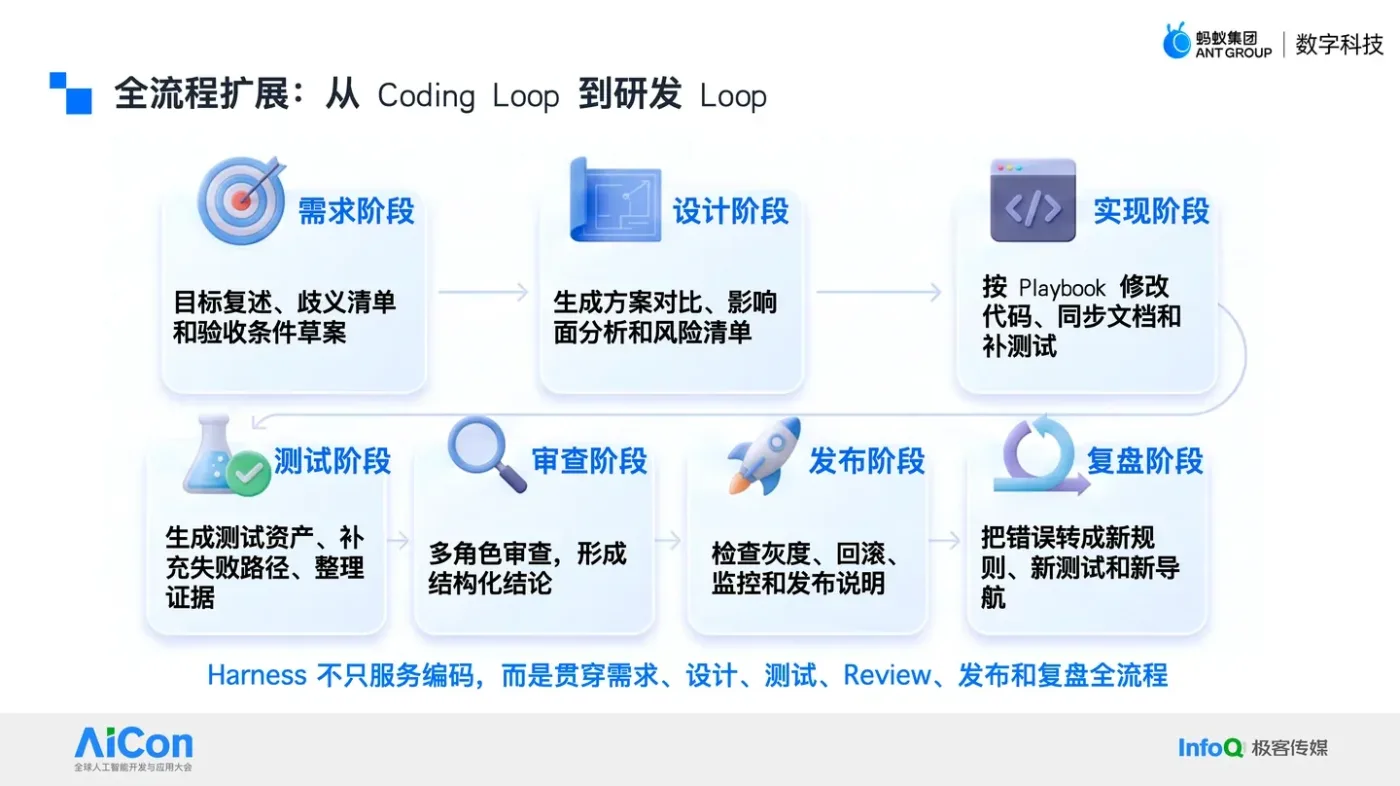
AI Coding improves code production speed; Harness must solve the problem of matching verification speed and acceptance capability to it. Only when requirements, development, testing, and delivery form a complete closed loop can AI's high productivity truly translate into stable software engineering efficiency.