
More than 5,000 teams and nearly 20,000 contestants battled down to a ten-minute pitch on stage. At the AFAC2026 Financial Intelligence Innovation Competition finals, participants had to explain their technical solutions clearly and field follow-up questions from judges representing industry, academia, and venture capital. This year’s problems were widely described by contestants as “much harder than previous years”: entirely new content, strict constraints, real-world noisy data, sparse experimental feedback, limited GPU memory and time, and long-text answers that had to be not only accurate but also token-efficient and backed by traceable evidence.
This set of “real” problems is itself a filter. Contestants must break out of conventional problem-solving thinking and understand why a task matters and where its value lies—simply memorizing algorithms or stacking parameters no longer works. Various approaches appeared on stage: some distilled general agent-harness capabilities into vertical agents; others used code as a self-evolving carrier, allowing each iteration to produce more deterministic financial tools. Ultimately, the competition screens for people whose technology can be deployed and whose business judgment can hold up under pressure.
Big tech hiring standards are also shifting publicly. Yao Quanming, associate professor in the Department of Electronic Engineering at Tsinghua University, said he now asks doctoral applicants: will your research be swallowed by large language models within the next six months? His judgment is that pure execution-side capability has largely been filled by AI agents, and what is scarce is the intrinsic drive to “make things happen.” Li Bei, head of university cooperation at Alibaba Cloud, also observed that benchmarks have been raised across the board by AI. Contestants are not only competing with peers but also with an AI-elevated threshold. In the past, mastering a new model or tool provided an advantage; now those abilities are quickly covered by foundation models. Human value must shift toward judging problems, understanding business, and taking responsibility for results.

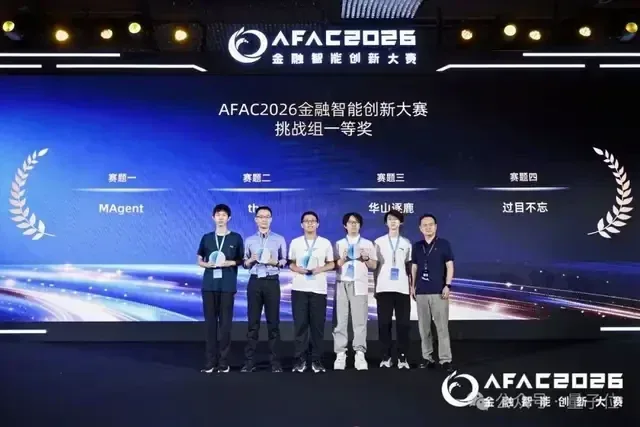
Xu Wanqing, R&D head of the Wealth AI Lab at Ant Group’s Wealth and Insurance Business Group, said the team urgently needs two types of people: those who can break through thinking inertia and find better methods, and those who can truly use AI to solve problems and turn innovative ideas into reality. Ding Ding, first-prize winner of Challenge Group Problem 1, offered a representative approach: first propose a hypothesis, then discuss validation criteria with AI, and after local validation let AI produce analysis results while the human decides whether to submit. AI can help validate 100 or even 1,000 hypotheses, but which hypothesis deserves priority validation still requires human judgment.
The logic behind this change is the industry’s repositioning in the agent era. As the execution layer is flattened by AI, human value moves upward to “choosing the right things to do.” From pursuing excellent algorithmic foundations, to handling noise in real business data, to developing systematic problem-solving ability—judges summarize the progression of algorithm professionals into these three stages. Whether engineering instincts are solid, whether one can think clearly, and whether one can push things forward have become the dividing line between learners and senior engineers.
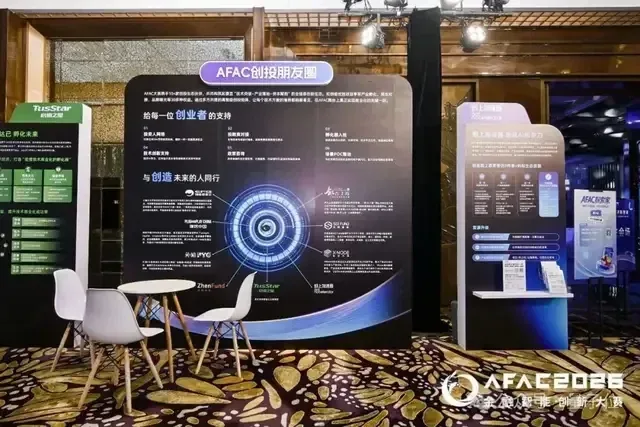
The competition also amplifies the value of real-world validation. After the finals, relevant business units at Ant opened more than 15 AI agent internship positions to contestants, covering core businesses such as insurance, wealth, investment research, and platform architecture. The startup group included companies that had already secured funding and orders, as well as seed teams still looking for their first customer. A 2024 contestant team from Sichuan University of Media and Communications founded a company after the competition and has gained some industry recognition; Shanghai Ciling Technology, a 2025 winner, received its first overseas order in March 2026. Technical capability connected through competitions to jobs, capital, and real scenarios is becoming a compounding career path.
Zooming out, the value of events like AFAC goes beyond selection. It is