
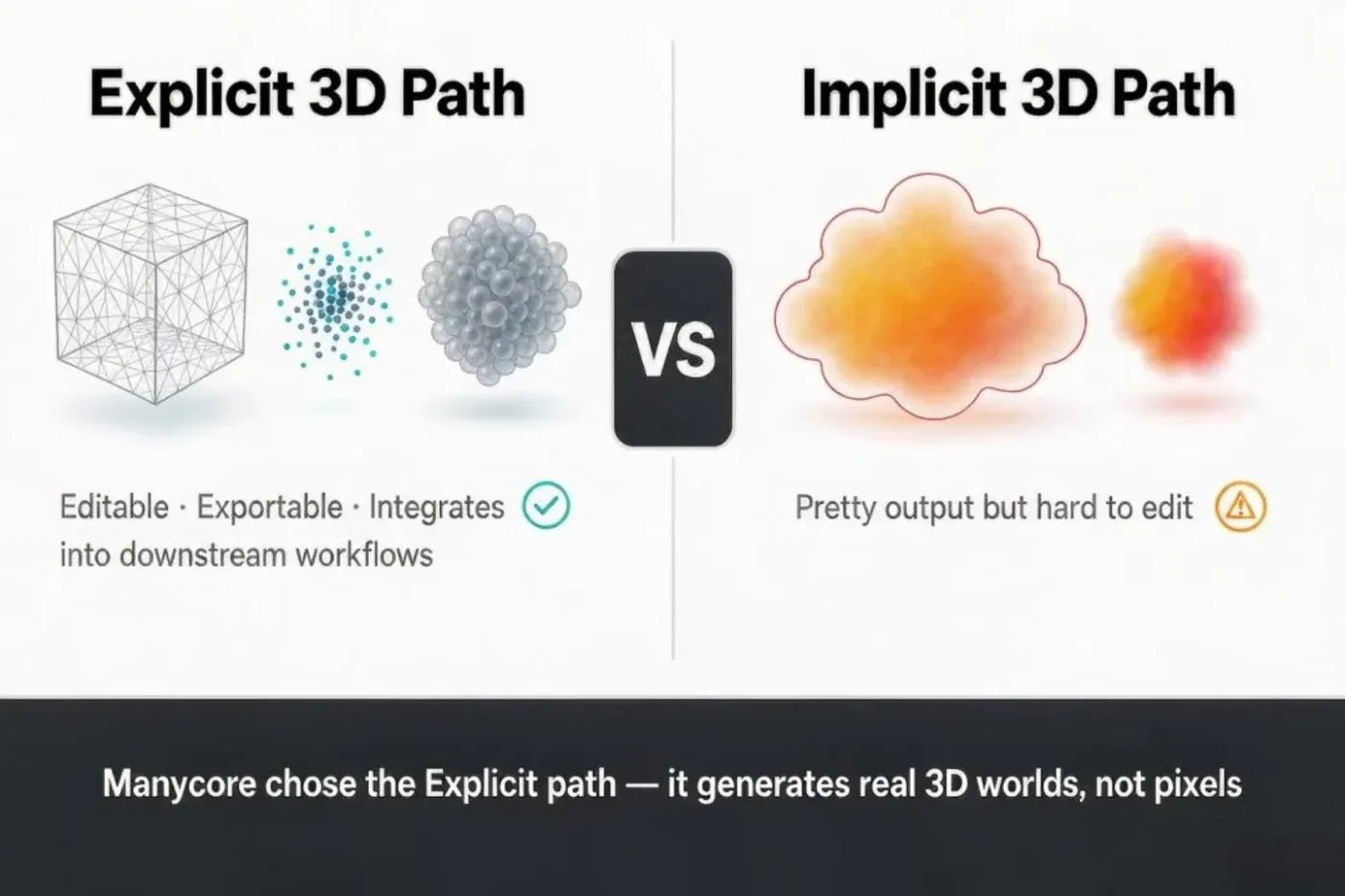
Feed in an image, get a 3D model out—AI has been doing this for two years. Most products have focused on speed and geometric accuracy, but generated models often reveal their weaknesses after a quick pass through Blender: metal does not look metallic, ceramic does not look like ceramic, and surfaces look as if they have been coated with matte paint. Manycore Tech’s newly released 3D generation model, Lux3D, aims to solve the material layer—truly embedding physically based rendering (PBR) parameters into generation results rather than merely applying color.
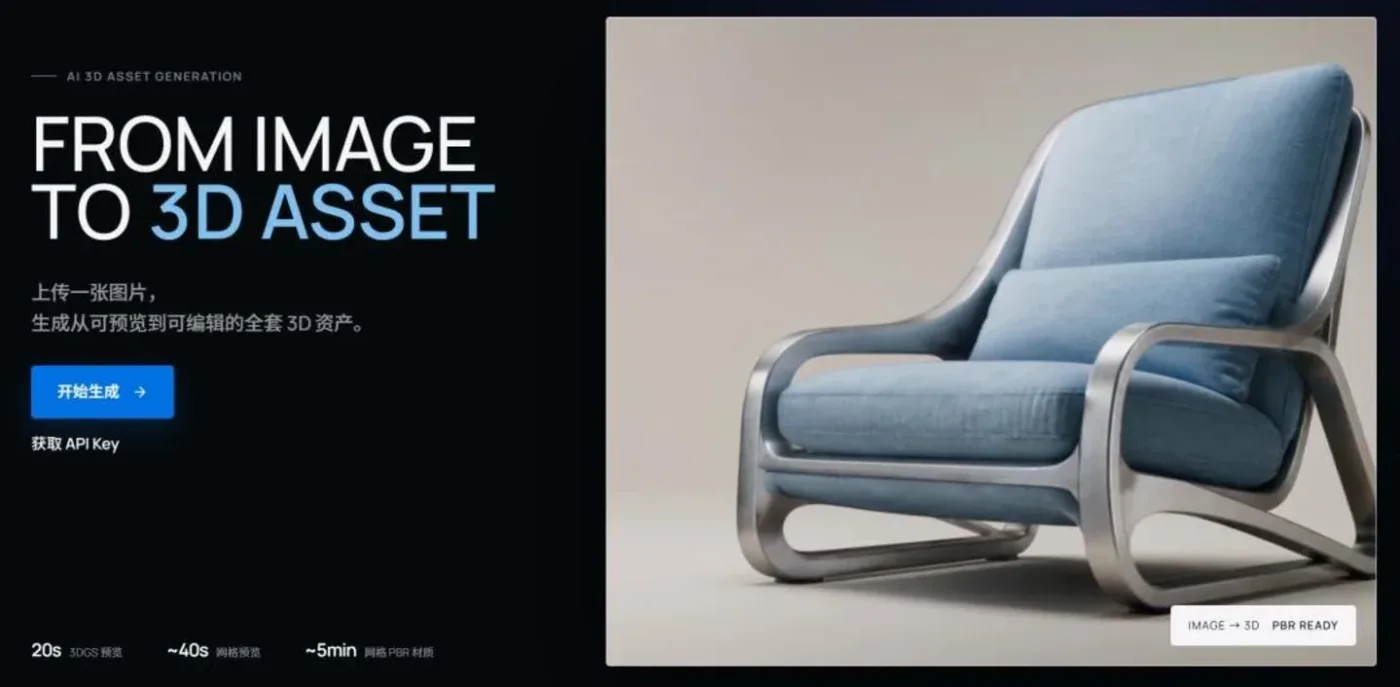
Lux3D comes in Standard and Turbo editions. With an image or text prompt as input, it outputs 3D Gaussian representations, Mesh assets, and complete assets with PBR materials. Generation follows a three-stage progressive pipeline: first, a 3D Gaussian preview is produced for rapid validation of overall appearance; after 40 seconds, the Mesh follows with editable topology; then material baking burns physical attributes such as metallic, roughness, and transparency into the mesh before final PBR delivery. Filtering out wrong directions at the preview stage means that in batch tasks, the most expensive fine generation is reserved only for objects that have already passed validation. Coarse screening first, refinement second—this is factory thinking, not demo thinking.
A set of real-world test materials illustrates the challenge: the oxidized layer, rattan handle, and metallic reflections of an old copper pot; the semi-transparent glaze of a celadon bowl; and the fabric, solid wood, and metal of a cloth sofa. If any one layer is handled poorly, the asset will expose itself in a rendering engine. Lux3D’s material baking provides a full set of physical parameters—metallic, roughness, transparency, and normal maps as separate channels—rather than a single base-color texture pasted onto the surface. Still, complex patterns and fine textures can be lost, and character and scene categories are not yet covered. There is still a gap before assets can enter rendering engines without inspection.
Its commercial design is equally aggressive. Single-model pricing starts at about RMB 0.07. The platform offers three SDKs—Python, TypeScript, and Java—along with a ComfyUI plugin and an MCP interface. AI coding tools such as Cursor and Claude Code can directly call Lux3D, embedding 3D asset generation into automated workflows. Manycore also provides an official Skill connected to GPT-6 Astra: large language models plan creative tasks, Lux3D batch-generates assets, and Blender assembles and renders them, enabling a code-driven pipeline to quickly produce interactive content.
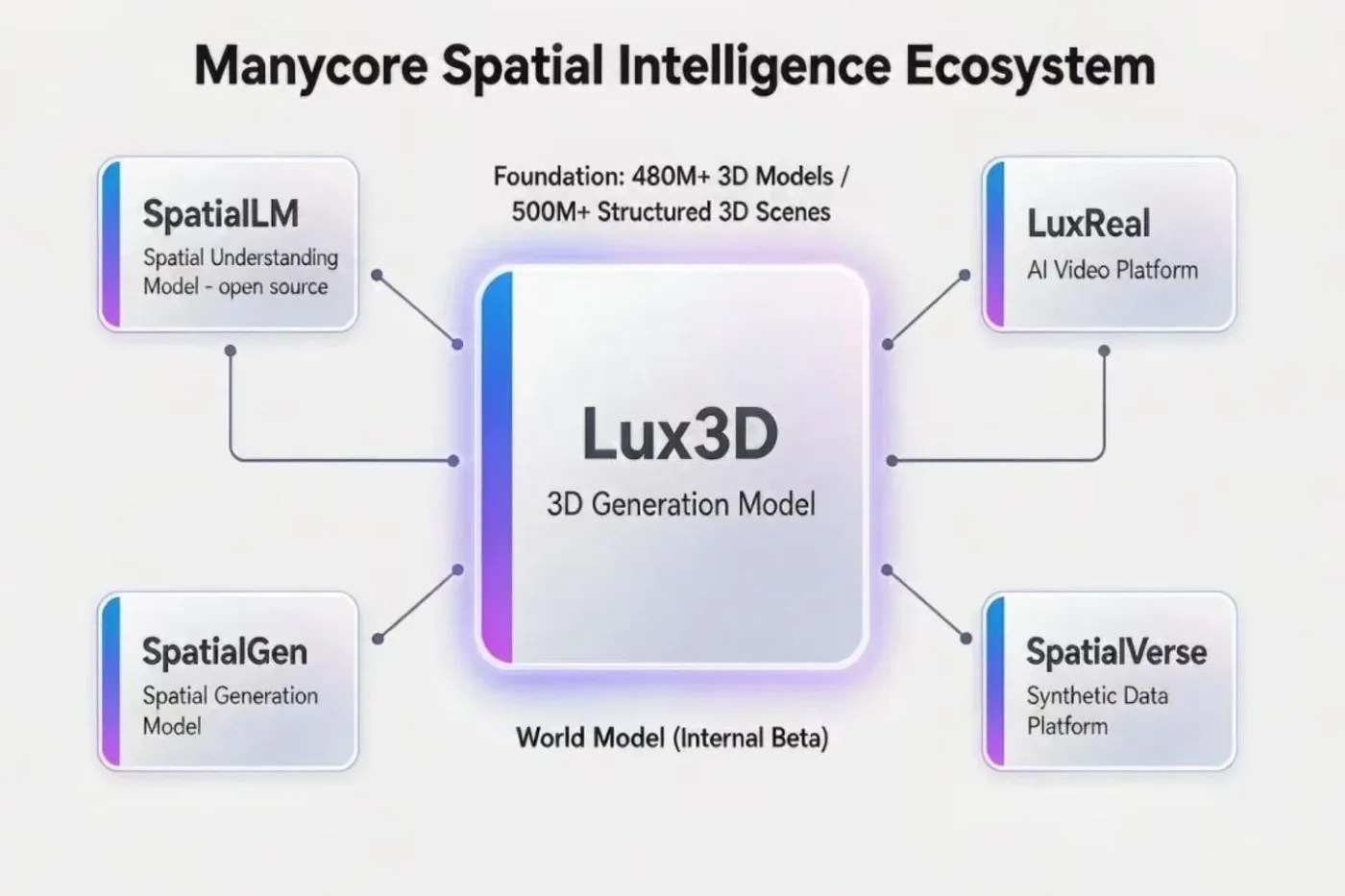
Why can Manycore make materials more accurate than peers? The answer is data. Manycore has accumulated more than 480 million 3D model assets and 500 million structured 3D spatial scenes, drawn from years of Kujiale’s spatial design business. Every step—designers furnishing spaces, selecting materials, and producing renders—generates physically annotated 3D data. This is the fundamental difference between Lux3D and purely generative 3D models: most models train on internet images, which can only tell the model what things look like, while structured 3D assets also include geometry, materials, and spatial relationships.
Business data supports this path. Its interim report shows that Manycore’s revenue from new AI applications and products rose 177% year over year in the first half. Orders for its synthetic data business, SpatialVerse, exceeded all of last year, and customers already include several leading embodied intelligence companies. Token consumption measured since mid-July averaged about 2.4 billion per day. On September 4, the Shanghai Stock Exchange announced that MANYCORE TECH would be included in Hong Kong Stock Connect, effective September 7. The narrative of a transition from spatial design software to “spatial intelligence” infrastructure is being embraced by both