
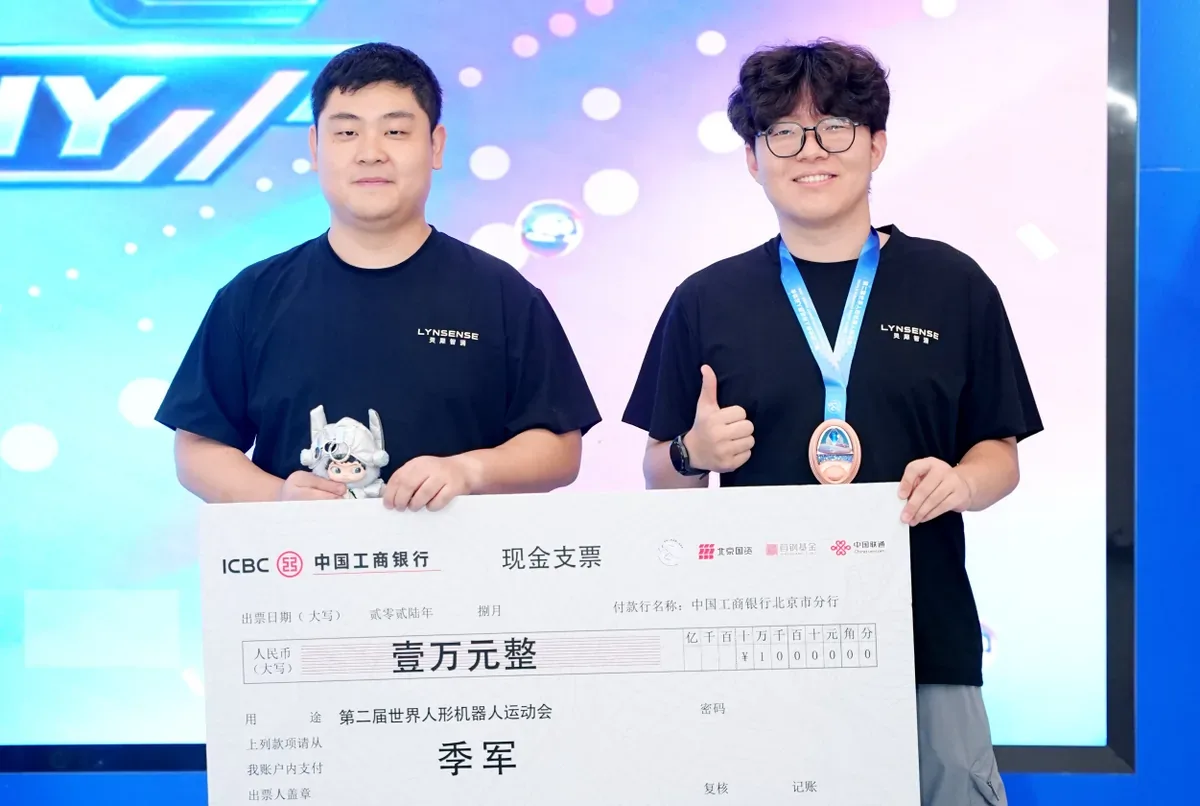
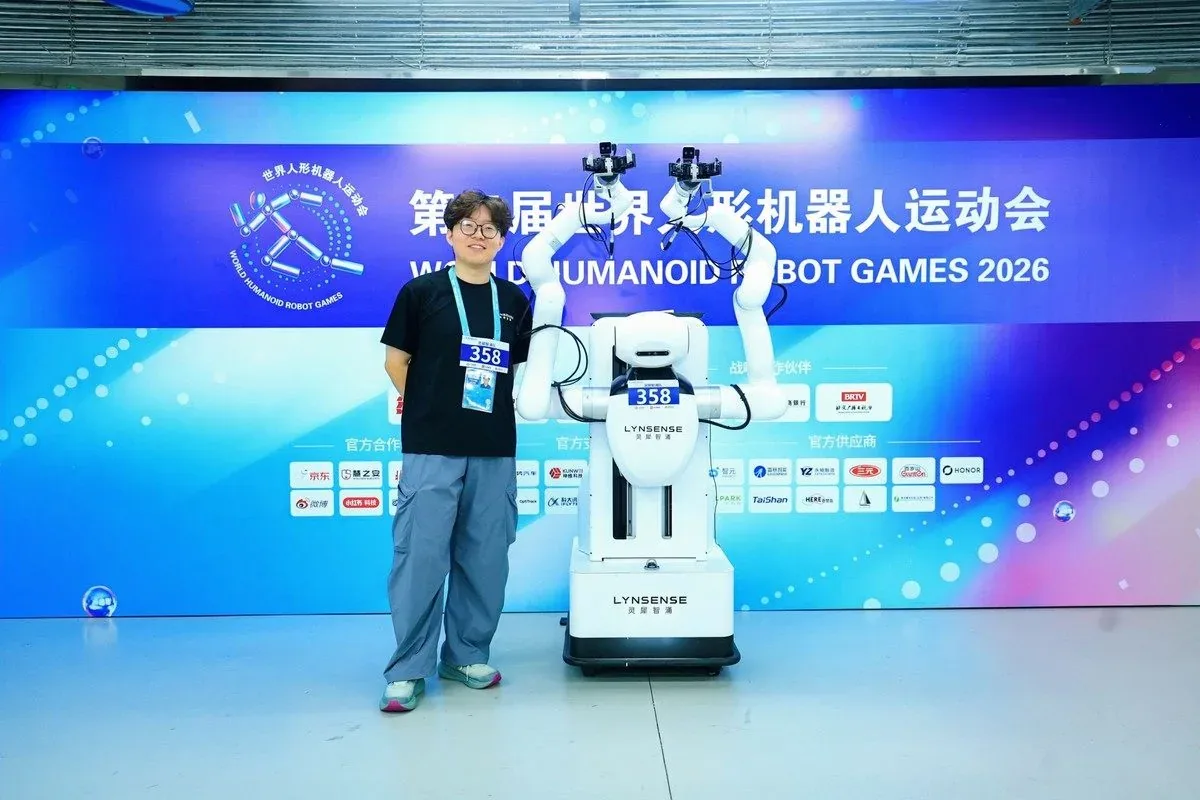
At the second World Humanoid Robot Games, the industrial assembly and material-feeding event was judged on the metrics that define industrial-grade delivery: long-duration stability, millimeter-level precision, and autonomous recovery under unexpected disruption. Lingxi Zhiyong, established for just three months, used a robot assembled on a demo-level base to score 160 points, placing among the top three nationwide and becoming the only robotics company outside the leading players to win an award in the event.
The result is especially significant because the hardware was not in its favor. The robot was not a mass-production unit, while its competitors included leading brands with deep expertise in chassis, robotic arms, and other core hardware components. Lingxi’s breakout came instead from ROSS Harness, an industrial-grade execution system built around embodied AI models. The system turns the probabilistic actions of AI models into stable, controllable, and reusable production capacity.
The strategy starts with a clear reading of the industry: no matter how attractive a leading company’s demo looks, it still has to pass delivery in real industrial environments. Unstable success rates, insufficient throughput, high maintenance costs, and difficult migration all point to a deeper issue — the methodological ceiling of a single-model approach. Model output is inherently probabilistic, and once per-attempt success rates approach their ceiling, open-world industrial scenarios demand more than a stronger model.
ROSS Harness addresses this challenge with five core capabilities that form an industrial-grade, self-evolving engine. Model abstraction prevents the system from being locked into a single foundation model. Skill abstraction turns industrial experience into reusable assets. Agentic AI enables robots to organize long-horizon tasks. Layered safety monitoring makes failures identifiable and recoverable. And a data flywheel makes every execution the starting point for the next round of improvement.
This case confirms a key judgment about embodied AI industrialization: models determine a robot’s initial capabilities, but the execution system determines whether those capabilities can be continuously amplified once they enter a production line. While much of the industry is still comparing large-model parameter counts, what truly determines delivery is often the engineering system. Large-scale embodied AI training also depends on computing power and simulation platforms. StarWar Cloud’s investment in AI training platforms targets exactly this training-infrastructure demand.
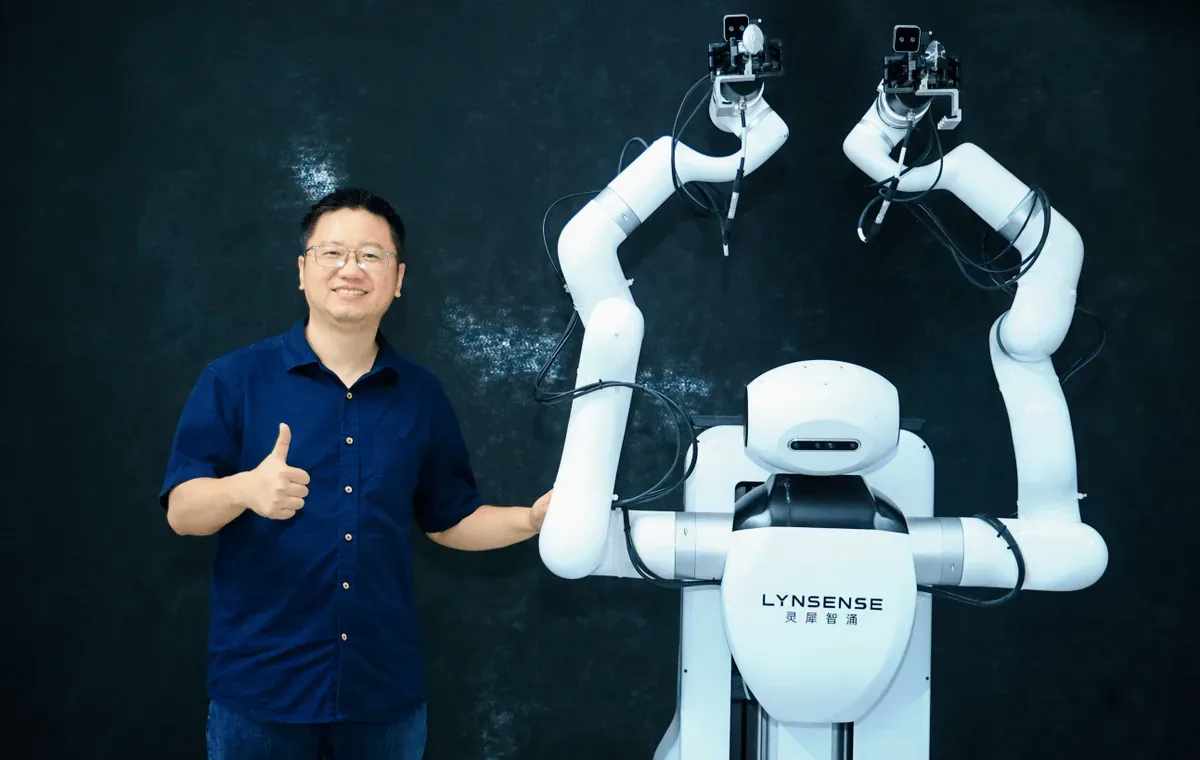
Lingxi Zhiyong’s technical route also shows that competition in embodied AI is shifting from model scale to system strength. An embodied agent is composed of a model, an execution system, and hardware. The stronger the model, the larger the capability boundary the execution system can unlock. In return, the real industrial experience accumulated by the execution system helps the model better understand industrial tasks, forming a pathway of co-evolution.
For the industry, Lingxi’s breakout is a signal: the entry barrier in robotics is moving from hardware arms races to system engineering capability. Whoever builds a reliable bridge between AI models and real-world execution will control the second half of industrial embodied AI.