
At the QCon Global Software Development Conference 2026 Beijing, Dr. Jin Yuyang, assistant researcher at Tsinghua University, presented a technical talk titled "Full-Chain Inference Acceleration for Large Models," deconstructing the complete optimization pipeline from underlying operators to high-level parallel strategies. His laboratory also open-sourced the inference engine "Chitu," an attempt to deliver an engineering solution for inference acceleration within the domestic chip ecosystem.
Inference cost is becoming the heaviest burden on AI industry deployment. Only a handful of vendors can train foundational models, but nearly every AI application relies on calling inference APIs — and computing power dominates that cost equation. As model parameters push toward trillion-scale and intelligent-agent scenarios demand ever-longer contexts, inference engines must simultaneously handle the compute-intensive Prefill phase and the memory-bandwidth-bound Decode phase. Both the optimization potential and the difficulty are rising.
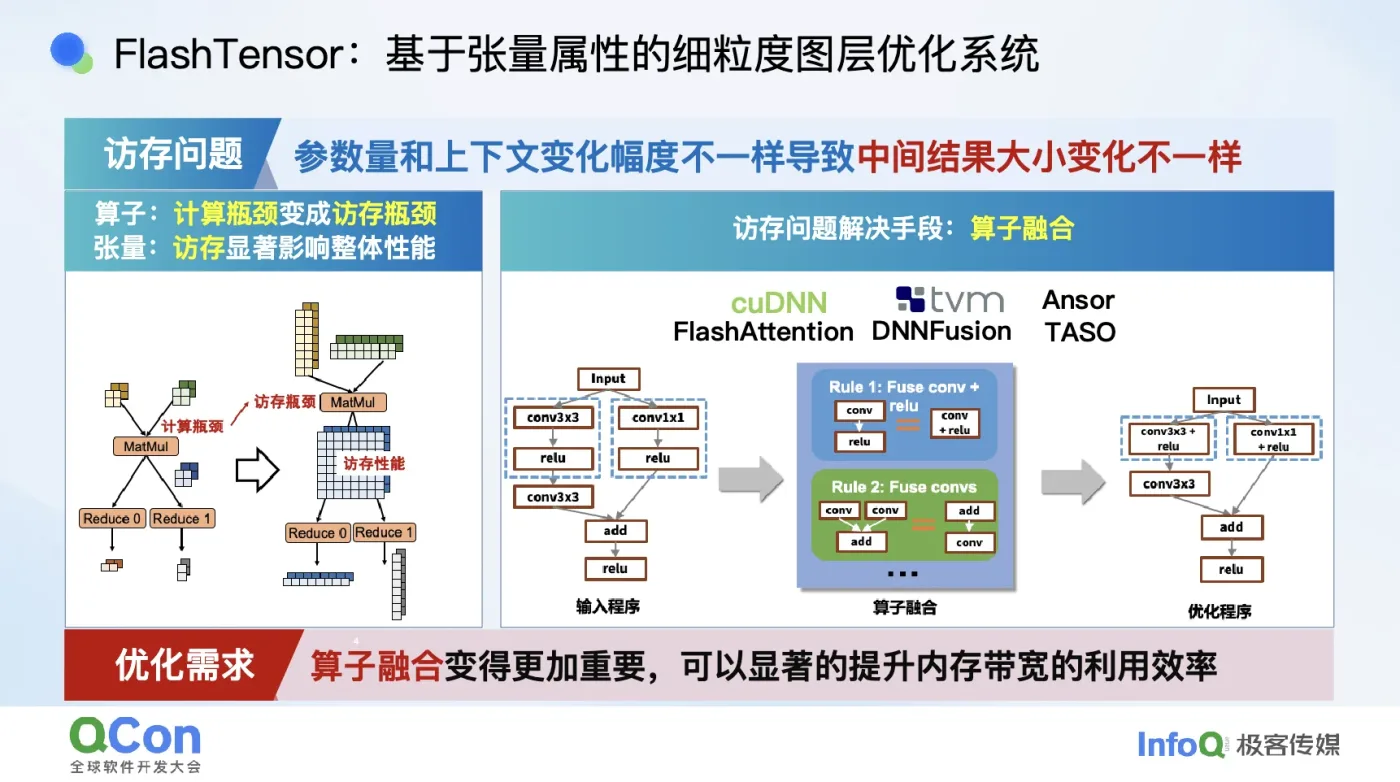
Jin decomposed inference system performance into five key dimensions: operator optimization, memory management, model quantization, heterogeneous scheduling, and parallel optimization. Among these, KV Cache memory management directly determines throughput in long-context scenarios; mixed-precision quantization requires tight coordination between compilation and runtime; and load-aware CPU-GPU heterogeneous scheduling routes different computational stages to the most suitable chips.
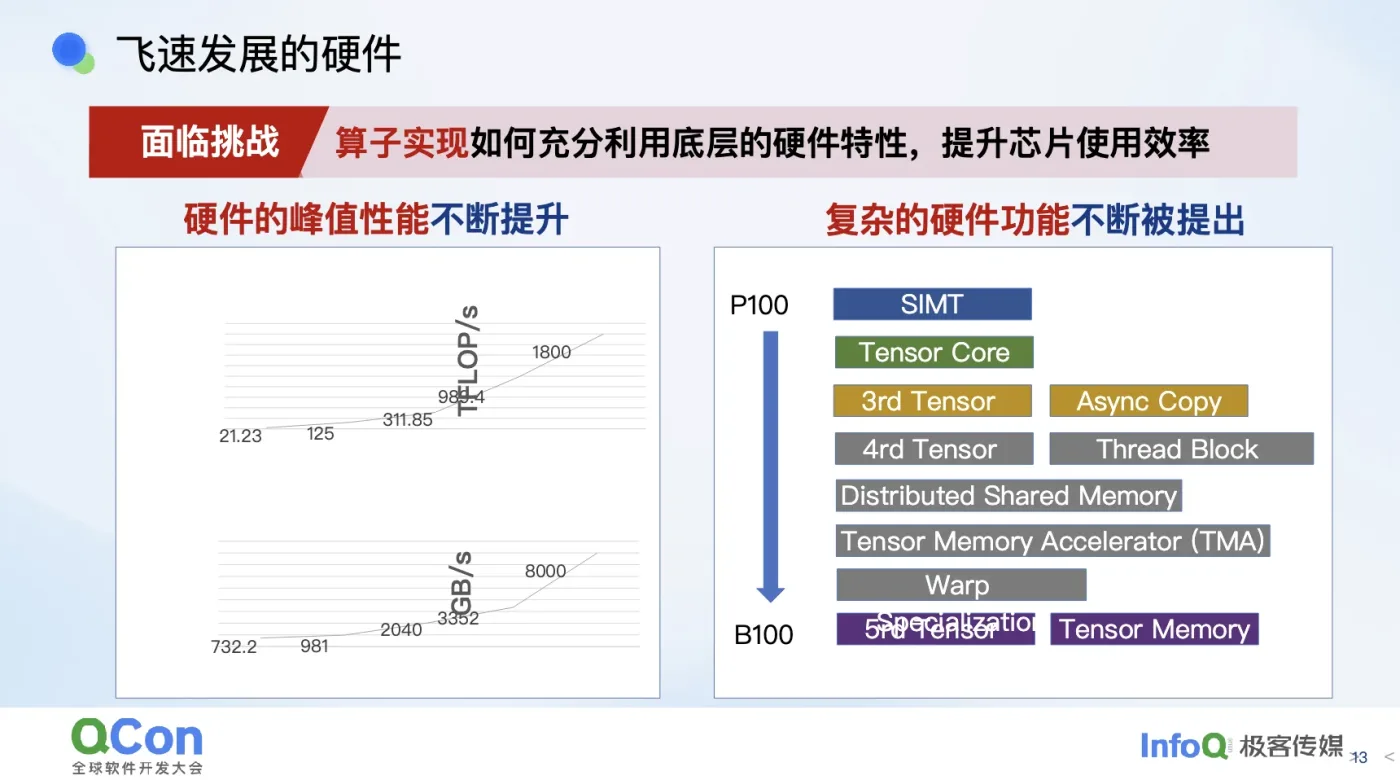
A noteworthy shift is under way: inference optimization is moving from "single-point techniques" to "full-chain engineering." In the past, teams habitually solved speed problems by upgrading to more powerful GPUs. But with model scale and architectural complexity expanding rapidly, the marginal returns of adding hardware are diminishing — making system-level collaborative optimization the far more sustainable direction. This also means inference capability no longer belongs solely to chip vendors; it has become a battleground for platforms and toolchains.
The ultimate payoff of inference optimization lies in engineering-led, platform-based computing power delivery. Whether it is adapting open-source inference engines or supporting scheduling across diverse domestic chips, the goal is the same: lowering the barrier for enterprises to harness large models effectively. StarWar Cloud's strategic focus on GPU computing platforms and inference services embodies exactly this vision — by delivering platform-based computing power and scheduling optimization, the company enables enterprises to access stable, high-performance LLM inference without building complex inference stacks on their own.
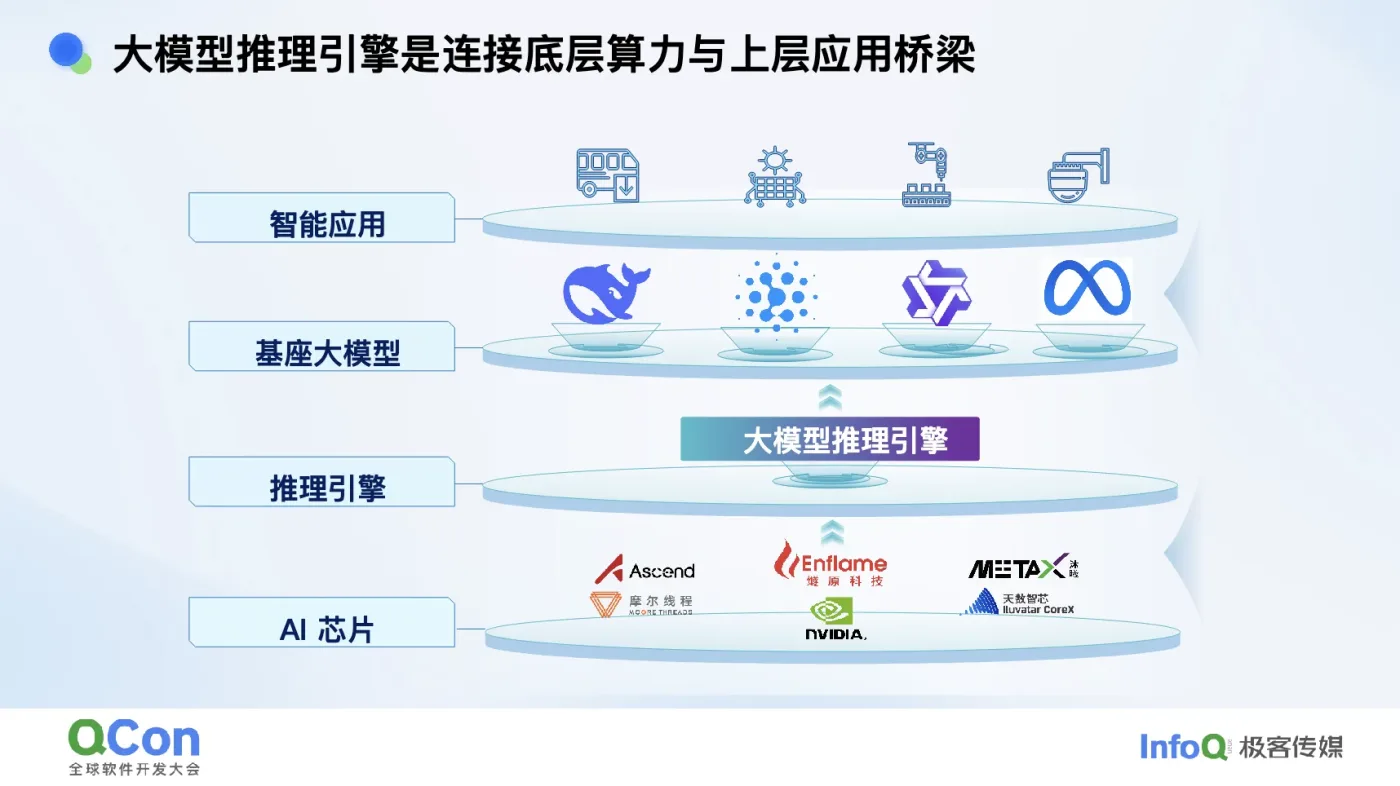
Jin also noted that the domestic chip ecosystem is maturing rapidly. Vendors including Ascend, Moore Threads, Enflame, and MetaX are all working to fill gaps across the inference pipeline, while open-source engines such as vLLM and SGLang are strengthening the ecosystem from the software side. For downstream application companies, this means more choices and potentially lower costs — but also the reality of rising adaptation complexity. Cross-chip, cross-engine scheduling capabilities will become increasingly indispensable.
Competition in LLM inference is extending from "who has the strongest model" to "who has the strongest inference stack." Whoever truly masters operators, memory, quantization, and scheduling will build a durable moat in inference cost and efficiency. This round of engineering competition is only just beginning.