
FanShi recently hosted a launch event for the PhanthyMotus ecological community co-building initiative, declaring that its first universal embodied Agent foundation has entered a new phase of open, multi-party collaboration. With leading hardware makers such as UBTech, Beijing Humanoid Robot Innovation Center, and StarDynamics present, the event signaled a tangible milestone in the embodied intelligence industry’s efforts to break down isolated hardware ecosystems.
Embodied intelligence is entering a period of explosive growth, but the underlying structure remains severely misaligned. Developers are blocked by high hardware barriers and cannot reuse code across different robot models; robot manufacturers are pulled into complex, customized delivery projects; and enterprises that own real-world scenarios still lack standardized solutions to bring products to market. FanShi co-founder and chief scientist Chen Yuqiang pointed out that the industry has shifted from single-point technology competition to system-level ecosystem competition. PhanthyMotus, he said, was created to serve as a universal middleware foundation that connects and decouples hardware, algorithms, and application scenarios.
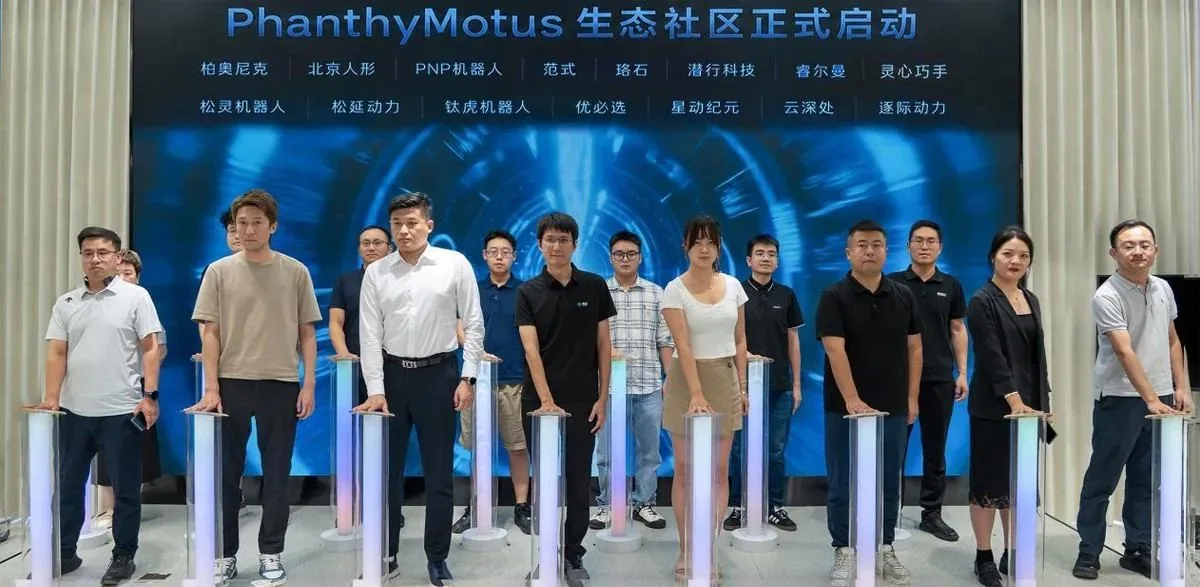
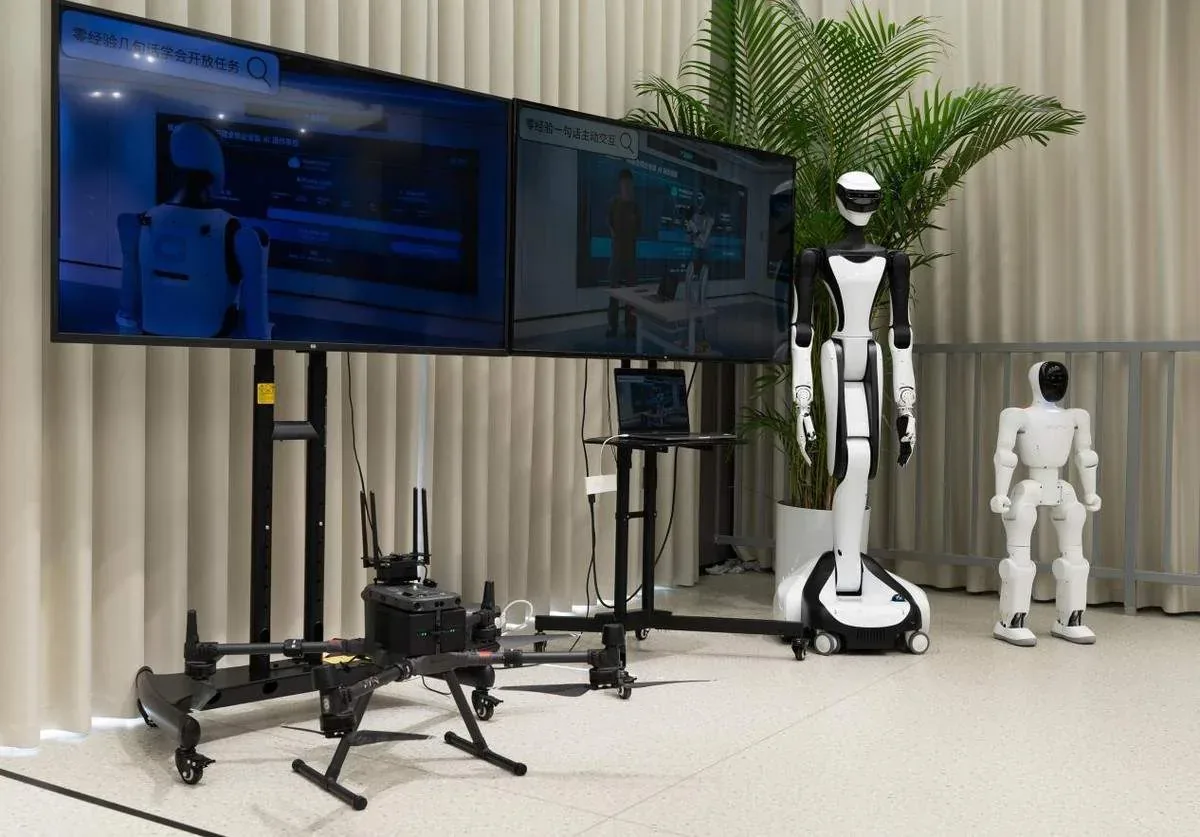
This vision has quickly gained traction across the industry. In just two months, the PhanthyMotus community has brought together developers from Unitree, AgiBot, DJI, EngineAI, Deep Robotics, Leju Robotics, ROKAE, Franka Robotics, and other leading brands. Through dense collaboration, the community has produced over 600,000 lines of high-quality code, completed adaptation for more than 15 mainstream robot platforms, and accumulated over 200 standardized hardware driver modules, covering humanoid, quadruped, wheeled, robotic-arm, and drone form factors.
Moving from open source to co-building, governance and standardization are the real challenges. To let developers enter with zero barriers, FanShi launched an incentive program that opens a full-category hardware resource pool, supports remote debugging across multiple robot models, and provides free computing tokens to code contributors. However, whether cross-model code reuse can truly deliver zero-cost flexibility in real industrial environments will require more large-scale deployment to verify. The accumulation of standardized driver modules is precisely the foundation on which that verification rests.
Training, simulation, and inference for embodied agents all require continuous and stable computing power. StarWar Cloud focuses on GPU computing platforms and scheduling capabilities, helping enterprises manage embodied-agent training and inference tasks under one unified system and allocate resources elastically on demand. This turns scattered compute assets into flexible resources for robotics teams and complements the open-source co-built hardware foundation, supporting embodied agents as they move toward large-scale deployment in the workplace.
Looking ahead, FanShi has set clear goals: by the end of 2026, the community aims to complete 50+ robot adaptations, expand to 500+ large-brain and small-brain AI algorithms, and accumulate 10,000+ community-shared skills, creating a skill application store for the embodied AI era. The community remains committed to no vendor lock-in and open co-building, with its official website now fully open. When hardware, algorithms, and skills all become reusable public assets, the pace of embodied intelligence deployment is likely to accelerate significantly.