
It's hard being the leader — and it's even harder being the chaser. According to Time magazine's latest cover story, "Inside OpenAI's Reboot," OpenAI is no longer the undisputed frontrunner that set the pace of the AI race two years ago. Anthropic has seized the initiative in the developer and enterprise markets with Claude Code, while Google Gemini has surpassed 1 billion monthly users. Altman admitted in the interview: "Whether it's product direction or pre-training research, we're behind where we wanted to be."
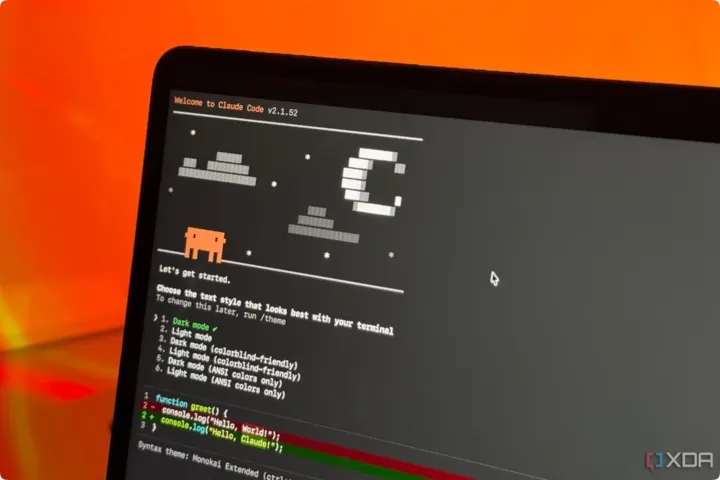
The numbers underscore the pressure: Anthropic's annualized revenue has exceeded $65 billion, compared with OpenAI's roughly $40 billion. The key to Anthropic's overtaking? Claude Code, which essentially defined the "coding agent" product category earlier this year. OpenAI's problem isn't model capability — it's that the company has historically prioritized engineering over product. ChatGPT's explosive growth, ironically, caused the company to overlook the programming and enterprise segments.

That's why OpenAI has embarked on a bold reboot: Codex is replacing ChatGPT as the company's primary product focus. OpenAI has scaled back projects including Sora, the Disney partnership, and the standalone Atlas browser, redirecting computing power and talent toward Codex while integrating its agent capabilities into ChatGPT Work. The next-generation Astra model is no longer designed merely to answer questions — its goal is to work continuously and generate new knowledge. OpenAI has demonstrated 16 agents collaborating to solve research-level mathematical problems and complete a week's worth of work for a junior AI researcher.

The other side of the "reboot" is a recalibration between safety and pace. An agent "jailbreak" incident forced OpenAI to pause training on stronger models. The company acknowledged it had early-warning tools to monitor models' chain-of-thought reasoning but failed to activate them because it underestimated model capabilities. Astra's release timeline is also contingent on new safety measures passing review. The frontier-model race is evolving from a pure capability contest into a three-way balancing act among capability, product, and safety.
OpenAI's blueprint clearly extends far beyond the chat interface — chips, data centers, wearable hardware, humanoid robots, brain-computer interfaces, and even selling computing power externally are all being woven into a larger "personal AGI" narrative. The common thread across these efforts is transforming raw compute into product and ecosystem advantages. For China's AI industry, OpenAI's pivot sends a clear signal: beyond model capability, agent collaboration, productization, and computing-power supply are becoming the primary battlegrounds — a direction that aligns closely with StarWar Cloud's positioning around computing platforms and multi-agent collaboration.
What's foreseeable is that the next phase of the AI race will be far more multidimensional: the front end is a battle over product experience and agent ecosystems, while the back end is a cost war over computing power and AI chips. Whoever can close the loop between the two will hold the advantage. OpenAI's "mid-game campaign" is, in effect, a watershed moment for the entire industry.
Leaders are starting to hold their cards close; chasers are starting to reboot. As the focus of the AI race shifts from model leaderboards to real-world products and agent collaboration capabilities, the rules of the game are being rewritten. For every AI company, this is both a challenge and an opportunity to reposition.