
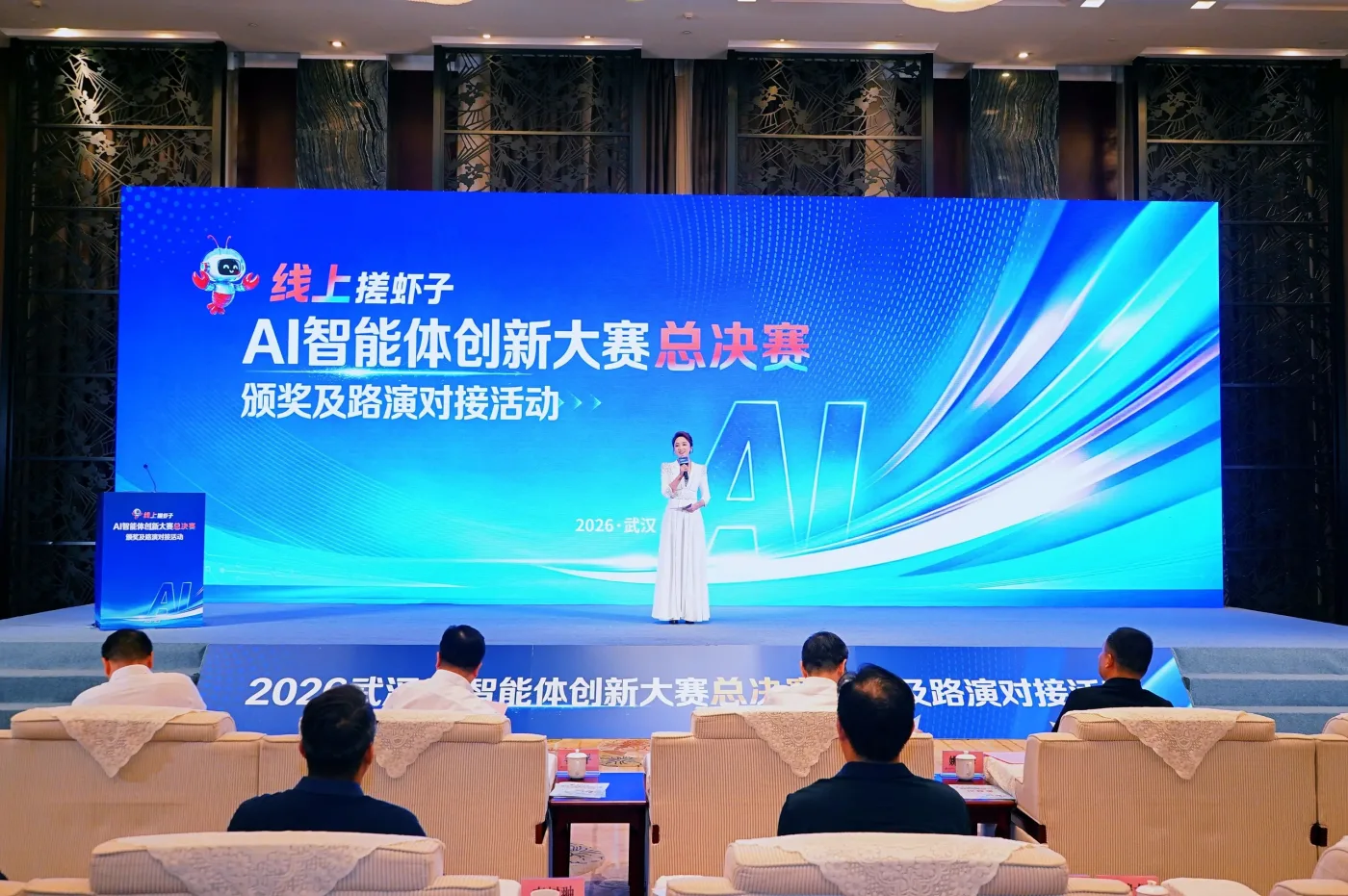
The 2026 Wuhan AI Agent Innovation Competition recently wrapped up, drawing more than 900 AI agent projects from across the country. Ultimately, 27 projects advanced to the award-winning roadshow, with submissions covering a wide range of industry scenarios including scientific research, healthcare, and industrial manufacturing. Local government backed participating teams with computing power resources, access to real-world scenarios, and capital matchmaking — using the competition as a bridge to anchor agent startups within the broader industrial ecosystem.
Behind the competition's momentum lies an industry reality: AI agents, increasingly powered by large language models, are moving from lab demos into real business environments, but the path to deployment remains far from smooth. Participating teams face mounting pressure from computing costs, scenario validation, and engineering complexity. In this context, a prototype that can quickly validate an idea often carries more weight with investors and customers than a technically dazzling algorithm.
Looking at the distribution of award-winning projects, vertical scenarios such as healthcare and industrial manufacturing have become the first stop for AI agent deployment. These industries feature complex workflows and clearly defined pain points — if an agent can reliably take over standardized steps, its value is immediately visible. Meanwhile, the competition's scenario-open mechanisms and capital matchmaking are pushing agent entrepreneurship from pure technical competition toward industrial fitness.
Notably, many teams cited the same pain point in post-competition feedback: the lack of low-code agent building platforms to rapidly construct prototypes and run iterative validation. For startup teams whose priority is proving commercial viability, building an agent from scratch by writing code is not only costly, it slows down the entire trial-and-error cycle. Development barriers, in other words, are becoming the real bottleneck for agent entrepreneurship.
Behind this demand is a growing call for platform-level AI infrastructure. StarWar Cloud, focused on its GPU computing power platform and DiWorker multi-agent collaboration platform, provides enterprises with computing power scheduling and agent engineering support, allowing teams to build, validate, and iterate industry-specific agents on a unified infrastructure — so scarce development resources go toward business innovation rather than repetitive low-level work.
The registration of more than 900 projects shows that the enthusiasm for building AI agents is spilling over from leading tech companies into a much broader developer community. Whether agents can make the leap from competition stage to industrial adoption will depend on how mature the ecosystem becomes — the "last mile" formed by computing power supply, development tools, and scenario validation will ultimately determine how high the next wave rises.