
As artificial intelligence rapidly evolves, the field of image generation is undergoing unprecedented transformation. Alibaba’s Tongyi Lab has introduced the Z-Image-Turbo-Fun-Controlnet-Union model as a major expansion of its Z-Image ecosystem. Now available on Hugging Face under the Apache 2.0 open-source license—which permits commercial use—this release is expected to accelerate AI adoption across industries.\n\nSince its launch in late November last year, the Z-Image series quickly gained traction in the open-source community, surpassing 500,000 downloads on the first day and topping Hugging Face’s trending charts. The series employs an innovative single-stream diffusion architecture that achieves photorealistic rendering with only 600 million parameters, excelling in skin texture, hair detail, and lighting aesthetics. Notably, the Z-Image-Turbo fast inference version can generate 1024x1024 high-resolution images in just 8 sampling steps, with inference time as low as 9 seconds on an RTX 4080 GPU, and supports mixed Chinese-English text rendering—greatly boosting creative efficiency.\n\nThe newly released Z-Image-Turbo-Fun-Controlnet-Union model features a significant technical breakthrough.
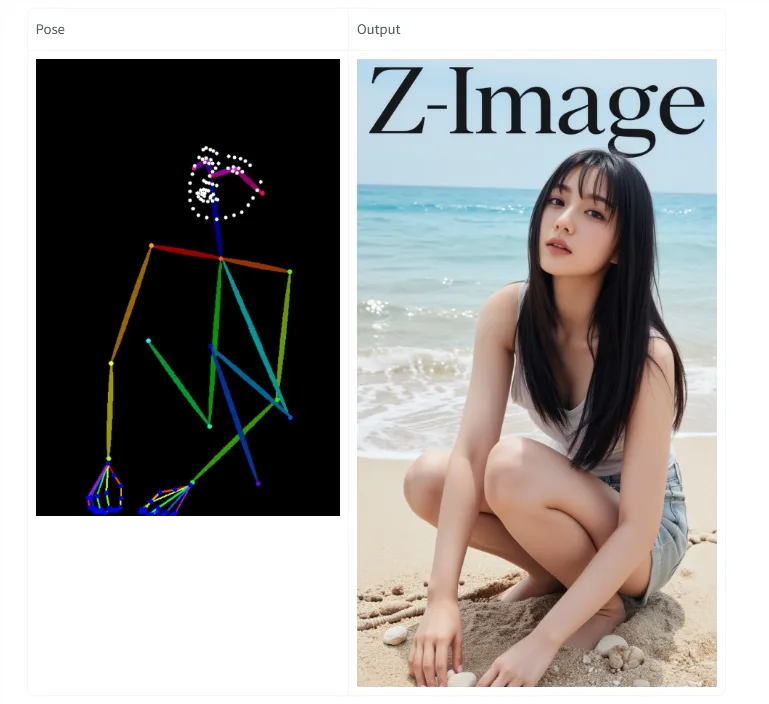
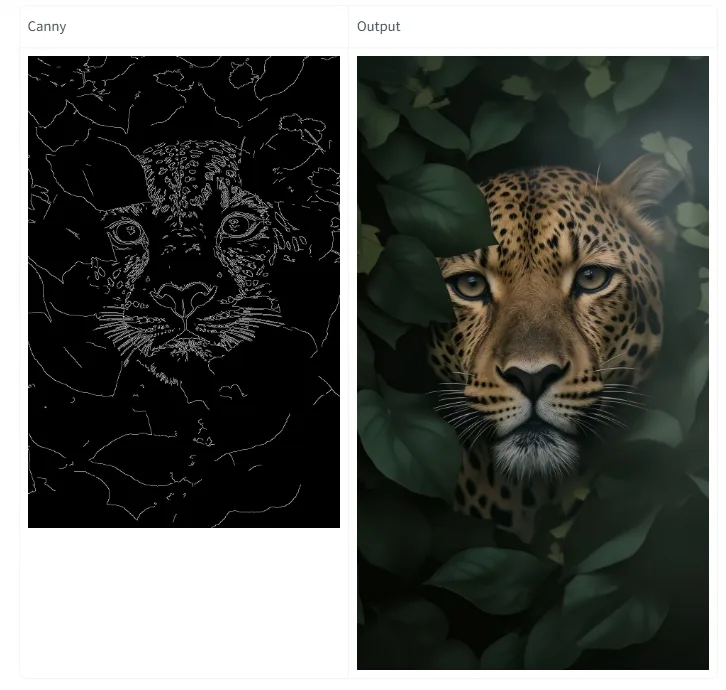
It integrates ControlNet structures into the six core blocks of the original architecture, enabling simultaneous compatibility with multiple control conditions such as Canny edge detection, HED boundary extraction, and depth mapping. This multimodal control capability makes it particularly suitable for complex image generation tasks, such as precise human pose control and line-art-based architectural rendering. The model is already integrated via Python code, with workflow support for tools like ComfyUI expected soon.\n\nFrom a computational efficiency standpoint, the model inherits the lightweight design of the Z-Image series, requiring only 6GB of VRAM—far less than traditional ControlNet models—and significantly lowering the technical barrier for AI image generation. Benchmark tests show that even on low-end GPUs, the model achieves a generation speed of 250 seconds for 5 steps, striking a favorable balance between quality and real-time performance.\n\nAdditionally, the model offers a 4-bit quantized version, compatible with frameworks like MFLUX for easy deployment on consumer devices such as Macs.
The Z-Image-Edit variant further enhances understanding of composite editing instructions, effectively maintaining image consistency. These features not only lower the entry barrier but also open professional-level creation to non-expert users. According to community feedback, the model has already surpassed competitors like OVIS Image in prompt fidelity for ad material generation, demonstrating strong technical competitiveness.\n\nReaction from the open-source community has been overwhelmingly positive, with numerous benchmark tests emerging on platforms like Reddit and X, including experiments on celebrity facial recognition and K-pop idol generation. Test results show the model excels in image recognizability and naturalness. Developers widely praise its efficiency advantage, often describing it as “outperforming Flux,” especially in maintaining stable output under low CFG Scale (2-3). These positive validations further affirm Alibaba’s global influence in AI open-source initiatives.