
As AI computing power continues to improve and large language model technology matures, application development is undergoing a transformation from professional to universal accessibility. Google’s integration of the Opal tool into the Gemini platform is a strategic move aligned with this industry trend. The tool enables users to describe requirements in natural language, which the Gemini large model automatically parses and generates application logic, achieving rapid conversion from “idea” to “app.” This capability relies on the large model’s ability to understand natural language and abstract application logic.\n\nThe core advantage of the Opal tool lies in its extremely low barrier to entry and intuitive user experience. Traditional app development requires deep programming knowledge and complex toolchains, whereas Opal uses a conversational interface that lets users simply describe functional requirements, and the system automatically generates runnable mini-apps. These apps can not only execute immediately but also be saved as personalized “Gems assistants,” becoming exclusive learning aids, coding partners, or text processing tools for users, showcasing the potential of AI technology in personalized services.\n\nTo enhance user experience, Google has designed an intuitive flowchart editor for Opal within Gemini.
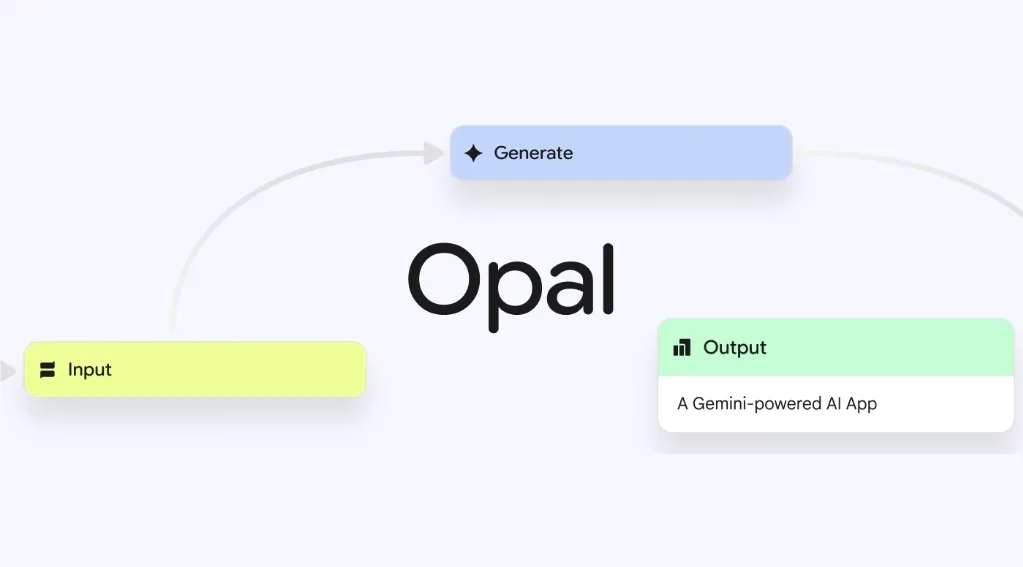
This feature allows users to adjust application logic by dragging and rearranging steps, while simultaneously converting text descriptions into a visual list of steps in real time, greatly reducing the difficulty of understanding application workflows. This visual programming approach not only improves creation efficiency but also provides users with a window to learn application logic, exemplifying a new paradigm of human-machine collaboration.\n\nCurrently, “vibe coding” has become a hot trend in the AI industry, with many tech giants actively positioning themselves in this field. By deeply embedding Opal into the web-based Gemini, Google is not only expanding Gemini’s application scenarios but also demonstrating its ambition to build the world’s most user-friendly AI application creation platform. This move could trigger a new wave of AI app creation, driving more innovation, while also challenging traditional software development models and reshaping the entire software development ecosystem.