
Amid data security controversies sparked by cloud-based large models such as GPT-4, the global AI industry is transitioning from centralized computing to distributed architectures. WitNote arrives at a pivotal moment. Its locally deployed QWen2.5-0.5B model not only avoids the privacy risks of API calls but also leverages the Ollama framework to unlock computing power on consumer-grade chips—demonstrating that large model optimization has now adapted to standard PC hardware environments.
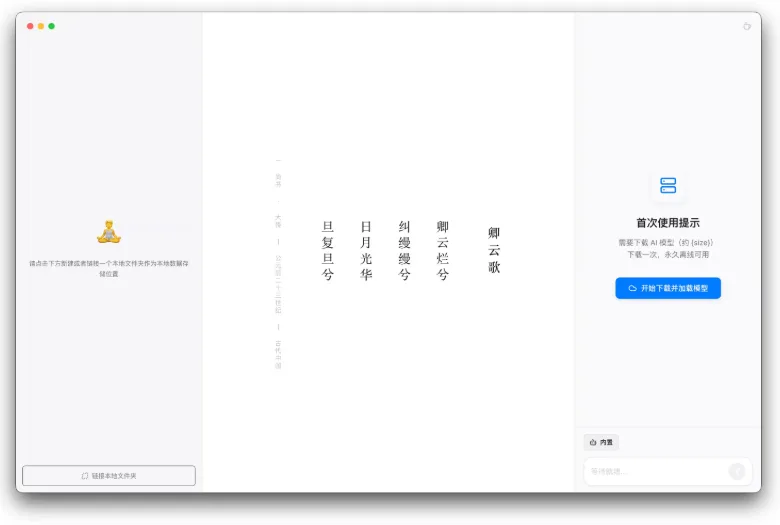
Unlike subscription-based SaaS models that require ongoing payments, WitNote's offline capability directly addresses user pain points. The tool allows direct calls to local Markdown files (including Obsidian compatibility) and performs real-time AI interactions under a CPU/GPU hybrid computing architecture. The developer even voluntarily covered Apple's developer program fees to bypass macOS signing restrictions, highlighting the determination of terminal AI software to break free from operating system ecosystem limitations.
Notably, WitNote supports three computing power options: a built-in lightweight model, a local large model via Ollama, and a hybrid mode with traditional cloud APIs. This modular design reflects an emerging trend in the AI industry: as consumer electronics face chip performance oversupply, balancing model accuracy with computing consumption will become the core competitive edge for next-generation AI tools.