
On November 4, Tencent Hunyuan released Hy4, a new-generation large language model that introduces visual capabilities for the first time and is being rolled out across multiple Tencent products. API pricing remains unchanged from the previous version: per million tokens, cache-hit input is 0.3 yuan, standard input is 6 yuan, and output is 18 yuan. To support the launch, selected products will offer free quotas from November 4 to November 15; from now through the end of the year, Tencent Cloud TokenHub will bill at 50% of list price.
On the evening of November 2, Alibaba did something different: it placed its Qwen Office membership monthly card into a top livestream commerce show. Priced at 0.01 yuan against an original price of 28 yuan, the offer sold about 100,000 units in half an hour, representing roughly 2 trillion tokens.
Viewed together, these two events show that the identity of the token has changed. It was originally a unit of measurement for large language models. Now it is a commodity that can be ordered, discounted, and cleared out.
But enterprises do not necessarily experience it that way.
A recent TMTPost article noted a phenomenon: Doubao has more than 200 million monthly active users but generates less than 1 million yuan in daily revenue. What investors focus on is also shifting—from model parameters and leaderboards toward task completion volume and consumption volume. The article put it more directly: the value unit of AI is moving from “capability” to “usage.”
Once usage becomes the basis of pricing, the question shifts from “which model should we use” to “how should this bill be calculated.”
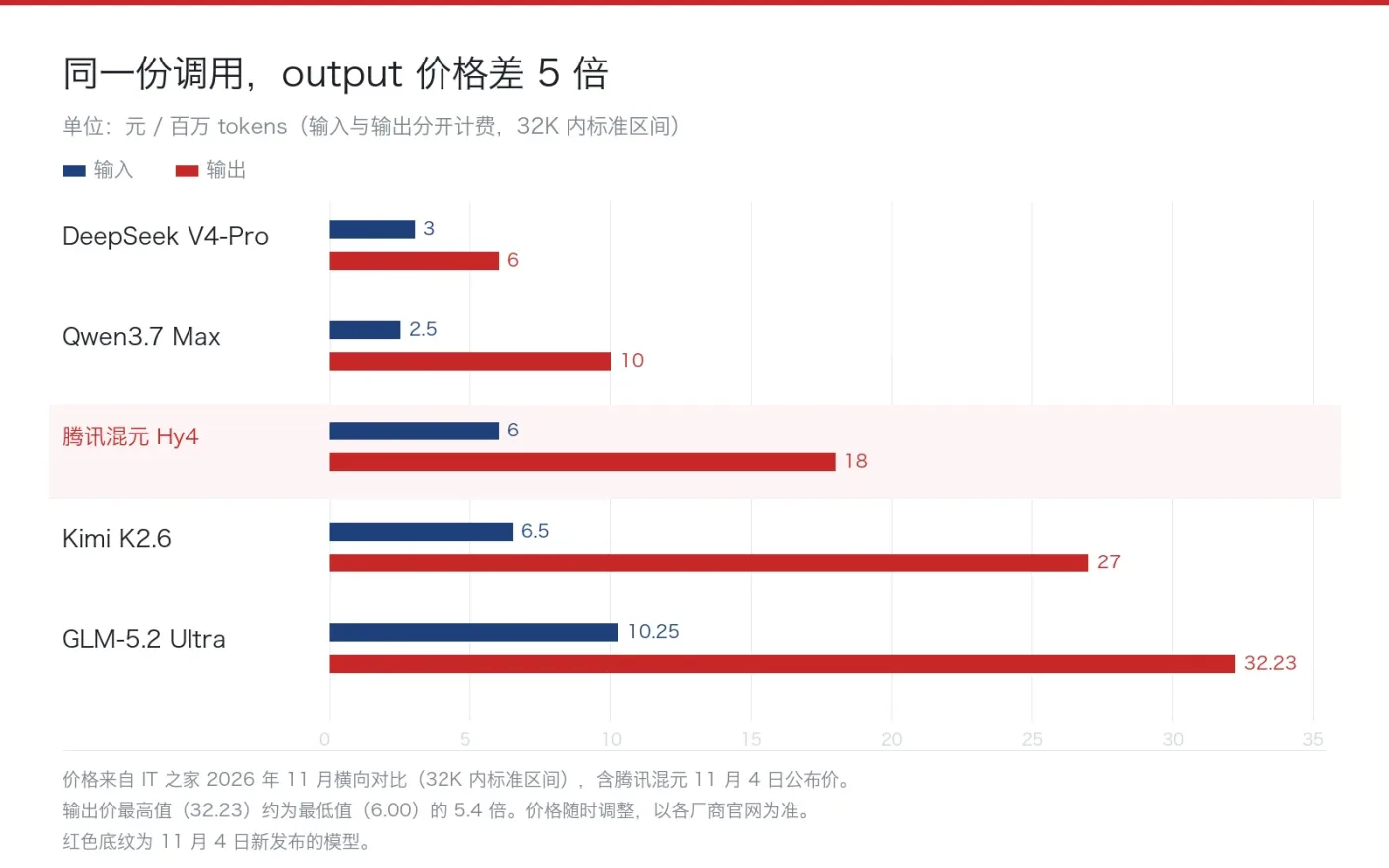
Start with unit prices. For the same million tokens, price differences across models are far from minor. DeepSeek V4-Pro charges 3 yuan for input and 6 yuan for output; Qwen3.7 Max charges 2.5 yuan for input and 10 yuan for output; Kimi K2.6 charges 6.5 yuan for input and 27 yuan for output; GLM-5.2 Ultra charges 10.25 yuan for input and 32.23 yuan for output. The output-price spread exceeds five times.
Then look at billing rules. Input and output are billed separately, cache-hit portions receive discounts, and long-context requests are billed in tiered increments. When an enterprise uses three models at the same time, it is effectively maintaining three billing standards, three sets of bills, and three quota rules.
The actual situation in many companies is this: the technical team selects models based on performance, finance looks at total spending, and no one in between can clearly explain “which business line, which model, and which type of request caused the extra 80,000 yuan spent this month.”
This is not about management capability; it is a structural problem. The more models there are, the more fragmented the billing standards become.
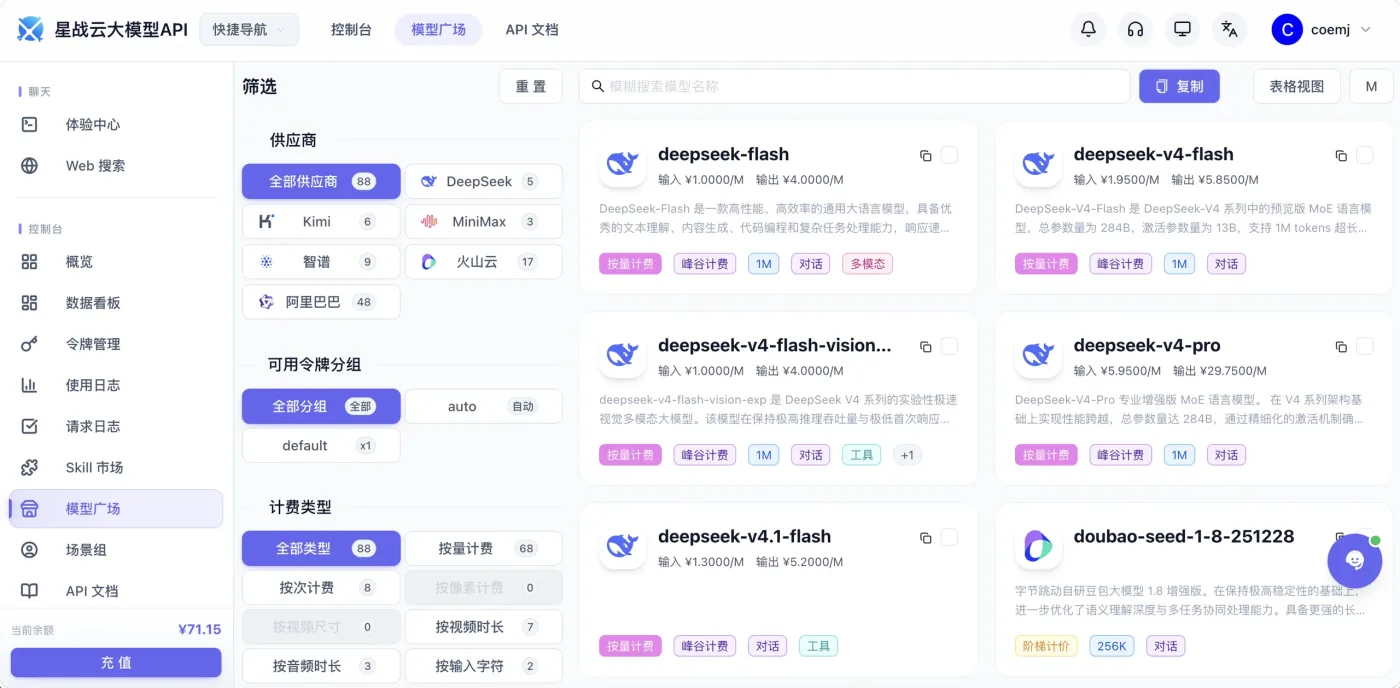
What Zhilian OpenAPI does is straightforward: it brings calls to more than 390 mainstream models into a single entry point. Users simply change the base_url to openapi.xingzhan.cloud without modifying the rest of their code; switching models requires changing only the model parameter. At a higher layer, it handles three things enterprises actually need.
First, unified billing standards: usage across different models is converted under one set of rules, alerts are issued before quotas are exceeded, and bills can be exported.
Second, intelligent routing: it monitors vendors’ latency and response speed in real time, routes calls to the best service by quality, and automatically fails over if one provider goes down.
Third, tiered permissions: key management, access control, and project isolation make it clear whose calls are attributed to whom.
A gateway cannot solve the problem of model selection, but it can solve the problem of unclear billing. And that latter issue is precisely an unavoidable part of how enterprises use AI today.