
Against the backdrop of ongoing iteration in large AI models, Tencent's HunyuanVideo1.5 demonstrates significant computing power optimization. Compared to earlier open-source models requiring 20 billion parameters and 50GB of memory, this version leverages the SSTA sparse attention mechanism to elevate inference efficiency to a commercially viable level, while maintaining visual quality for 5-10 second video generation. This breakthrough in computing efficiency lowers the technical barrier for content creators, enabling consumer-grade chips to handle complex video generation tasks.

From a technical architecture perspective, HunyuanVideo1.5's multi-stage training strategy not only improves motion coherence but also uses image-video consistency algorithms to ensure that generated content closely matches input materials in terms of color, lighting, and other dimensions. This cross-modal generative capability opens new possibilities for digital content creation—for example, when converting static images into dynamic scenes, the model accurately interprets complex prompts like "an English-style garden growing inside a suitcase," demonstrating deep natural language understanding.
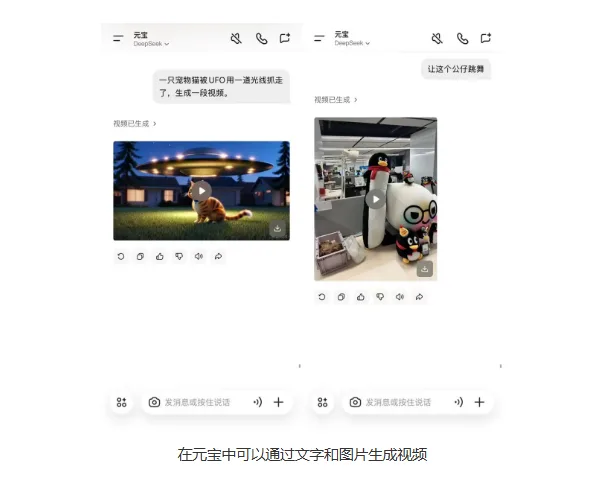
At the AI industry trend level, the model's lightweight design highlights the need for infrastructure innovation in large-model deployment. As video generation technology moves from lab to practical application, chip manufacturers are accelerating the development of specialized computing units that support efficient inference. Tencent's choice to achieve technology implementation on consumer-grade graphics cards not only reflects the declining cost of AI computing power but also signals that content production tools are opening up to a broader audience.
Notably, HunyuanVideo1.5 supports both Chinese and English text-to-video generation, expanding multilingual content creation scenarios and revealing the potential value of AI models in cross-cultural content production. As video generation technology permeates from professional domains to general creators, it will spawn a wide array of new digital content forms, further driving the restructuring of the entire AI industry ecosystem.