
Google is accelerating the democratization of AI technology by transforming its Gemini web application (gemini.google.com) into an open creation platform. The company has recently integrated the Opal tool, which is built around the concept of “vibe coding.” This tool allows users to simply describe their needs through conversational dialogue—for example, “Create a meeting notes assistant”—and automatically generates application logic presented as a visual flowchart. No programming background is required; users can directly drag, reorder, and connect processing steps to intuitively adjust application behavior. Opal’s new “text-to-steps” view converts natural language into a structured operation list in real time, not only simplifying the development process but also helping users understand the inner workings of AI. All created mini-apps can be saved as Gems—Google’s custom AI assistant system launched in 2024—supporting personalized scenarios like tutoring and career planning, truly enabling the personalization of high-frequency workflows.
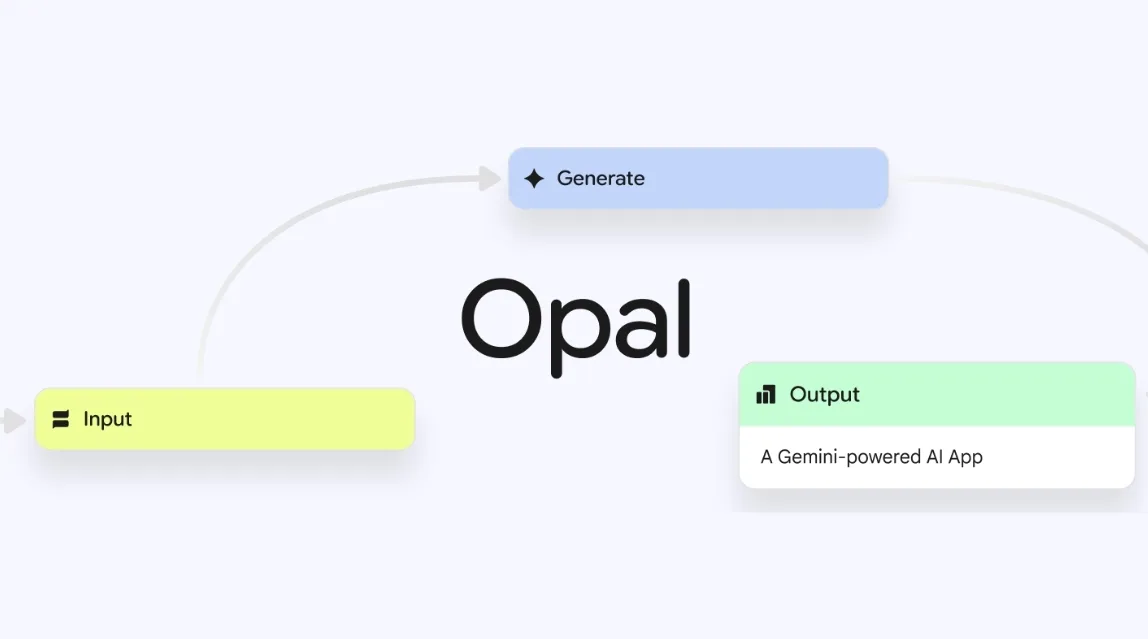
Under the broader AI industry trends, Google’s strategy reflects a deep integration of large-model infrastructure. The launch of Opal not only lowers the barrier to AI application creation but also highlights the growing importance of computing power in an era of widespread adoption. Through a trio of graphical interfaces, dialogue-driven interaction, and the Gems ecosystem, Google is attracting non-technical users to participate in AI ecosystem building. This echoes the “vibe coding” wave promoted by startups like Lovable and Cursor, shifting application building from “writing code” to “saying ideas.” For advanced users, Google also provides an entry point to the advanced editor (opal.google.com), supporting complex logic orchestration and integration with external tools—underscoring the critical role of AI infrastructure in enabling flexible development.
The current AI competition has moved beyond mere comparisons of large-model capabilities into a new phase where the question is “Who can make users actually use it?” Google’s move leverages computing power and large models as its backbone, ensuring AI does not just stay at the level of answering questions but empowers users to take action. This transformation relies not only on Gemini’s multimodal model capabilities but also on global advancements in AI chips and infrastructure to guarantee efficient computing support. As AI industry trends accelerate, everyday users can create their own assistants through simple conversation, heralding a future where AI tools become more integrated into daily life, driving the entire industry toward practicality and personalization.