
Current AI wearable devices—such as AI rings and necklaces—are primarily targeting the consumer market, but they face significant challenges in user acceptance and real-world use cases. In contrast, the Plaud Note Pro, with its credit-card-sized design, addresses high-frequency recording users in business, media, and academia by delivering standalone functionality that operates independently of a smartphone connection. This design represents a fresh direction for AI hardware in computational power optimization. Measuring just 0.12 inches in thickness (roughly three stacked credit cards) and weighing 30 grams, it features 64GB of built-in local storage to ensure data security. With 30 hours of recording battery life and up to 60 days of standby, it meets the demands of intensive usage, showcasing the advantages of localized processing in AI infrastructure.
The Note Pro’s technical specifications are deeply integrated with AI chip innovations. It employs a four-microphone array and a dedicated Voice Processing Unit (VPU) to achieve omnidirectional pickup with an effective range of 16.4 feet (approximately 5 meters). Real-time audio processing includes noise cancellation, voice separation, and echo suppression. In large meeting scenarios, users have reported clear recordings even from the back row—a result of optimized chip computing power that enables efficient operation of large AI models on edge devices without relying on cloud resources, thereby enhancing overall reliability.
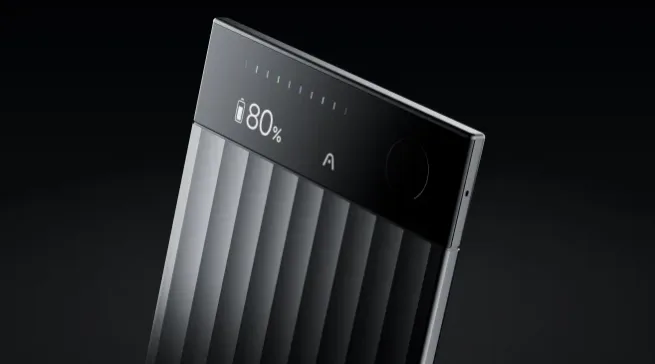
In terms of privacy design, Plaud understands the need for compliance and transparency among professional users. The device uses physical buttons for operation, a micro screen to display recording status and battery level in real time, and provides haptic feedback to ensure full transparency. A dedicated button can mark key moments, which are then highlighted in AI-generated summaries—a feature that aligns with workplace ethics. This design underscores the importance of data security within AI infrastructure, minimizing the risk of sensitive information leakage.
On the intelligent service front, the Note Pro integrates a large language model, offering 300 minutes of free transcription per month. It supports customizable note templates (e.g., investor meetings, academic interviews) and automatically structures output content. Users can access transcripts seamlessly via a web interface, enjoy an optimized “click text to replay corresponding audio” experience, and export results to third-party transcription services, maintaining flexibility in the toolchain. This reflects the progress of cross-platform collaboration as an industry trend in AI.
Market analysis reveals that while the industry has been obsessed with concept products like AI rings and necklaces, Plaud has returned to fundamentals by solving a real pain point: efficiently capturing meeting value. Its success confirms that professional users prioritize reliability and efficiency over gimmicks, marking a turning point where AI hardware moves from flashy demonstrations to practical utility. Going forward, computing power and chip technology will become even more scenario-driven.