
According to industry monitoring, the update uncovered on December 29 fundamentally reshapes the paradigm of mobile AI interaction. The newly launched dual-mode thinking engine lets users freely switch between two tiers of compute resource allocation: “Standard” mode maintains a 20ms response time for everyday scenarios, while “Extended” mode activates an additional 30% of processing units to tackle complex tasks. This technical transplant—analogous to CPU dynamic frequency scaling—reveals OpenAI’s latest strides in underlying chip optimization and model distillation techniques.\n\nThis upgrade directly tackles the long-standing “compute parity” issue in mobile AI. Previously, Android users were limited by terminal chip performance, forcing them to rely on heavily pruned, lightweight models.
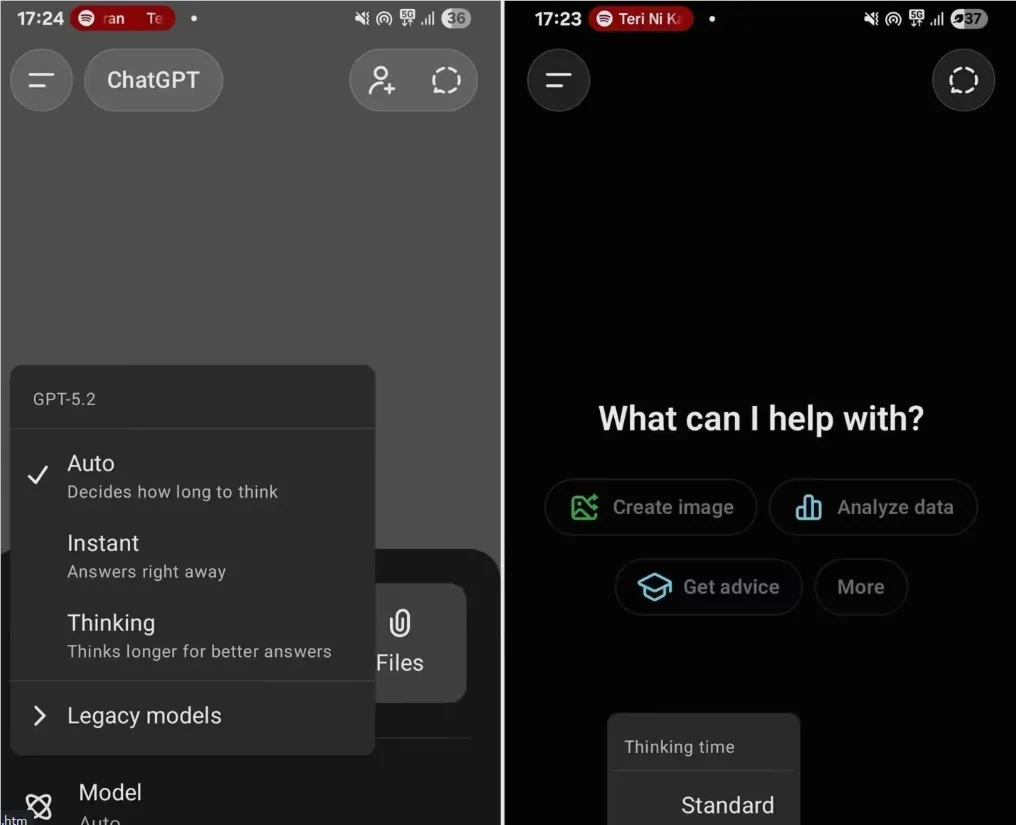
Notably, the feature is currently exclusive to ChatGPT Plus subscribers, signaling that AI companies are exploring monetization pathways for compute resources through differentiated services.\n\nEqually intriguing is the simultaneous launch of an intelligent interface reconfiguration system. When detecting programming or mathematical tasks, the interface automatically shifts into a code-editor layout; during document processing, it mimics the form of an Office suite. This context-aware UI paradigm essentially represents a “feedback loop” from large models to computing infrastructure, demonstrating how AI is reshaping the foundational architecture of human-computer interaction.