
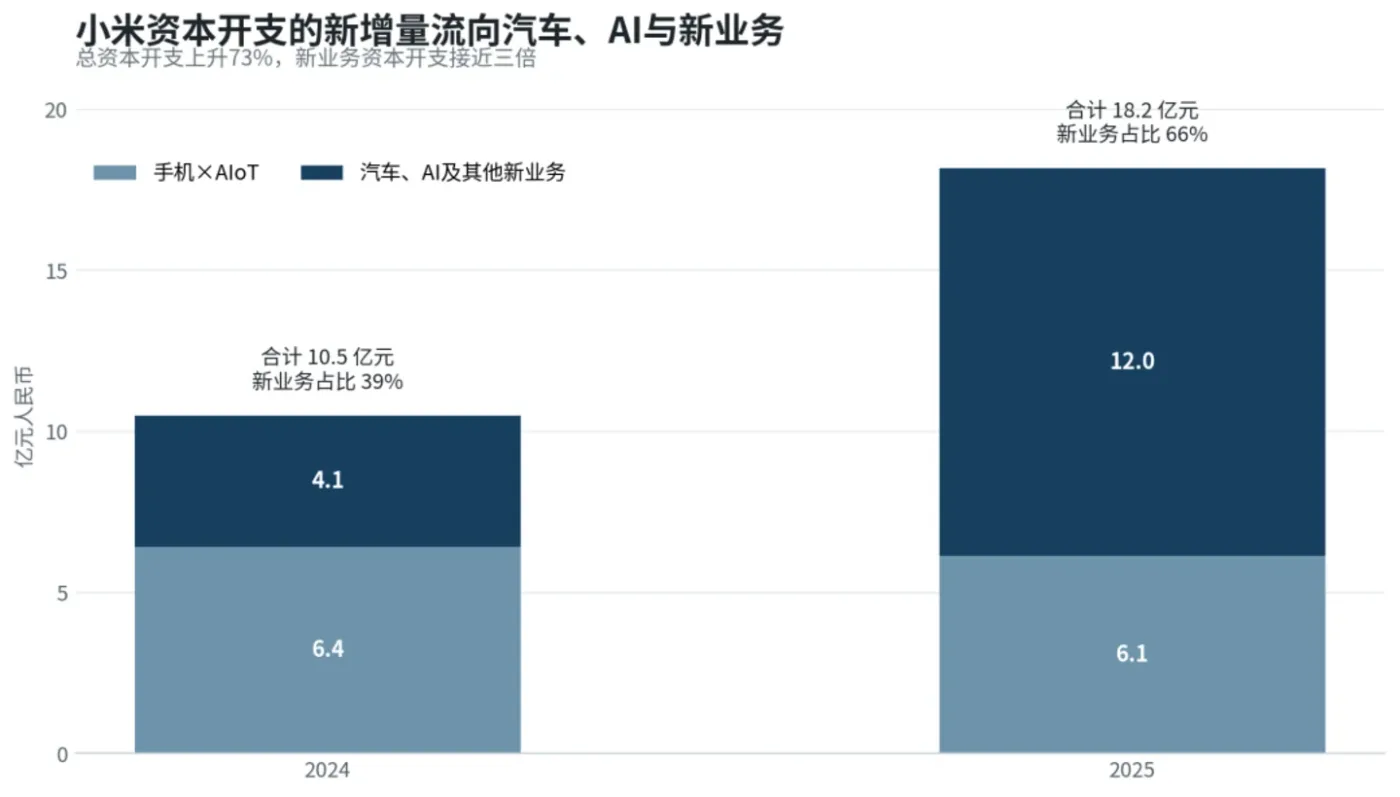
In August 2026, Alibaba placed 710 million new shares at HK$112.70 each, raising about HK$80 billion. The use of proceeds was highly concentrated: 100% of net proceeds will go to full-stack AI capabilities, including expanding and upgrading AI infrastructure. In the prior year and a half, Xiaomi had already raised about HK$42.5 billion through a Hong Kong placement, investing in automobiles, AI, AI chips, and smart manufacturing. Combined, the two financings exceed HK$120 billion.
Notably, neither company lacked cash before fundraising. Xiaomi had more than RMB170 billion in cash resources at the end of 2024, while Alibaba held about RMB474.5 billion in cash and other liquid investments as of the end of June 2026. They did not wait until funds became tight; instead, while cash remained abundant, they replenished long-term capital for the next growth cycle. The money points in two directions: one spreads across real-world terminals, while the other doubles down on cloud computing capacity.
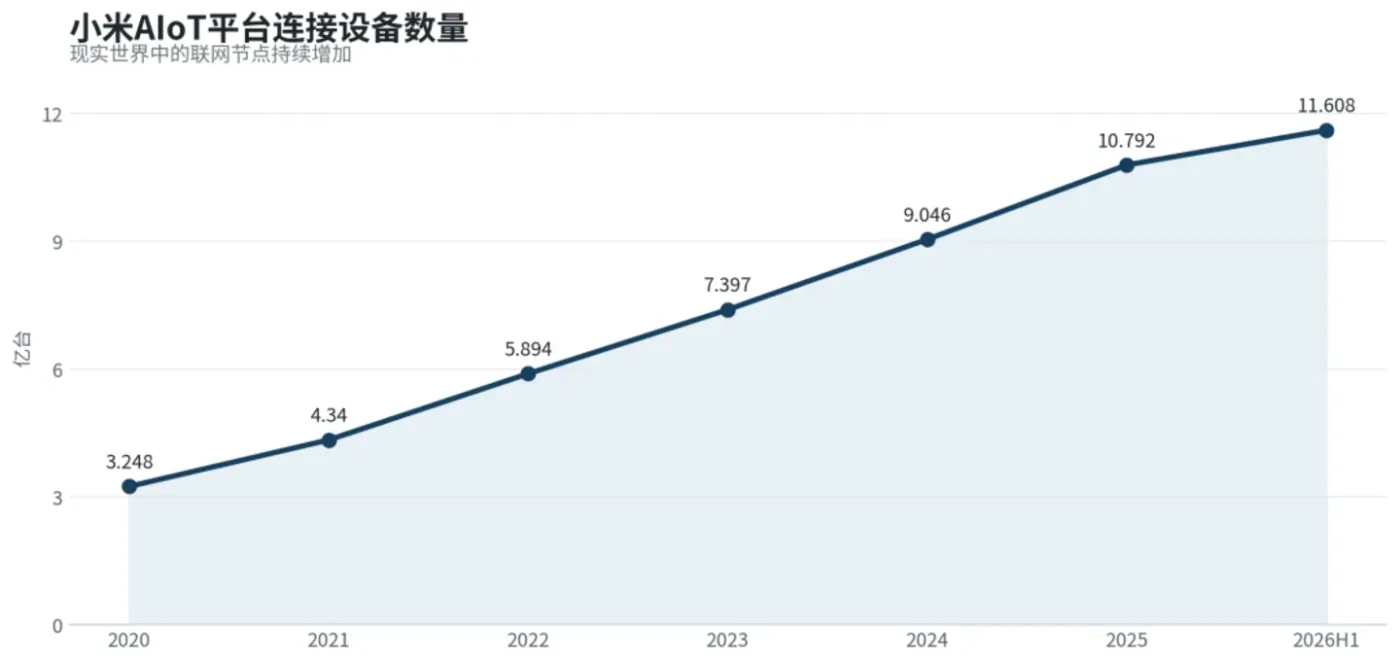
Behind this is a deeper shift: intelligence in the digital world is entering the physical world. The internet once moved large volumes of real-world activity into the digital realm and expanded at low cost through software, users, and traffic. Now the direction is reversing. Cars, home appliances, robots, and cameras all require perception, computation, communication, and execution capabilities, and the capability density of every node is rising. Computing is moving along terminals into rooms, roads, and factories.
Alibaba’s financials record this transition. Its group capex ratio rose from 3.4% in FY2024 to 12.3% in FY2026, free cash flow turned from positive to negative, and the latest quarter’s capex grew 75% year over year. Every conversation, image generation, or Agent execution requires scheduling models and computing power at request time. Demand growth and cash-flow pressure are appearing simultaneously, showing that AI infrastructure has moved from strategic slogan to hard capital investment.
When computing power becomes a heavy asset, companies must rethink how to acquire it: build their own data centers or rely on public computing power platforms for elastic access. StarWar Tech has consistently emphasized the value of GPU computing power platforms—allowing enterprises, during periods of high compute costs and tight supply-demand, to replace one-time heavy investment with on-demand scheduling and convert capex pressure into more controllable operating costs.
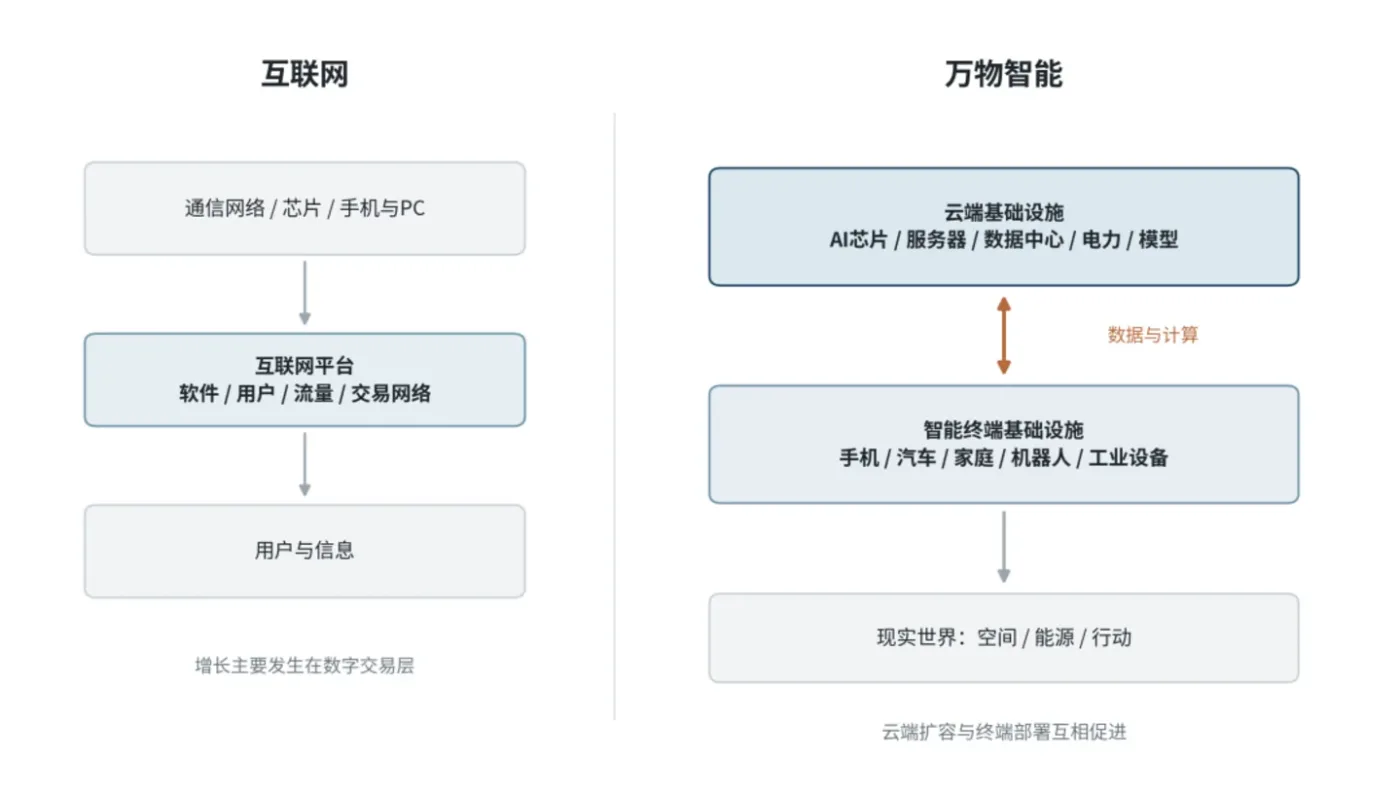
This heavy-asset cycle will also reshape the industry chain. From upstream chips, storage, advanced process nodes, and advanced packaging to midstream data centers, networking, and power, and downstream terminals and model applications—including large language models and AI agents—the entire chain benefits from expanding AI capex. At the same time, computing power supply is moving from a single source toward domestic substitution, heterogeneous combinations, and multi-cloud collaboration.
The Alibaba and Xiaomi financings are just a footnote in this AI heavy-asset cycle. As growth begins to depend on physical devices and computing power supply, understanding compute scheduling, cost structures, and supply elasticity will become a required course for both enterprises and investment institutions.